

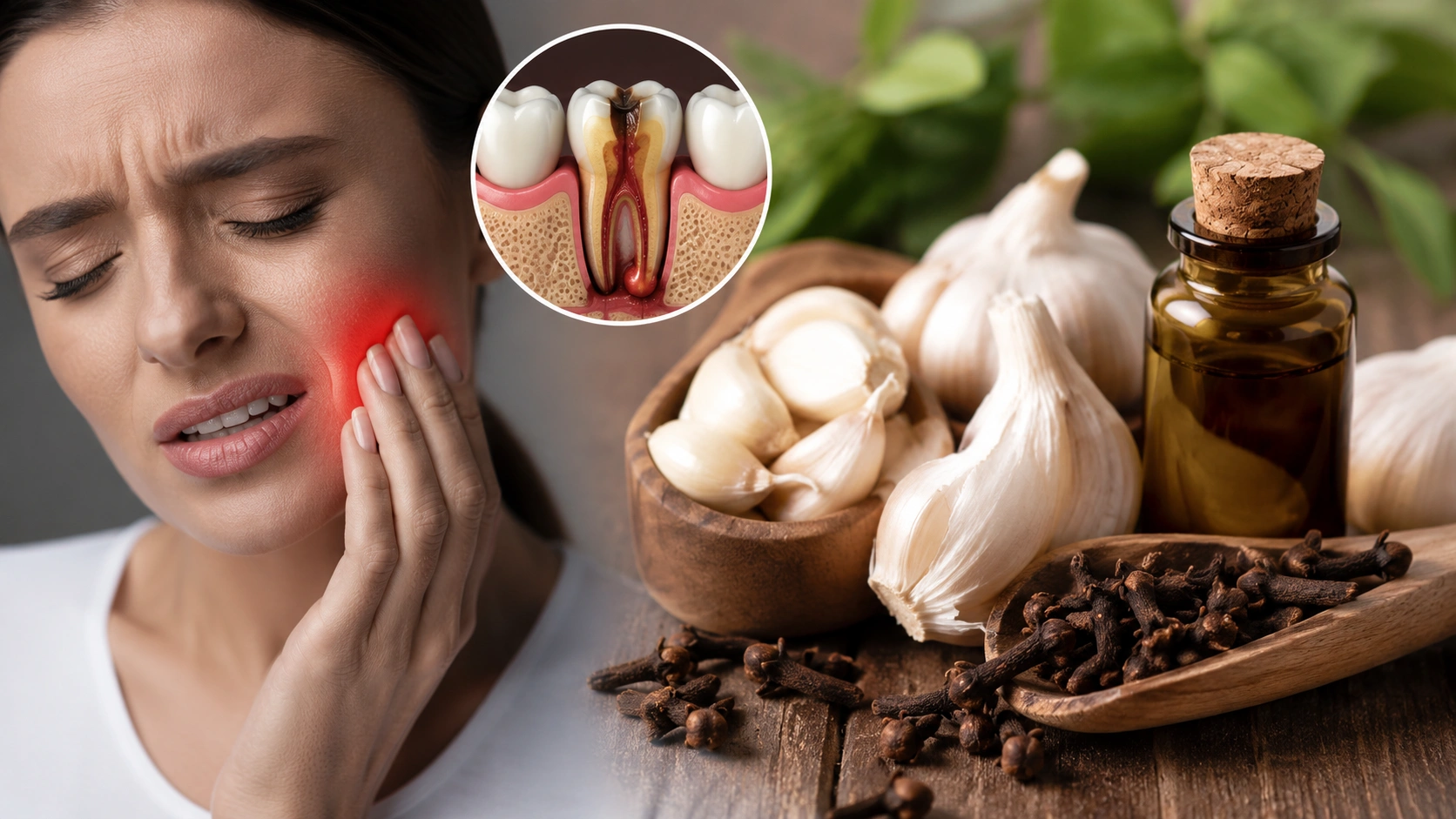
What is the strongest natural antibiotic for tooth infection is a question many people ask when they have throbbing tooth pain, swelling, or the early signs of a tooth abscess and want relief fast. The honest answer is that garlic is usually the strongest natural option people point to because it contains allicin, a compound linked with antibacterial activity, while clove oil is often the best-known natural remedy for pain relief because of eugenol. But there is an important catch: a true tooth infection usually needs professional dental treatment, and home remedies may only offer temporary relief, not a cure. Dental abscesses can worsen, spread, and sometimes lead to serious complications if they are ignored.
That means the best article on this topic should not just say “use garlic” and stop there. It should explain what works best naturally, what helps pain and swelling, what cannot fix the underlying infection, and when you need a dentist urgently. The American Dental Association notes that many dental pain and swelling cases need definitive dental treatment, and antibiotics are not automatically the answer for every case. In the same way, “natural antibiotics” are not magic either.
Direct Answer: Garlic Is Usually the Strongest Natural Antibiotic, but Clove Oil Is Often Better for Pain
If you want the most direct answer, garlic is the strongest natural candidate for a natural antibiotic for tooth infection because it contains allicin, which is why so many articles and home-remedy discussions rank it first. In practical terms, though, many people feel quicker symptom relief from clove oil, because eugenol has a long history of use for dental discomfort. So the smartest answer is this: garlic may be stronger for antibacterial support, while clove oil may be better for easing pain. Neither one removes an abscess deep inside a tooth or gum pocket.
That distinction matters because a dental abscess is not just surface irritation. Cleveland Clinic describes a tooth abscess as a pocket of pus caused by a bacterial infection, and Mayo Clinic notes that treatment often involves draining the abscess, doing a root canal, or removing the tooth if it cannot be saved. So while a home remedy for tooth infection may reduce discomfort, it does not replace treatment aimed at the underlying cause.
Garlic for Tooth Infection
Among all the popular natural remedies, garlic for tooth infection usually gets the strongest reputation. That is because garlic contains allicin, which is associated with antibacterial activity. If someone asks, “what natural remedy works like amoxicillin?” garlic is often the natural ingredient they have in mind. Still, it is better to think of it as a supportive remedy rather than a replacement for amoxicillin or other dentist-prescribed treatment. Prescription antibiotics and natural remedies are not interchangeable.
Some people crush one or two fresh garlic cloves or place half a fresh garlic clove near the affected area. That kind of home use is common, but it can also irritate already inflamed gum tissue. If you mention garlic in an article, the safest framing is that it may help reduce bacterial load and discomfort temporarily, but it cannot clean out infected pulp, drain a pocket of pus, or repair a damaged tooth.
Clove Oil for Tooth Infection
Clove oil is one of the most widely used natural remedies for tooth pain, and it deserves a separate place in the article because it solves a different problem than garlic. Garlic is the remedy most people associate with antibacterial support. Clove oil, thanks to eugenol, is more strongly associated with pain relief, mild antiseptic action, and a numbing effect. That is why so many people feel it “works better,” even if it is not the best answer to the infection itself.
When people use clove oil, they often dilute two or three drops in one teaspoon of carrier oil before applying it carefully with a cotton swab or cotton ball. That can help with dental pain, but too much can irritate the tissues. In SEO terms, this is a strong section for clove essential oil, eugenol, analgesic, anesthetic, and antiseptic language because those semantic terms match what readers are really searching for: not just “kill infection,” but “make this hurt less right now.”
Other Natural Remedies People Use
Beyond garlic and clove oil, people commonly search for turmeric, saltwater rinse, hydrogen peroxide rinse, oregano oil, tea tree oil, thyme oil, oil pulling, coconut oil, manuka honey, aloe vera gel, lavender, green tea, and even fenugreek tea. These remedies fit the broader topic of natural remedies for tooth infection, but they do not all have the same purpose. Some are used for rinsing, some for soothing the gums, and some for general anti-inflammatory or antimicrobial support.
For example, turmeric is often mentioned because of curcumin, while oregano oil is associated with compounds like carvacrol, and thyme oil is linked with thymol. A saltwater rinse is not really an “antibiotic,” but it is still one of the most sensible home remedies because it can help clean the mouth and soothe irritated tissues. If you are writing for readers, it helps to separate these remedies by function: garlic for antibacterial reputation, clove oil for pain, and saltwater rinse for simple supportive care.
Comparison Table: What Each Remedy Is Best For
| Natural remedy | Main compound or benefit | Best for | Main limitation |
| Garlic | Allicin | Antibacterial support | Does not remove infected pulp or drain abscess |
| Clove oil | Eugenol | Pain relief | Relief is temporary |
| Saltwater rinse | Cleansing support | Soothing irritated gums | Not an antibiotic |
| Turmeric | Curcumin | Inflammation support | Limited role in deep infection |
| Oregano oil / thyme oil | Carvacrol / thymol | Antimicrobial support | Can irritate tissues if misused |
| Hydrogen peroxide rinse | Surface cleansing | Short-term mouth rinse use | Must be diluted and used carefully |
This kind of table works well because it answers the reader’s real question: Which option is best, and for what? It also makes the article more useful than pages that simply list remedies without explaining their limits. The most medically responsible conclusion is still the same: these options may help while you wait, but they are not a substitute for definitive dental treatment.
Can a Natural Antibiotic Actually Cure a Tooth Infection?
This is where many articles either become misleading or lose trust. A natural antibiotic for tooth infection can sometimes help with temporary relief, but it does not usually cure a real tooth abscess. If the infection is inside the dental pulp or has formed a pocket of pus, the problem is deeper than something a home remedy can fix. Mayo Clinic and the NHS are both very clear that dental abscesses generally need treatment such as drainage, root canal treatment, or tooth removal, depending on the cause.
This is also why the question “can a tooth infection go away on its own?” matters so much. Sometimes symptoms fade for a while, but that does not mean the infection is gone. A quieter infection can still continue underneath and later return with worse swelling, fever, or spread into nearby tissues. That is why both dental and medical guidance focus on the difference between easing symptoms and actually eliminating the source of infection.
Best quote to include in plain English: Nature may soothe a tooth infection, but dentistry treats it.
That line is not a medical citation. It is a simple way to explain the most important truth behind this keyword.
Signs You May Have a Tooth Infection or Tooth Abscess
A lot of readers searching this topic are not even sure whether they have a tooth infection, a gum abscess, or just a bad toothache. Common signs of a dental abscess include severe throbbing tooth pain, pain that spreads to the jaw, neck, or ear, swelling in the face or gums, pain when chewing, sensitivity to hot or cold, foul taste, bad odor, pus, fever, and swollen lymph nodes under the jaw or in the neck.
This is a valuable section for both SEO and user trust because it helps readers understand that a real infection is more than discomfort. If you mention facial swelling, fever, swollen lymph nodes, bad taste in the mouth, and a red swollen bump on the gums, you are aligning your article with the language used by major health sources and answering what people actually worry about when they search home remedy for tooth infection.
When a Tooth Infection Is an Emergency
A strong article should not bury this. If someone has difficulty swallowing, difficulty breathing, fast-growing swelling in the face or neck, or a feeling that the infection is spreading, that is not the moment to keep testing home remedies. Mayo Clinic specifically warns that swelling in the face, cheek, or neck can lead to trouble breathing or swallowing, and untreated abscesses can lead to serious complications.
This is one of the most important gap keywords and gap sections because many competitor articles mention urgency only briefly. In reality, this is often the part readers most need. A severe untreated tooth abscess can spread into nearby bone and tissues. If the article includes a short warning block here, it becomes far more helpful and trustworthy.
What Causes a Tooth Infection in the First Place?
Tooth infections usually start when bacteria get inside the tooth or gum tissues. That can happen because of tooth decay, a deep cavity, a cracked or broken tooth, injury, or gum disease such as periodontal disease. Once bacteria reach the inner part of the tooth, the dental pulp can become inflamed or die, creating the conditions for an infected tooth or periapical tooth abscess.
This section supports topical authority because it connects the natural-remedy question to the deeper oral-health issue. It also gives you a place to naturally include oral hygiene, plaque, oral bacteria, gum disease, and tooth decay without sounding forced. Strong SEO articles do this well: they answer the main keyword, but they also explain the system around it.
The Best Home Remedies for Temporary Relief
If you need to wait a few hours or a day before you can see a dentist, some remedies may help you get through that time more comfortably. A warm saltwater rinse is one of the safest and most practical. Many people mix about half a teaspoon of salt into one glass of warm water and rinse gently for about 30 seconds. It will not cure a deep infection, but it may help soothe irritated tissues and keep the mouth cleaner.
A hydrogen peroxide rinse is another common option, but it should be diluted properly, often with equal parts hydrogen peroxide and water, and it must not be swallowed. Cold compresses on the outside of the face may help with swelling and pain. Regular OTC pain relief can also help, even though these products are not antibiotics. Some health guidance for dental abscesses emphasizes that painkillers may be appropriate while urgent drainage or dentist care is arranged.
This is also a good place to say something many readers need to hear: there are no true over-the-counter antibiotics for a tooth infection. You may find numbing gels, pain relievers, rinses, and natural remedies, but not a real OTC antibiotic that can eliminate a dental abscess. That answer alone can make the article more useful than many competitors.
Do You Need Prescription Antibiotics for Every Tooth Infection?
Not always. This surprises many people. The American Dental Association says antibiotics are not needed for the urgent management of most dental pain and intraoral swelling in otherwise healthy adults when definitive dental treatment is available. In other words, the best answer is often not “take an antibiotic,” but “treat the tooth.”
That said, prescription antibiotics do have an important role in some cases, especially when there is systemic involvement, severe spread, or specific clinical reasons. Cleveland Clinic lists options such as amoxicillin, metronidazole, and azithromycin among the antibiotics that may be prescribed as part of treatment. This is a smart place in the article to address the comparison between natural remedy vs antibiotics for tooth infection without misleading people into thinking either one works in all cases.
How Dentists Actually Treat a Tooth Infection
One of the best ways to strengthen this article is to explain the real treatment path. A dentist may start with a dental examination and X-rays to see how deep the infection goes. If there is an abscess, treatment may involve draining the abscess. If the tooth can be saved, a root canal may remove the infected material inside the tooth. If it cannot be saved, the dentist may recommend tooth extraction.
This matters because people often search what is the strongest natural antibiotic for tooth infection when what they really need is a clear next-step plan. They are in pain, worried about cost, or afraid of the dentist. A helpful article should calmly explain that professional care is not a punishment or overreaction. It is often the most direct way to stop the infection and prevent it from getting worse.
Garlic vs Clove Oil: Which Is Better?
If the question is which natural remedy is stronger against bacteria, garlic is usually the better answer because of allicin. If the question is which one helps tooth pain faster, clove oil is usually the better answer because of eugenol. That is the simplest comparison, and it is the most useful one for real readers.
So the better section heading is not just garlic vs clove oil for tooth infection, but garlic for bacterial support, clove oil for pain relief. That kind of framing is more accurate, more helpful, and more likely to satisfy search intent than pretending one natural product completely solves the whole problem.
How to Prevent Tooth Infections Naturally
Prevention is less dramatic than treatment, but it is part of a strong article because it builds topical authority. The basics still matter most: good oral hygiene, reducing sugar exposure, brushing well, flossing, treating cavities early, and getting regular dental checkups. Since tooth infections often begin with tooth decay, cracks, or neglected gum disease, prevention is really about stopping bacteria from getting a deeper foothold in the first place.
This section can also gently reinforce a practical truth: many people search for a natural antibiotic for tooth infection because they want to avoid major treatment, but the best way to avoid major treatment is to deal with small dental problems before they become abscesses. That is a much stronger long-term solution than repeatedly chasing home remedies.
A Quick Case Example
Imagine someone develops a deep cavity, ignores mild sensitivity, and later wakes up with throbbing pain, facial swelling, and a bad taste in the mouth. They search home remedy for tooth infection, try garlic, clove oil, and a saltwater rinse, and feel slightly better for a few hours. But the next day, the swelling increases and chewing becomes painful. That pattern fits exactly why home remedies can be misleading: they may soften the symptoms while the infection itself continues.
A better outcome would be using those remedies only as temporary support while arranging urgent dental care. That is the balance a trustworthy article should strike: helpful now, but honest about limits.
FAQ
Can a tooth infection go away on its own?
Usually, no. Symptoms may come and go, but the infection itself often remains and can worsen or spread if it is not treated.
What is better for tooth infection, garlic or clove oil?
Garlic is the better natural pick for antibacterial support. Clove oil is often better for pain relief. Neither one cures a deep abscess.
What is the fastest way to ease tooth infection pain at home?
A saltwater rinse, carefully used clove oil, a cold compress, and appropriate OTC pain relief may help temporarily while you arrange dental care.
Do I need antibiotics for every tooth infection?
No. The ADA says many cases need definitive dental treatment rather than automatic antibiotics, though some infections do require prescription antibiotics.
How long can you leave a tooth infection untreated?
It is risky to wait. Untreated abscesses can become more serious and may spread. Prompt dental evaluation is the safer choice.
Final Takeaway
So, what is the strongest natural antibiotic for tooth infection? The best direct answer is garlic, with clove oil close behind for pain relief rather than true antibacterial strength. But the most important takeaway is this: natural remedies may provide temporary relief, not a complete cure. If you have signs of a tooth abscess, especially swelling, fever, pus, difficulty swallowing, or difficulty breathing, get urgent dental help. The sooner the underlying problem is treated, the better the chance of saving the tooth and avoiding serious complications.
Disclaimer: This article is for general informational purposes only and does not replace professional dental advice. Natural remedies may provide temporary relief but do not cure infections. Always consult a qualified dentist for proper diagnosis and treatment.











Leave a Reply