

Introduction:
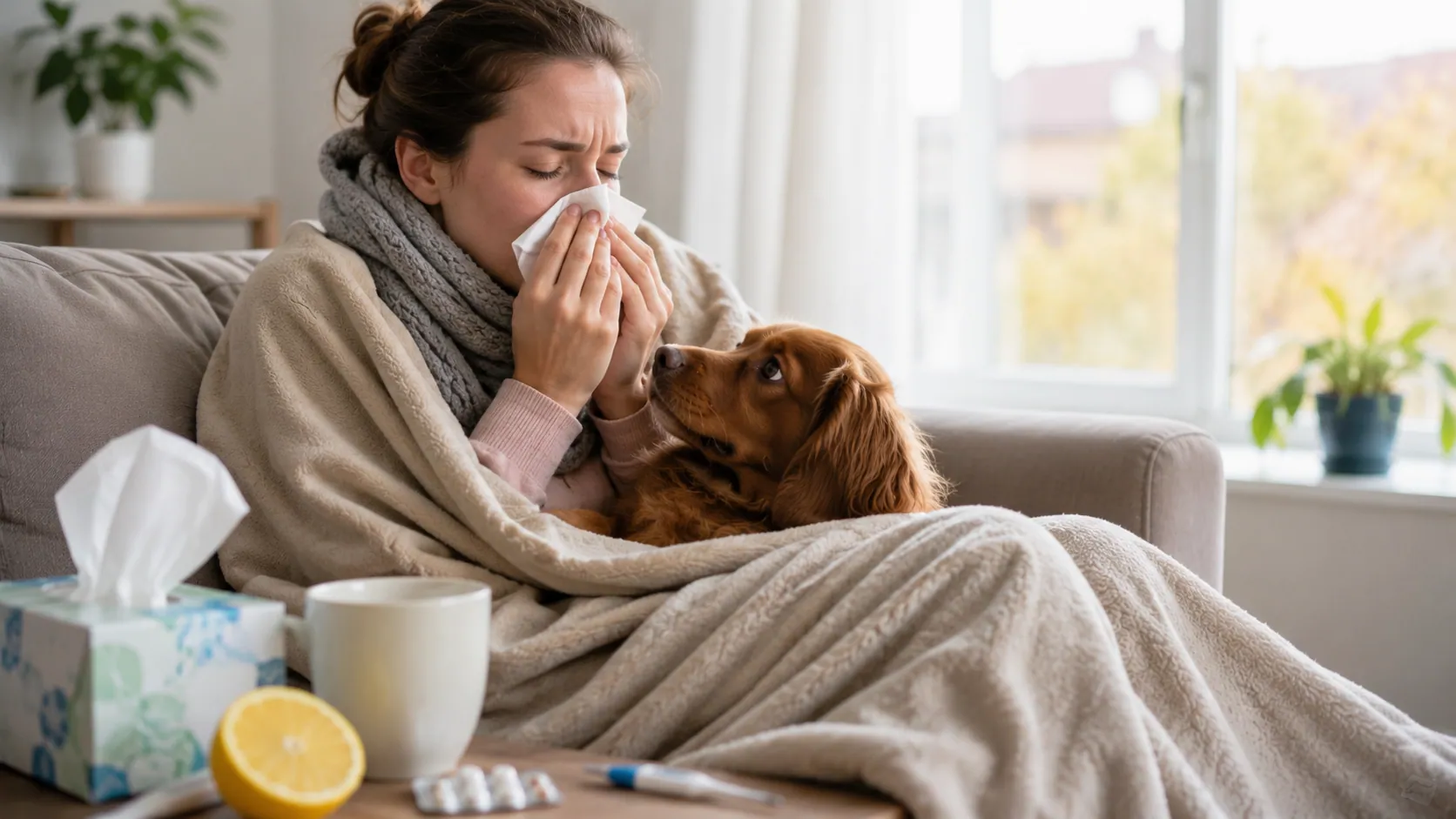
Can a dog catch the flu from a human? This is a common worry for pet parents, especially when they are coughing, sneezing, dealing with a fever, or resting at home with the flu while their dog stays close by. Many dogs love to cuddle when their owners feel unwell, so it is natural to wonder whether being sick around your dog could make them sick too.
The simple answer is that a dog is very unlikely to catch the regular human seasonal flu from a person. Human flu viruses usually spread between humans, while dogs have their own type of flu called canine influenza, often known as dog flu. These are not the same illness.
That does not mean dogs cannot get respiratory problems. A dog may still develop coughing, sneezing, tiredness, or a runny nose from dog flu, kennel cough, allergies, irritants, or another respiratory infection. So, if your dog starts acting sick while you have the flu, it does not automatically mean your dog caught your illness.
This dog flu guide will explain the difference between human flu and dogs, whether dogs can get human flu, what symptoms pet parents should watch for, how dog flu spreads, simple prevention tips, and when it is best to call a vet.
The Short Answer: Can Dogs Get Human Flu?
In most normal household situations, dogs do not catch seasonal human flu the same way people do. If you are sick with the flu, your dog may stay near you, sleep beside you, or lick your hand, but that does not mean the virus will easily infect them. Human influenza viruses are mainly adapted to spread from person to person, not from humans to dogs.
Dogs can get a type of flu, but it is usually canine influenza, also called dog flu. This is a different respiratory illness that spreads mostly between dogs. It can cause symptoms such as coughing, sneezing, nasal discharge, fever, low energy, and reduced appetite.
There have been rare cases in scientific research and disease surveillance where influenza viruses move between species. However, this is not the everyday risk most pet parents need to worry about when they have regular seasonal flu at home. For the average family, flu transmission to dogs from humans is considered very unlikely.
The practical takeaway is simple: your dog is much more likely to catch a dog respiratory illness from another dog at a boarding kennel, dog daycare, grooming salon, shelter, training class, or dog park than from your human flu. So, if you are asking, “Can my dog get sick from me?” the answer is usually no for regular human flu, but you should still use basic hygiene and watch your dog for signs of illness.
Human Flu vs Dog Flu: What Is the Difference?
Understanding human flu vs dog flu can make this topic much less confusing. The word “flu” is used for both people and dogs, but these illnesses are not exactly the same.
Human seasonal flu is a contagious respiratory illness caused by influenza viruses that mainly spread among people. It commonly causes symptoms such as fever, cough, sore throat, body aches, chills, fatigue, and sometimes a runny or stuffy nose. When someone in the home has the flu, the main concern is usually spreading it to other people.
Canine influenza, also called dog flu, is a contagious respiratory disease that affects dogs. It is usually linked to canine influenza strains such as H3N2 and H3N8. These strains are different from the regular seasonal flu viruses that commonly spread between humans.
So, while people can get human flu and dogs can get influenza in dogs, they are usually dealing with different flu viruses. Canine influenza is not the same as the common seasonal flu people get, and dog flu usually spreads from dog to dog, especially in places where many dogs are close together.
| Topic | Human Flu | Dog Flu |
| Main host | Humans | Dogs |
| Common spread | Person to person | Dog to dog |
| Typical symptoms | Fever, cough, body aches, fatigue | Cough, sneezing, runny nose, fever, low energy |
| Main concern for dog owners | Protecting family members | Protecting dogs in social settings |
For pet parents, the key point is simple: if you have the flu, your dog is very unlikely to catch your exact illness. But if your dog spends time around other dogs, they may be at risk for dog flu H3N2, dog flu H3N8, kennel cough, or another respiratory infection.
How Dogs Usually Catch Dog Flu
Dog flu spreads mainly from infected dogs, not from sick humans. When people ask how dogs catch dog flu, the most important thing to understand is that canine influenza spread usually happens in places where dogs are close to other dogs.
A dog with canine influenza can release tiny respiratory droplets when they cough, sneeze, bark, or breathe close to another dog. These droplets can reach nearby dogs directly, especially during nose-to-nose contact. Dog flu can also spread through contaminated items and surfaces, such as shared water bowls, food bowls, toys, leashes, collars, bedding, crates, and kennel surfaces.
This is why dog flu transmission is more likely in busy dog environments, including:
- Dog parks
- Boarding facilities
- Groomers
- Dog daycare centers
- Animal shelters
- Training classes
- Veterinary waiting rooms
The risk is higher when many dogs share the same space, especially if one dog is coughing or recently exposed to illness. For example, a healthy dog that visits a crowded dog park or boarding kennel may have more exposure risk than a dog that mostly stays at home.
This does not mean every social dog will get sick. It simply means dogs with frequent contact with other dogs have a higher chance of picking up dog respiratory illnesses, including boarding kennel dog flu, kennel cough, or other contagious infections. For pet parents, the safest approach is to watch for symptoms after social outings and avoid high-risk places if there is a known local outbreak.
Can Your Dog Get Sick When You Have the Flu?
If you are wondering, “Can my dog get sick when I have the flu?” the reassuring answer is that your dog is unlikely to catch your regular seasonal flu. Human flu viruses are mainly built to spread between people, not from humans to dogs. So, if you are coughing, sneezing, or resting in bed, your dog is usually not at high risk of catching the same flu virus from you.
However, your dog may still seem a little “off” when you are sick. Dogs are sensitive to changes in the home, and they often notice when their owner is tired, stressed, or not following the usual routine. Some common reasons for dog acting sick when owner is sick include less exercise, shorter walks, delayed feeding times, less play, more sleep in the house, or general stress in the environment.
Some dogs may also stay close to their sick owner and appear quieter than usual. This does not always mean the dog is ill. In some cases, it may simply be a reaction to your changed behavior. Many pet parents also wonder, can dogs sense illness? While dogs cannot diagnose the flu, they can often pick up on changes in smell, mood, movement, and daily routine.
It is also possible for a dog to develop unrelated respiratory symptoms at the same time by coincidence. For example, your dog could start coughing because of kennel cough, dog flu, allergies, dust, smoke, dry air, or another respiratory infection. That timing can make it feel like your dog caught the flu from you, even when the cause is different.
A helpful pet-parent tip is this: if you are sick and your dog starts coughing, do not automatically assume it came from you. Track the symptoms, note when they started, and call your vet if they continue, worsen, or come with low energy, fever, appetite loss, or breathing changes. This keeps you from worrying unnecessarily while still making sure your dog gets proper care if something more serious is going on.
Symptoms of Dog Flu Pet Parents Should Watch For
Dog flu symptoms can look mild at first, which is why pet parents may confuse them with a simple cough, allergies, or irritation from dust or dry air. In many cases, canine influenza symptoms affect the nose, throat, lungs, energy level, and appetite.
Common signs of dog flu may include persistent cough, sneezing, a dog runny nose, watery eyes, dog fever, tiredness, reduced appetite, and mild breathing changes. Some dogs may still eat and move around normally, while others may seem quieter, sleep more, or avoid play.
A dog with a respiratory infection may also sound congested or cough more after activity, excitement, or pulling on a collar. If your dog has been around other dogs recently and then starts dog coughing and sneezing, it is worth paying close attention.
More serious warning signs need faster veterinary care. Call your vet promptly if your dog has trouble breathing, blue or pale gums, a high fever, refuses water, seems extremely weak, or keeps getting worse instead of better. These symptoms can suggest a more serious dog respiratory infection or complications that should not be managed at home.
It is also important to remember that dog flu can look similar to kennel cough, allergies, pneumonia, bronchitis, irritant exposure, or other respiratory illnesses. Because these conditions can overlap, pet parents should avoid guessing the cause based only on symptoms. A veterinarian can check your dog’s breathing, temperature, exposure history, and overall condition to decide what care is safest.
Is It Human Flu, Dog Flu, Kennel Cough, or a Cold?
When a dog starts coughing, sneezing, or acting tired, it is easy to wonder whether they have the flu, a cold, or something more serious. Dogs do not get “colds” exactly the same way humans do, but they can get a dog respiratory infection that causes cold-like symptoms.
This is why it helps to compare the most common canine cough causes instead of guessing.
Canine influenza, or dog flu, may cause coughing, sneezing, fever, low energy, runny nose, watery eyes, and reduced appetite. It is more likely if your dog has recently been around many other dogs or there is a known local outbreak.
Kennel cough often causes a dry, harsh, honking cough. Many pet parents notice dog coughing after boarding, daycare, grooming, dog parks, shelters, or training classes. Some dogs with kennel cough still act fairly normal, while others may seem tired or uncomfortable.
Allergies can also look like mild respiratory illness. Dogs with allergies may have watery eyes, sneezing, itching, paw licking, or symptoms that appear during certain seasons. Unlike dog flu or kennel cough, allergies are not contagious.
Pneumonia is more serious and may cause deeper illness, fever, fast breathing, trouble breathing, weakness, and poor appetite. A dog with possible pneumonia should be checked by a vet quickly.
Irritation from smoke, dust, strong fragrances, air fresheners, cleaning chemicals, or dry air can also cause coughing or sneezing. This may happen suddenly after exposure to something in the home or environment.
| Symptom Clue | Possible Cause | What Pet Parents May Notice |
| Cough, fever, low energy, recent dog exposure | Canine influenza | Dog seems sick after daycare, boarding, or contact with other dogs |
| Dry, honking cough after social exposure | Kennel cough | Cough sounds harsh, especially after excitement or activity |
| Sneezing, watery eyes, itching, seasonal pattern | Allergies | Symptoms come and go, often with pollen, grass, dust, or mold |
| Fever, weakness, breathing difficulty | Pneumonia | Dog seems seriously unwell and may breathe faster or harder |
| Coughing after smoke, dust, perfume, or cleaners | Irritation | Symptoms start after exposure to a strong smell or airborne irritant |
The safest approach is not to decide on your own whether it is dog flu vs kennel cough, allergies, irritation, or pneumonia. If your dog’s cough lasts, gets worse, or comes with fever, low energy, appetite loss, or breathing trouble, call your vet for guidance.
What to Do If You Have the Flu and Live with a Dog
If you are sick with flu around your dog, you do not need to panic or avoid your pet completely. In most cases, your dog is unlikely to catch your seasonal flu. Still, good flu hygiene around dogs is smart because it helps protect everyone in the home and keeps your dog’s space clean and safe.
Wash your hands after coughing, sneezing, blowing your nose, or handling used tissues. Try not to cough or sneeze directly on your dog, especially if they like to sit close to your face. If you are wondering, “Can I cuddle my dog when sick?” the answer is usually yes, but keep it reasonable. Wash your hands first, avoid face-to-face coughing, and let your dog rest in a clean area.
It is also important to keep tissues, flu medicine, cough drops, lozenges, inhalers, decongestants, and other cold or flu products away from pets. Dogs may chew or swallow things that smell interesting, and many human medications can be dangerous for them. Never give your dog human flu medicine unless your veterinarian specifically tells you to.
Try to keep your dog’s normal routine as steady as possible. Feed them on schedule, make sure they have fresh water, and keep bathroom breaks regular. If you are too weak or feverish to walk your dog safely, ask a family member, neighbor, or trusted helper to take over short walks for a day or two.
You should also avoid sharing food, drinks, utensils, or bedding when hygiene is poor. This is less about your dog catching human flu and more about keeping household germs, medications, and mess away from your pet. The best approach to flu safety for pets is simple: use basic hygiene, keep risky products out of reach, and protect your dog’s routine while you recover.
Can Dogs Carry Flu Germs on Their Fur?
Many pet parents also wonder, can dogs carry flu germs on their fur after being close to a sick person? In most cases, a dog’s fur is not a common way flu spreads. Human flu usually spreads more easily through respiratory droplets when people cough, sneeze, talk, or touch contaminated surfaces and then touch their face.
That said, germs can temporarily land on surfaces, including dog fur, collars, leashes, blankets, bedding, toys, or food bowls. For example, if someone coughs into their hand and then pets the dog, or sneezes near the dog’s coat, small amounts of germs may be present for a short time. This does not mean your dog is infected, and it does not mean your dog is a major source of flu spread in the home.
Good pet hygiene during flu season is usually enough. Wash your hands after handling pets if someone in the house is sick, especially before eating or touching your face. Keep your dog’s bedding clean, wipe down commonly used leashes or collars when needed, and try not to let several sick family members cough or sneeze directly around the dog.
There is no need to panic or over-bathe your dog. Too many baths can dry out the skin and make your dog uncomfortable. A clean resting area, basic handwashing, and common-sense hygiene are usually the best approach when thinking about dog fur and viruses or flu germs on dog fur.
When Should You Call the Vet?
Knowing when to call a vet for dog flu can help you avoid both unnecessary panic and dangerous delays. A mild cough may not always be an emergency, but respiratory symptoms in dogs should be taken seriously when they last, worsen, or come with other signs of illness.
Call your vet if your dog has a cough lasting more than a day or two, a fever, loss of appetite, thick nasal discharge, low energy, or recent exposure to other dogs at boarding, daycare, shelters, grooming salons, dog parks, or training classes. You should also contact a vet quickly if your dog seems unusually tired or if the cough sounds deep, frequent, or uncomfortable.
Some symptoms need urgent attention. A dog breathing problem, such as fast breathing, struggling to breathe, noisy breathing, blue or pale gums, or extreme weakness, should be treated as serious. These signs may point to a more severe dog respiratory infection, pneumonia, or another condition that needs prompt care.
Certain dogs need faster veterinary guidance even if the symptoms seem mild at first. This includes puppies, senior dogs, flat-faced breeds such as Bulldogs, Pugs, and French Bulldogs, and dogs with heart disease, lung problems, immune issues, or other chronic health conditions. These dogs may have a harder time handling respiratory illness.
For possible canine influenza treatment, your vet may recommend a physical exam, temperature check, respiratory testing, rest, fluids, isolation from other dogs, or supportive care at home. In more serious cases, additional treatment may be needed.
It is also important to understand that antibiotics do not treat viruses like canine influenza. However, a vet may prescribe antibiotics if they suspect a secondary bacterial infection. Because sick dog symptoms can overlap with kennel cough, allergies, pneumonia, and other illnesses, the safest choice is to let your vet guide the next step instead of trying to diagnose or medicate your dog at home.
Can Humans Catch Dog Flu from Dogs?
Many pet parents also ask the reverse question: can humans catch dog flu from dogs? The reassuring answer is that this is not considered a normal risk. According to the CDC, there is no evidence that canine influenza viruses spread from dogs to people, and there has not been a single reported case of human infection with a canine influenza virus anywhere in the world.
This means that caring for a dog with canine influenza is not the same as caring for a person with human flu. Dog flu is mainly a dog-to-dog illness, so the bigger concern is usually keeping a sick dog away from other dogs, not worrying that the dog will give flu to the family.
Still, basic hygiene is a good habit whenever a pet is sick. Wash your hands after handling your dog, clean food bowls and water bowls, wash bedding, and keep your dog’s resting area comfortable. If your dog is coughing, sneezing, or has nasal discharge, avoid taking them to dog parks, daycare, boarding, grooming appointments, or training classes until your vet says it is safe.
People with weakened immune systems should be a little more cautious with any sick pet. If someone in the home is immunocompromised, pregnant, elderly, or medically fragile, they should ask their physician about general pet illness precautions. The overall dog flu human risk appears very low, but careful hygiene protects both people and animals in the home.
How to Prevent Dog Flu in Social Dogs
The best approach to dog flu prevention is to focus on where the real risk usually comes from: contact with other dogs. Social dogs are often happier and more active, but they may also have more chances to pick up contagious respiratory illnesses, especially in shared spaces.
If your dog goes to boarding, grooming, daycare, training classes, or group play areas, ask the facility about its cleaning and illness policies. A responsible facility should have a plan for separating sick dogs, disinfecting shared spaces, cleaning bowls and bedding, and asking owners not to bring dogs with coughing, sneezing, fever, or nasal discharge.
It is also smart to avoid dog parks or crowded dog areas during known local outbreaks. Dog daycare flu risk and dog park exposure can increase when many dogs share the same air, toys, water bowls, and close-contact play spaces. If you hear about coughing dogs in your area, keep your dog away from group settings until the risk settles.
At home and during travel, clean items your dog uses often, such as leashes, crates, bedding, toys, food bowls, water bowls, and travel bowls. In public spaces, avoid letting your dog share bowls or toys with unfamiliar dogs. If your own dog is coughing or seems unwell, keep them home and away from other dogs until your vet says it is safe.
You can also talk to your veterinarian about the canine influenza vaccine. The dog flu vaccine may be recommended for dogs that board, travel, attend daycare, visit groomers, compete in shows, go to dog parks, or spend time around many other dogs. It is not always necessary for every dog, so the decision should depend on your dog’s lifestyle, local exposure risk, health history, and your vet’s guidance.
In simple terms, the goal is not to isolate every dog from social life. It is to prevent dog flu by making smart choices: choose clean facilities, avoid sick dogs, stay alert during outbreaks, keep your dog’s items clean, and ask your vet whether a dog boarding vaccine or canine influenza vaccination makes sense for your pet.
Home Care Tips for a Dog with Mild Respiratory Symptoms
If your dog has mild coughing, sneezing, or a runny nose, the first step is to keep them rested, calm, and comfortable. Just like people, dogs often need quiet time when they are dealing with a respiratory issue. Limit rough play, long walks, running, and excitement until your dog is breathing normally and acting like themselves again.
Make sure your dog has fresh water available at all times. Good hydration can help keep them comfortable, especially if they have a mild fever, nasal discharge, or reduced appetite. If your dog refuses water, seems weak, or is not eating well, call your vet for advice.
A clean, calm, well-ventilated room can also help. Keep your dog away from smoke, dust, strong perfumes, air fresheners, harsh cleaning products, and heavy fragrances, because these can irritate the throat and make coughing worse. Soft bedding, a quiet resting space, and gentle supervision are often helpful parts of basic dog respiratory infection care.
If your dog coughs more when wearing a collar, try using a harness for walks instead. Pressure on the neck can sometimes make coughing worse, especially in dogs with throat irritation or a respiratory infection. Short bathroom breaks are usually better than long walks until your dog improves.
One of the most important sick dog comfort tips is to avoid giving human medicine. Do not use human cough, cold, or flu medicine unless your veterinarian specifically approves it. Many common human products can be unsafe for dogs, even if they seem mild.
If you are wondering what to do for dog flu or another contagious respiratory illness, keep your dog away from other dogs until your vet says it is safe. Avoid dog parks, daycare, grooming appointments, boarding facilities, training classes, and playdates. This helps protect other dogs and gives your pet time to recover.
Home care can support a dog with mild symptoms, but it should not replace veterinary care when symptoms continue, worsen, or include fever, breathing trouble, thick nasal discharge, extreme tiredness, or appetite loss.
Myths About Dogs and Human Flu
There are many dog flu myths online, and some of them can make pet parents worry more than they need to. The truth is that dogs can get respiratory infections, but regular human flu is not usually the main concern. Understanding the difference between fear and fact can help you protect your dog without panicking.
Myth: “My dog will definitely catch my flu.”
Fact: This is very unlikely with normal seasonal flu. Human flu viruses usually spread between people, not from humans to dogs. If you are sick, basic hygiene is still smart, but your dog is not expected to catch your flu the same way another person might.
Myth: “Dog flu and human flu are the same.”
Fact: They are different illnesses. Human flu affects people, while dog flu, or canine influenza, affects dogs. Canine influenza usually spreads from dog to dog, especially in social settings like boarding facilities, daycare centers, shelters, grooming salons, and dog parks.
Myth: “If my dog coughs while I am sick, I gave it the flu.”
Fact: A coughing dog does not automatically mean flu transmission happened from you to your pet. The cough may be caused by kennel cough, allergies, smoke, dust, strong odors, irritation, pneumonia, or canine influenza. This is one of the most common dog cough myths, and it can lead pet parents to overlook other possible causes.
Myth: “Human flu medicine can help dogs.”
Fact: Many human medicines can be dangerous for dogs. Never give human medicine for dog flu, cough, fever, congestion, or cold symptoms unless your veterinarian specifically approves it. Some ingredients that are common in human flu products may be harmful or even toxic to pets.
Myth: “Indoor dogs cannot get respiratory infections.”
Fact: Indoor dogs can still be exposed to illness. A dog may come into contact with germs through other dogs, visitors, grooming visits, boarding, vet clinics, shared spaces, contaminated items, or short social outings. Even a mostly indoor dog can develop a respiratory infection if they have the right exposure.
The most helpful dog flu facts are simple: regular human flu is unlikely to infect your dog, dog flu is usually spread between dogs, and any ongoing cough, fever, appetite loss, or breathing change should be taken seriously. When in doubt, a quick call to your vet is safer than guessing at home.
Quick Checklist: What Pet Parents Should Do During Flu Season
A simple dog flu season checklist can help you stay calm and practical when someone in the home is sick or your dog starts showing respiratory symptoms. Most of the time, prevention comes down to hygiene, routine, observation, and knowing when to call the vet.
If you have the flu, wash your hands often, especially after coughing, sneezing, blowing your nose, or touching used tissues. Try not to cough directly on your dog, and keep all human medicines, tissues, cough drops, and flu products out of reach. Even when you feel unwell, do your best to maintain your dog’s normal feeding, walking, bathroom, and sleep routine. This kind of sick owner pet care helps your dog feel secure while you recover.
If your dog is coughing, limit contact with other dogs until you know what is going on. Watch your dog’s appetite, energy level, breathing, temperature signs, nasal discharge, and overall behavior. If the cough lasts, gets worse, or comes with fever, low energy, appetite loss, thick discharge, or breathing trouble, call your vet. A basic dog respiratory illness checklist can help you explain symptoms clearly when speaking with the clinic.
If your dog is social, take extra care during flu season or known local outbreaks. Ask your veterinarian whether canine influenza vaccination makes sense for your dog’s lifestyle. Avoid high-risk dog gatherings if many dogs in the area are coughing or sick. Choose boarding, grooming, and daycare facilities that have clear cleaning rules, illness policies, and good ventilation.
For easy reference:
| Situation | What to Do |
| If you have the flu | Wash hands often, avoid coughing on your dog, keep medicines away, maintain your dog’s routine |
| If your dog is coughing | Limit contact with other dogs, watch symptoms, call your vet if signs persist or worsen |
| If your dog is social | Ask about the canine influenza vaccine, avoid outbreaks, choose clean boarding and daycare facilities |
Good flu season dog care is not about fear. It is about using common sense, protecting your dog from real exposure risks, and getting veterinary help when symptoms do not look normal.
FAQs
Can a dog catch the flu from a human?
Usually, no. Dogs are very unlikely to catch normal seasonal human flu from a person. Human flu viruses mainly spread between people, not from humans to dogs. However, dogs can get their own type of flu called canine influenza, which usually spreads from infected dogs to other dogs.
Can I cuddle my dog if I have the flu?
In most cases, yes, you can cuddle your dog if you have the flu, but use basic hygiene. Wash your hands, avoid coughing or sneezing directly on your dog, and keep used tissues away from them. If you are very sick, it may be better to let your dog rest nearby instead of having close face-to-face contact.
What happens if my dog starts coughing while I have the flu?
If your dog starts coughing while you have the flu, do not automatically assume your dog caught it from you. A dog coughing while the owner is sick may have kennel cough, dog flu, allergies, irritation from dust or smoke, or another respiratory infection. Call your vet if the cough continues, gets worse, or comes with fever, low energy, appetite loss, thick nasal discharge, or breathing changes.
Can dogs get sick from humans in general?
Some illnesses can occasionally move between humans and animals, which is sometimes called reverse zoonosis. However, regular seasonal flu is not considered a common risk for dogs. Good hygiene is still smart during any illness, especially handwashing, cleaning shared spaces, and keeping medicines or tissues away from pets.
Is dog flu dangerous?
Dog flu is not always dangerous, and many dogs recover with rest and supportive care. However, canine influenza risk can be higher for puppies, senior dogs, flat-faced breeds, and dogs with heart, lung, or immune problems. A vet should check any dog with breathing trouble, high fever, extreme weakness, worsening symptoms, or a cough that does not improve.
Should my dog get a flu shot?
Dogs do not get the human flu shot. Some dogs may benefit from the canine influenza vaccine, especially if they board, travel, attend daycare, visit groomers, go to dog parks, or spend time around many other dogs. Ask your vet whether a dog flu shot makes sense based on your dog’s lifestyle, health, location, and exposure risk.
Conclusion
So, can a dog catch the flu from a human? In most normal household situations, a dog is very unlikely to catch the regular human seasonal flu from a person. Human flu mainly spreads between people, not from owners to dogs.
Dogs can get canine influenza, but this is a different illness that usually spreads from dog to dog, especially in social places like boarding facilities, daycare centers, groomers, shelters, training classes, and dog parks. That is why dog flu prevention should focus more on dog-to-dog exposure than fear of cuddling your pet while you are sick.
The safest approach is simple: use good hygiene when you are sick, wash your hands often, avoid coughing directly on your dog, and keep human medicines, tissues, cough drops, and flu products safely out of reach. Watch your dog for symptoms such as coughing, sneezing, fever, low energy, appetite loss, or breathing changes. During local outbreaks, avoid unnecessary contact with other dogs, especially if your dog is social or medically vulnerable.
Being careful with dogs and human flu is smart, but pet parents do not need to panic every time they get sick. With basic hygiene, safe medicine storage, sensible sick dog care, and a quick call to the vet when symptoms are concerning, you can protect your dog while keeping your home calm and safe.
Disclaimer:
This article is for general informational purposes only and is not a substitute for professional veterinary advice, diagnosis, or treatment. Every dog’s health, risk level, and symptoms can vary. If your dog is coughing, acting sick, having breathing trouble, or showing concerning symptoms, contact a licensed veterinarian for guidance.












Leave a Reply