

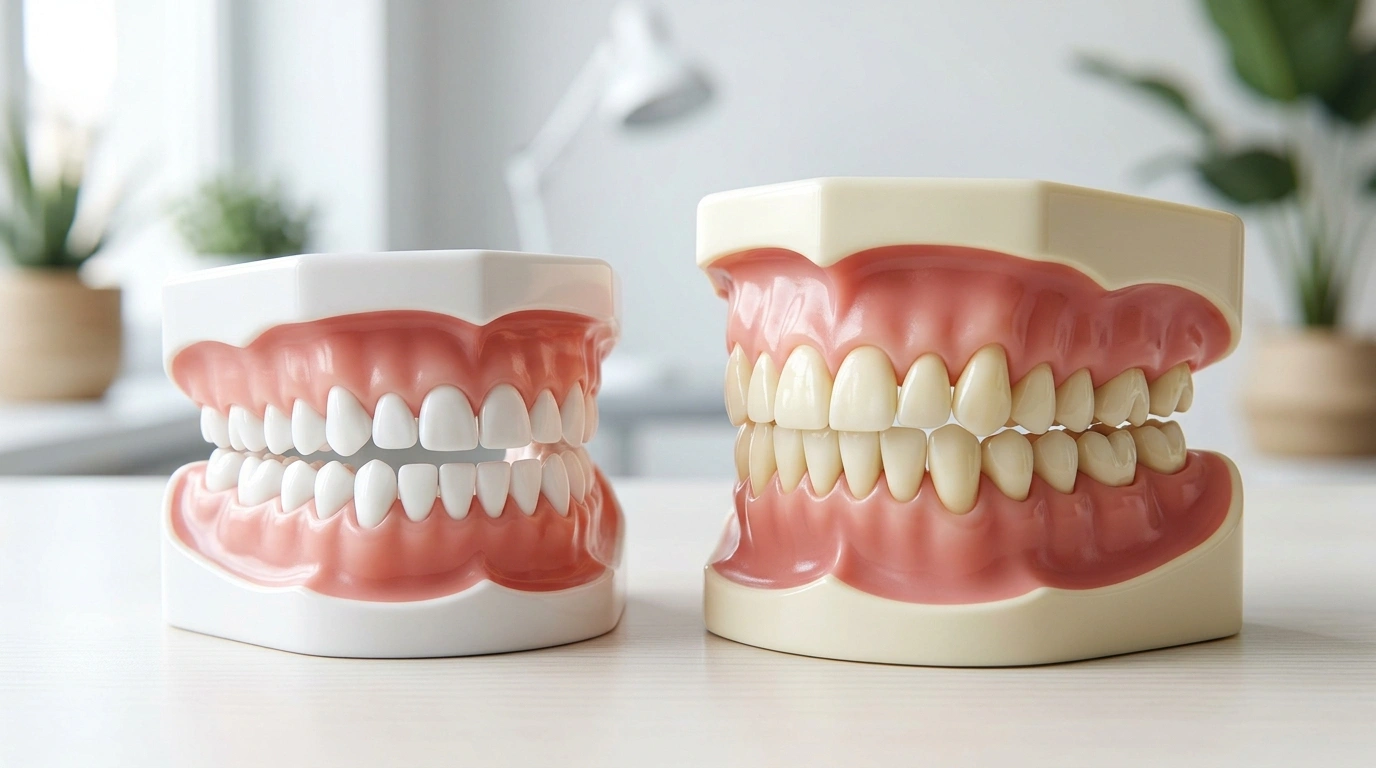
What is the difference between milk teeth and permanent teeth? The simplest answer is that milk teeth are the first set of teeth a child gets, while permanent teeth are the second set that are meant to last through adulthood. Milk teeth are usually smaller, whiter, and fewer in number, while permanent teeth are generally larger, slightly darker in color, and more durable over time. Children usually have 20 primary teeth, and adults usually have 32 permanent teeth, including wisdom teeth. Baby teeth often begin erupting around 6 months, while the transition to permanent teeth commonly starts around age 6 and continues into the teen years.
For many parents, this topic is not just about terminology. It is about understanding why baby teeth matter, when permanent teeth erupt, and whether changes in size, shape, enamel, roots, alignment, and color are normal. A child’s dental development affects chewing, speech development, jaw growth, and the way permanent teeth come into place later. That is why learning the difference between milk teeth, baby teeth, primary teeth, and adult teeth is more useful than it first seems.
What Are Milk Teeth and What Are Permanent Teeth?
Milk teeth, also called baby teeth, primary teeth, or deciduous teeth, are the first teeth that appear in childhood. These teeth begin to erupt through the gumline in infancy and are usually all present by around age 3. Their job is not temporary in the sense of being unimportant. They help children eat, speak, smile comfortably, and keep the right amount of space in the jaw for future permanent teeth.
Permanent teeth, often called adult teeth, are the second and usually final set of teeth. They begin replacing primary teeth at about age 6, and most permanent teeth come in by about age 12 or 13, with wisdom teeth sometimes erupting between 17 and 21 years. Permanent teeth are designed for long-term function, so they have structural differences that make them better suited for a lifetime of biting, chewing, and maintaining occlusion.
A helpful way to think about it is this: primary dentition is the starter set that supports early growth, while permanent dentition is the mature set that takes over as a child grows. That is why the difference between primary and permanent teeth is not only about age. It is also about function, anatomy, strength, and developmental timing.
Milk Teeth vs Permanent Teeth at a Glance
The fastest way to understand milk teeth vs permanent teeth is to compare them side by side.
| Feature | Milk Teeth / Primary Teeth | Permanent Teeth / Adult Teeth |
|---|---|---|
| Total number | 20 | 32 including wisdom teeth |
| Eruption begins | Around 6 months | Around age 6 |
| Color | Usually whiter | Usually slightly more yellow |
| Size | Smaller crowns | Larger crowns |
| Enamel | Thinner enamel | Thicker enamel |
| Roots | Roots later undergo resorption | Roots are built for long-term support |
| Role | Help with speech, chewing, and holding space | Designed for long-term use |
| Lifespan | Temporary | Intended to be permanent |
This comparison helps answer several common long-tail searches at once, such as are baby teeth smaller than permanent teeth, why are baby teeth whiter than permanent teeth, and difference in enamel between milk teeth and permanent teeth. The basic pattern is consistent across pediatric dental references: milk teeth are more delicate and transitional, while permanent teeth are more robust and built for adulthood.
Number of Teeth: How Many Milk Teeth and Permanent Teeth Do Humans Have?
One of the clearest differences is the number of teeth. Children normally develop 20 milk teeth. These include 4 central incisors, 4 lateral incisors, 4 canines, and 8 molars. There are no premolars in the primary dentition.
Adults normally have 32 permanent teeth if all teeth erupt, including 4 wisdom teeth. The permanent set includes incisors, canines, premolars, and molars. Some adults have only 28 permanent teeth if their wisdom teeth never erupt or are removed. This explains why a child’s mouth and an adult’s mouth look structurally different even beyond simple size.
So, when people ask how many milk teeth does a child have or how many permanent teeth does an adult have, the standard answer is 20 and 32. That number difference is one reason permanent teeth need more space and why proper alignment and dental arch space matter so much during growth.
Size, Shape, and Color Differences
If you place a milk tooth and a permanent tooth side by side, the visual difference is often obvious. Milk teeth are typically smaller, rounder, and appear more delicate. Permanent teeth are bigger, broader, and more defined in shape. Newly erupted adult incisors may even show mamelons, which are the small 3 little ridges sometimes seen on the biting edge. These usually wear down with time.
Another question parents ask is: why are permanent teeth yellower than milk teeth? In most cases, this is normal. Baby teeth often look very white, while permanent teeth tend to look a little creamier or more yellow because of differences in enamel thickness and the dentin underneath. So if a child’s newly erupted front teeth look darker than the baby teeth beside them, that does not automatically mean something is wrong.
Permanent molars also tend to have deeper grooves and valleys on the chewing surface. Those features are useful for breaking down food, but they can also make teeth harder to clean. That is one reason long-tail questions like why do adult molars have deeper grooves than baby teeth matter in real life, not just for SEO.
Enamel, Strength, and Why Baby Teeth Decay Faster
A major structural difference lies in the enamel. Primary teeth have thinner enamel and thinner layers of supporting tooth material, which means decay may spread more quickly once a cavity starts. Permanent teeth generally have thicker enamel, making them more durable over time. That is why questions like why do milk teeth have thinner enamel and why are milk teeth more prone to decay are so common.
This does not mean milk teeth are unimportant or disposable. In fact, because primary teeth are smaller and have less protective structure, they may need fast attention if there is tooth decay, visible damage, or pain. Cavities, bacteria, sugary snacks, and acidic drinks can affect both types of teeth, but the thinner structure of baby teeth means problems can sometimes progress faster.
A useful practical takeaway is simple: good oral hygiene matters from the beginning. Regular brushing and flossing, a balanced diet, and preventive visits help protect both primary and permanent teeth. Parents sometimes ask, do milk teeth require fillings or why fill baby teeth if they fall out anyway. The answer is that treatment can still matter because pain, infection, difficulty eating, and early tooth loss can affect a child’s comfort and future dental development.
Roots, Shedding, and How Permanent Teeth Replace Baby Teeth
One of the most fascinating differences between baby teeth and adult teeth is what happens below the surface. Milk teeth are meant to fall out, but they do not simply “drop” for no reason. Their roots gradually undergo root resorption, meaning the roots break down as permanent teeth push upward. This natural process is why a child’s tooth may suddenly feel loose before it comes out.
Permanent teeth behave differently. Their roots are intended to remain stable for long-term use. They do not normally loosen and shed as part of healthy development. This is one of the clearest biological answers to the question what is the difference between milk teeth and permanent teeth. Milk teeth are temporary and designed to be replaced. Permanent teeth are built to stay.
Eruption Timeline: When Milk Teeth Come In and When Permanent Teeth Erupt
Timing is one of the biggest concerns for parents. In general, the first milk teeth erupt at around 6 months. Most children have a full set of 20 primary teeth by about age 3. Later, the transition to permanent teeth often starts around age 6, which is why many families notice loose teeth and newly erupted adult teeth around the early school years.
Most permanent teeth erupt between ages 6 and 12 or 13, though wisdom teeth may not appear until 17 to 21. This long transition period is sometimes called the mixed dentition stage, because children have both baby teeth and permanent teeth at the same time. That overlap is completely normal and explains why the mouth can look uneven for a while.
Here is a simple timeline:
- Around 6 months: first baby teeth often appear
- By age 3: most children have all 20 primary teeth
- Around age 6: baby teeth often start falling out, and the first permanent teeth appear
- By age 12 or 13: most permanent teeth are in place except wisdom teeth
- Age 17 to 21: wisdom teeth may erupt
This section helps answer several search questions at once, including when do baby teeth usually come in, when do milk teeth start falling out, when do permanent teeth erupt, and what age do wisdom teeth erupt.
Why Milk Teeth Matter Even Though They Fall Out
Many people assume that milk teeth are not very important because they are temporary. That idea is misleading. Baby teeth help children chew, learn speech, support normal jaw and facial development, and maintain the right amount of space for permanent teeth. They also support confidence, comfort, and everyday function.
A good real-world example is early tooth loss. If a child loses a primary molar too soon because of injury or decay, nearby teeth may drift into that empty space. Later, the permanent tooth may have less room to erupt properly. That is why dentists sometimes use a space maintainer after the early loss of a baby tooth. The role of primary teeth as placeholder teeth is one of the strongest reasons they should be protected.
So when parents ask do baby teeth affect permanent teeth or why are primary teeth important for speech and eating, the answer is yes, they do matter a great deal. Baby teeth are small, but their job is big.
Mixed Dentition, 6-Year Molars, and “Shark Teeth”
A topic many competitor pages only touch lightly is the mixed dentition stage. This is the period, usually from about age 6 to 13, when a child has both primary and permanent teeth in the mouth. This stage can look messy. Some teeth seem larger, some look yellower, and the mouth may appear crowded even when development is normal.
One especially important milestone is the eruption of the first permanent molars, often called 6-year molars. These teeth usually come in behind the existing baby molars rather than replacing a tooth right away. Because of that, some parents do not realize they are permanent. Keeping these teeth clean matters because they are meant to last for decades.
Another parent concern is shark teeth, meaning permanent teeth erupt behind baby teeth before the baby teeth fall out. This can happen during normal development, especially around the lower front teeth. Sometimes the baby tooth loosens and falls out on its own. In other situations, a dentist may want to check whether there is delayed shedding, crowding, or a need for intervention. That makes questions like can permanent teeth grow behind baby teeth and what are shark teeth in children very relevant.
What Happens If a Baby Tooth Falls Out Too Early?
When a baby tooth comes out at the normal time, it is usually part of healthy growth. But early loss of baby teeth is different. A tooth lost too soon because of decay, trauma, or extraction can reduce the available dental arch space. Over time, neighboring teeth may move into the gap, increasing the chance of crowding, crooked teeth, or difficult eruption of the permanent successor.
This is where concepts like space maintenance become important. A dentist may recommend a space maintainer to preserve room for the permanent tooth. Not every child needs one, but the underlying idea is simple: primary teeth help guide permanent teeth into position. If that guide is removed early, the path can become less predictable.
That is why long-tail queries such as what happens if baby teeth are lost too early and space maintainer after early loss of baby tooth deserve a full answer in a strong article on this topic. They connect the comparison between tooth types to a real parent pain point.
Do Baby Teeth Need Fillings and Dental Treatment?
A common misconception is that there is no point treating baby teeth because they will fall out anyway. In reality, untreated cavities in primary teeth can cause pain, trouble eating, sleep disruption, infection, and loss of important space for permanent teeth. So the question do milk teeth require fillings is not trivial. In many cases, treatment can protect comfort and development.
There is no one-size-fits-all answer because treatment depends on the child’s age, the location of the tooth, the amount of damage, and how soon the tooth is expected to exfoliate. But the broad principle is clear: baby teeth deserve care. A tooth being temporary does not make it unimportant.
When Should a Child First See a Dentist?
Another useful question around this topic is when should a child first see a dentist. The American Dental Association says a child should visit a dentist by the first birthday or within 6 months after the first tooth erupts. That early visit helps parents learn how to care for erupting teeth and spot potential concerns early.
This guidance also supports preventive care during the entire transition from milk teeth to permanent teeth. Regular dental visits can help monitor eruption, look for cavities, assess hygiene, and address concerns such as delayed eruption, crowding, or early tooth loss.
How to Care for Milk Teeth and Permanent Teeth at Home
The best home care advice works for both sets of teeth. Brush twice daily, floss where teeth touch, limit sugary and acidic drinks, and encourage a diet that supports healthy development. Parents should also watch for changes in the gumline, tooth color, or unusual pain. Good habits started during the primary dentition stage often continue into the permanent dentition stage.
For children in the mixed dentition years, supervision is especially useful. Newly erupted permanent teeth may sit a little lower than surrounding baby teeth at first, and the deeper grooves in molars can make them easier to miss while brushing. A simple routine and regular dental checkups do a lot of work here.
Quick FAQ About Milk Teeth vs Permanent Teeth
Are milk teeth and baby teeth the same?
Yes. Milk teeth, baby teeth, and primary teeth refer to the same first set of teeth.
Why are permanent teeth more yellow than baby teeth?
Permanent teeth usually look slightly darker or creamier because of their structure and the dentin under the enamel.
How many milk teeth and permanent teeth are there?
Children usually have 20 primary teeth, and adults usually have 32 permanent teeth, including 4 wisdom teeth.
What are mamelons on permanent teeth?
They are the small ridges, often 3 little ridges, seen on newly erupted incisors. They usually wear down over time.
Can permanent teeth grow behind baby teeth?
Yes, this can happen and is often called shark teeth. It can be normal, but a dentist should assess it if the baby tooth stays firm or the area looks crowded.
Conclusion
So, what is the difference between milk teeth and permanent teeth? Milk teeth are the first, smaller, whiter, temporary set that help children eat, speak, and hold space in the mouth. Permanent teeth are the larger, stronger, long-term set that gradually replace them and usually serve for life. The difference involves count, size, color, enamel, roots, eruption timing, and overall function. Children typically have 20 primary teeth, while adults usually have 32 permanent teeth.
The most important takeaway is that baby teeth matter. They are not “just temporary.” They guide permanent teeth into position, support normal development, and deserve proper care from the start. If a child has pain, early tooth loss, delayed eruption, or permanent teeth erupting in unusual positions, it is worth getting professional advice early.
Disclaimer: This article is for general dental and informational purposes only. Tooth development and dental conditions may vary between individuals. Always consult a qualified dentist for personalized advice and care.














Leave a Reply