

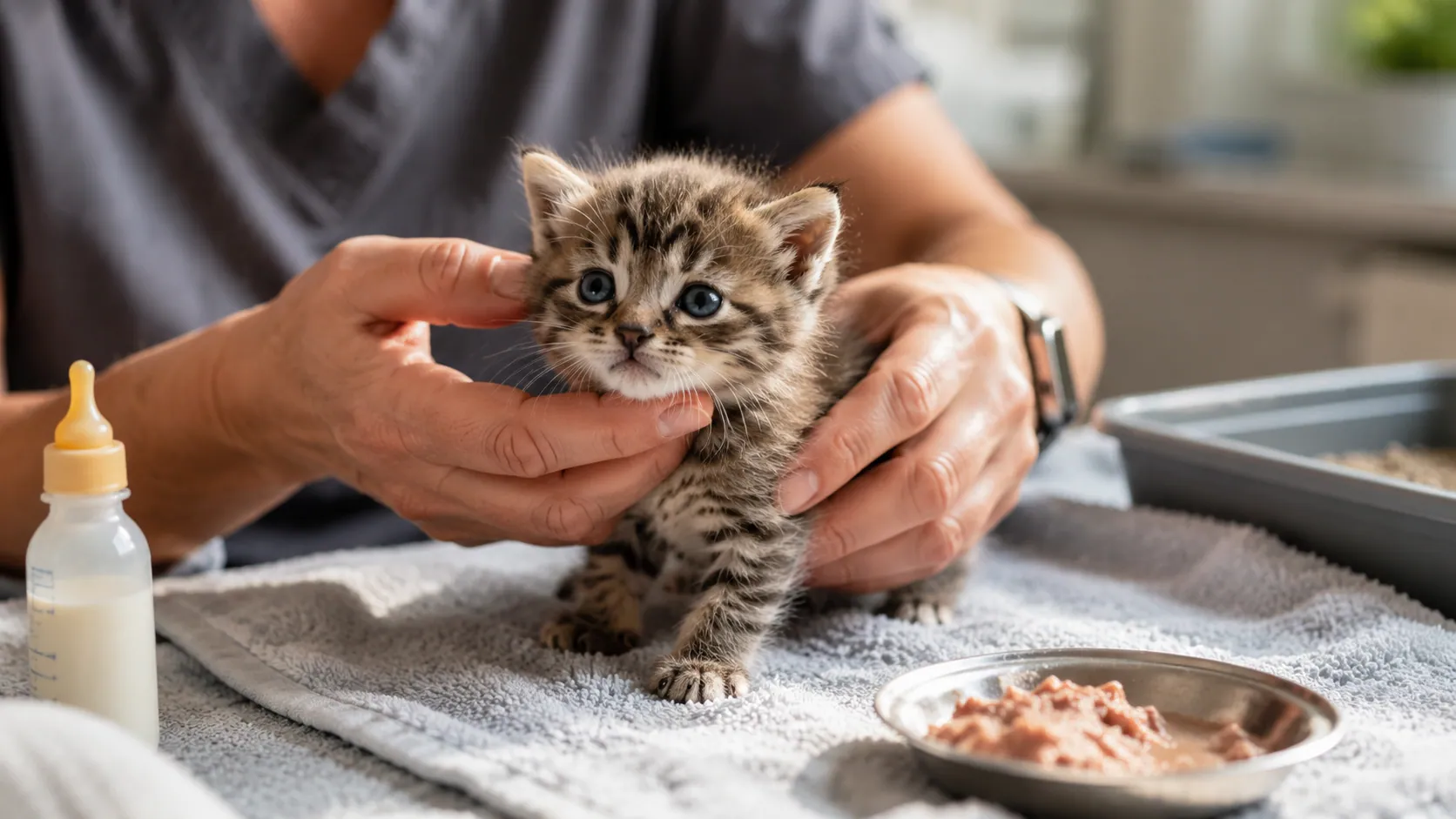
How to tell the age of a kitten is one of the first things you need to know when you find, adopt, rescue, or foster a young cat. A kitten’s age affects almost everything: what it can eat, whether it needs warmth, whether it can use a litter box, when it should see a veterinarian, and whether it is ready for adoption.
The tricky part is that kittens grow quickly, and size alone can be misleading. A tiny kitten may be older but underweight, while a healthy, well-fed kitten may look bigger than expected. The best way to estimate kitten age is to compare several clues together, including eyes, ears, teeth, weight, movement, feeding ability, and behavior.
This kitten age guide will walk you through a practical kitten age chart, explain how to tell a kitten’s age by teeth and weight, and help you understand what to do if you have a found kitten and do not know how old it is.
Quick Answer: How Can You Tell the Age of a Kitten?
The easiest way to tell a kitten’s age is to look at several developmental milestones together. A newborn kitten usually has closed eyes, folded ears, no teeth, and very limited movement. A kitten around 2 weeks old often has open eyes and unfolding ears. Around 3 weeks, many kittens begin showing baby teeth and taking wobbly steps. By 4 weeks, they may start eating soft food or gruel. By 7–8 weeks, many kittens are fully weaned, playful, using the litter box, and starting to look like a small version of an adult cat.
In simple terms, if the kitten has closed eyes, it is probably under 2 weeks old. If it has tiny teeth and wobbly walking, it may be around 3–4 weeks old. If it is running, playing, eating wet food, and using the litter box, it is likely closer to 6–8 weeks old.
Still, no single sign is perfect. The most accurate estimate comes from comparing kitten teeth, eyes, ears, weight, feeding stage, and behavior together.
Kitten Age Chart by Week
A kitten age chart gives you a quick way to compare visible signs. Use this as a general guide, not an exact diagnosis, because health, nutrition, and breed size can affect growth.
| Kitten Age | Physical Clues | Teeth | Movement | Feeding and Care |
| Newborn | Eyes closed, ears folded, tiny body, umbilical cord may be present | No teeth | Cannot walk | Needs warmth, kitten formula, and bathroom stimulation |
| 1 week old | Eyes closed or starting to open, ears still low | No teeth | Crawls or scoots slightly | Bottle feeding, warmth, daily weight checks |
| 2 weeks old | Eyes usually open, ears beginning to unfold | Usually no teeth yet | More alert, crawling | Still needs kitten formula |
| 3 weeks old | Ears more upright, blue eyes, more alert face | Baby incisors may appear | Wobbly walking | May begin litter box introduction |
| 4 weeks old | More stable body, stronger legs | Canine teeth may appear | Walking, playing, exploring | Start weaning with gruel or wet kitten food |
| 5–6 weeks old | Active and more coordinated | Premolars may come in | Running, climbing, pouncing | Wet food, litter training, socialization |
| 7–8 weeks old | Looks like a small cat | Most or all baby teeth | Playful and independent | Fully weaned, litter box use, vet/adoption milestones |
| 9–12 weeks old | Bigger, stronger, very active | Permanent teeth may begin later | Confident play and climbing | Vaccines, deworming, routine kitten care |
This chart works best when you combine it with the detailed signs below. For example, a kitten that weighs around 1 pound may be about 4 weeks old, but if it is underfed, sick, or orphaned, weight may not match its real age.
How to Tell a Kitten’s Age by Eyes, Ears, Teeth, and Weight
The most reliable home estimate comes from looking at multiple age clues. Eyes and ears are especially useful for very young kittens, while teeth become more helpful as the kitten gets older.
Eyes and Ears
Kittens are born with closed eyes. If a kitten’s eyes are completely shut and the eyelids look sealed, the kitten is likely very young, often under 2 weeks old. Many kittens begin opening their eyes around 6–10 days, and their eyes are often fully open around 2 weeks.
Most young kittens have baby blue eyes at first. This does not always mean the kitten is newborn. Eye color can stay blue for several weeks before the adult eye color starts to appear, often around 2 months.
Ears are another helpful clue. A newborn kitten’s ears are usually folded and close to the head. Around the first week, the ears begin to unfold. By about 3 weeks, the ears are usually more upright, giving the kitten a more alert look.
Teeth
If you want to know how to tell a kitten’s age by teeth, start by checking whether any teeth are visible. Newborn kittens and very young kittens usually have no teeth. Around 3 weeks, tiny baby teeth, also called deciduous teeth or milk teeth, begin to come in. The first teeth are often the small front teeth, called incisors.
Around 4 weeks, the sharper canine teeth may start to appear. Between 4–6 weeks, premolars often begin coming in. By around 7–8 weeks, many kittens have most or all of their baby teeth.
Permanent teeth appear later, often starting around 12 weeks. So, if a kitten is getting adult teeth, it is older than the tiny newborn-to-8-week stage.
Weight
Many people search for how to tell a kitten’s age by weight, and weight can be useful. A newborn kitten may weigh around 3–5 ounces. Around 1 week, some kittens are close to 8 ounces. Around 4 weeks, a kitten may be near 1 pound. Around 8 weeks, many kittens are close to 2 pounds, and by 12 weeks, some may be around 3 pounds.
A healthy kitten may gain about 7–15 grams per day, but growth is not always perfect. Weight should be treated as a clue, not a final answer.
Why Weight Alone Can Be Misleading
Weight is helpful, but it is not always accurate for estimating kitten age. A kitten that looks tiny may not be newborn. It may be older but underweight, malnourished, sick, dehydrated, or affected by fleas or parasites.
This is especially common with an orphan kitten or a rescued kitten that has not had steady access to its mother’s milk. A kitten with poor nutrition may weigh less than expected but still have older signs, such as teeth, upright ears, or walking ability.
Breed size and genetics can also affect weight. Some kittens are naturally larger or smaller than others. That is why teeth are often more reliable than weight, especially after the first few weeks.
The best approach is to ask: Do the eyes, ears, teeth, movement, feeding ability, and weight all point to the same age range? If not, a veterinarian assessment is the safest way to estimate age and check the kitten’s health.
Movement, Feeding, and Litter Box Clues by Age
A kitten’s behavior can tell you a lot about its age. Very young kittens cannot walk, eat solid food, or use the litter box independently. As they grow, their movement and independence improve quickly.
Movement and Play
A newborn kitten mostly sleeps, nurses, and wiggles close to the mother cat. Around 2 weeks, kittens may crawl or scoot more actively. Around 3 weeks, many kittens begin taking wobbly steps. They may look unsteady, but this is a normal stage of development.
By 4 weeks, kittens usually become more curious. They may start exploring, pawing at littermates, and showing early play behavior. By 5–6 weeks, they are often running, climbing, scratching, pouncing, and playing more confidently.
If a kitten is walking but still clumsy, it may be around 3–4 weeks old. If it is climbing, chasing toys, and playing like a tiny cat, it is likely older.
Feeding and Weaning
Feeding ability is one of the most important age clues. A very young kitten needs kitten formula or mother’s milk. It should not be given cow’s milk, which can cause digestive problems and does not meet a kitten’s nutritional needs.
Around 4 weeks, many kittens begin the weaning process. This often starts with a soft mixture of kitten formula and wet kitten food, sometimes called gruel. At first, they may make a mess and step in the food, but they gradually learn to lap and chew.
By 7–8 weeks, many kittens are fully weaned and eating wet food or kitten food independently. If a kitten is eating on its own, drinking water, and gaining weight well, it is probably not a newborn.
Litter Box and Independence
Very young kittens cannot pee or poop on their own and need their mother, or a caregiver, to stimulate them. Around 3–4 weeks, kittens often begin learning to use a shallow litter box. For very young kittens, non-clumping litter is safer because curious kittens may taste or step in the litter.
By 6–8 weeks, most kittens are much more independent. They can usually eat, play, groom, and use the litter box with less help.
What to Do If You Found a Kitten and Don’t Know Its Age
If you found a kitten outside, do not rush to assume it has been abandoned. The mother cat may be nearby searching for food or moving the litter. If the kittens are warm, quiet, clean, and in a safe place, it may be best to observe from a distance for a while to see whether the mother returns.
However, you should act quickly if the kitten is cold, weak, injured, constantly crying, covered in fleas, struggling to breathe, or in immediate danger. In those cases, contact a local rescue, animal shelter, or emergency vet for guidance.
Before feeding a found kitten, try to estimate its age. A newborn may need warmth, bottle feeding, kitten formula, and bathroom stimulation. An older kitten may be able to eat wet food and use the litter box.
A simple found kitten checklist looks like this: check whether the kitten is warm, look for the mother cat, estimate the age using eyes and teeth, avoid cow’s milk, keep the kitten safe, and call a veterinarian or rescue if you are unsure.
As many rescuers say, “Age determines care.” The wrong food, temperature, or feeding method can be dangerous for a very young kitten.
Emergency Red Flags and Common Age-Guessing Mistakes
Some kitten situations need urgent help. A kitten should see a vet quickly if it has a cold body, limpness, labored breathing, severe diarrhea, dehydration, pale gums, swollen eyes, eye discharge, heavy fleas, wounds, refusal to eat, or no weight gain.
Very young kittens are fragile because they cannot regulate their body temperature well. Feeding a cold kitten too quickly can be risky, so warmth and professional guidance matter.
There are also common mistakes people make when guessing a kitten’s age. One mistake is judging only by size. Another is assuming blue eyes always mean the kitten is newborn. Kittens can keep blue eyes for several weeks. Some people also give cow’s milk, use unsafe flea products, or separate kittens from the mother too early.
Another mistake is using clumping litter too soon. Young kittens explore with their mouths, so non-clumping litter is usually safer during early litter training.
If you are unsure, it is always better to get a veterinary checkup. A vet can estimate age, check hydration, look for parasites, and help create a feeding plan.
When Is a Kitten Ready for Adoption, Vaccines, and Spay/Neuter?
After you estimate a kitten’s age, the next question is often whether it is ready for adoption, vaccines, or spay/neuter surgery.
Many kittens are considered ready for adoption around 8 weeks, but age is not the only factor. A kitten should also be eating independently, using the litter box, gaining weight, and showing healthy social behavior. Some kittens may need more time with their mother, littermates, or foster caregiver.
Vaccines often begin around 6–8 weeks, depending on veterinary guidance. A vet may discuss the FVRCP vaccine, deworming, flea prevention, and parasite control. These steps are especially important for rescued kittens or kittens that came from outdoors.
For spay/neuter, many programs use a general milestone of around 8 weeks and about 2 pounds, but the exact timing depends on the kitten’s health and the veterinarian’s recommendation. A vet may also discuss a microchip, future vaccine boosters, and long-term kitten care.
Quick Kitten Age Checklist
Use this quick checklist when you need a fast estimate:
- Eyes closed: likely under 2 weeks
- Ears folded: usually very young, often under 2–3 weeks
- No teeth: often under 3 weeks
- Tiny baby teeth: often around 3–4 weeks
- Wobbly walking: often around 3–4 weeks
- Playing and exploring: often 4–6 weeks
- Eating wet food: often 4 weeks or older
- Using the litter box: often starts around 3–4 weeks
- Fully weaned and very playful: often 7–8 weeks or older
This checklist is helpful, but it should not replace a vet’s opinion, especially if the kitten is sick, underweight, or rescued from outdoors.
FAQs About How to Tell the Age of a Kitten
How old is a kitten when its eyes open?
Most kittens begin opening their eyes around 6–10 days, and their eyes are often fully open around 2 weeks. If a kitten’s eyes are still completely closed, it is probably very young.
How old is a kitten when it starts walking?
Many kittens start taking wobbly steps around 3 weeks. Before that, they may crawl, scoot, or push themselves around without real walking.
How old is a kitten when it gets teeth?
Tiny baby teeth often begin coming in around 3 weeks. Canine teeth may appear around 4 weeks, and premolars may come in around 4–6 weeks.
Can you tell a kitten’s age by weight?
Yes, but only roughly. A kitten around 1 pound may be close to 4 weeks old, and a kitten around 2 pounds may be close to 8 weeks old. But weight can be misleading if the kitten is sick, underfed, or naturally small.
When can kittens eat wet food?
Many kittens begin trying soft gruel or wet kitten food around 4 weeks. They usually need a gradual transition from formula to food.
When is a kitten fully weaned?
Many kittens are fully weaned around 7–8 weeks, although some may need more time depending on health and development.
When should a found kitten see a vet?
A found kitten should see a vet if it is cold, weak, injured, flea-covered, dehydrated, not eating, has eye discharge, or if you cannot estimate its age confidently.
Conclusion: Use Several Clues to Estimate Kitten Age
Learning how to tell the age of a kitten is easier when you compare several signs together. Look at the kitten’s eyes, ears, teeth, weight, movement, feeding stage, litter box ability, and behavior. Closed eyes and folded ears usually mean a very young kitten, while baby teeth, wobbly walking, wet food, and litter box use point to an older stage.
Remember that every kitten grows a little differently. If the kitten is underweight, sick, cold, orphaned, or rescued from outdoors, a veterinarian assessment is the safest next step. A good age estimate helps you give the right kitten care by age and gives the kitten the best chance to grow into a healthy, happy cat.
Disclaimer: This article is for general informational and educational purposes only and does not constitute veterinary, medical, animal rescue, or pet care advice. Kitten development can vary based on health, nutrition, breed, and environmental factors. If a kitten appears sick, injured, underweight, orphaned, or distressed, consult a licensed veterinarian or qualified animal rescue organization for proper evaluation and care.














Leave a Reply