

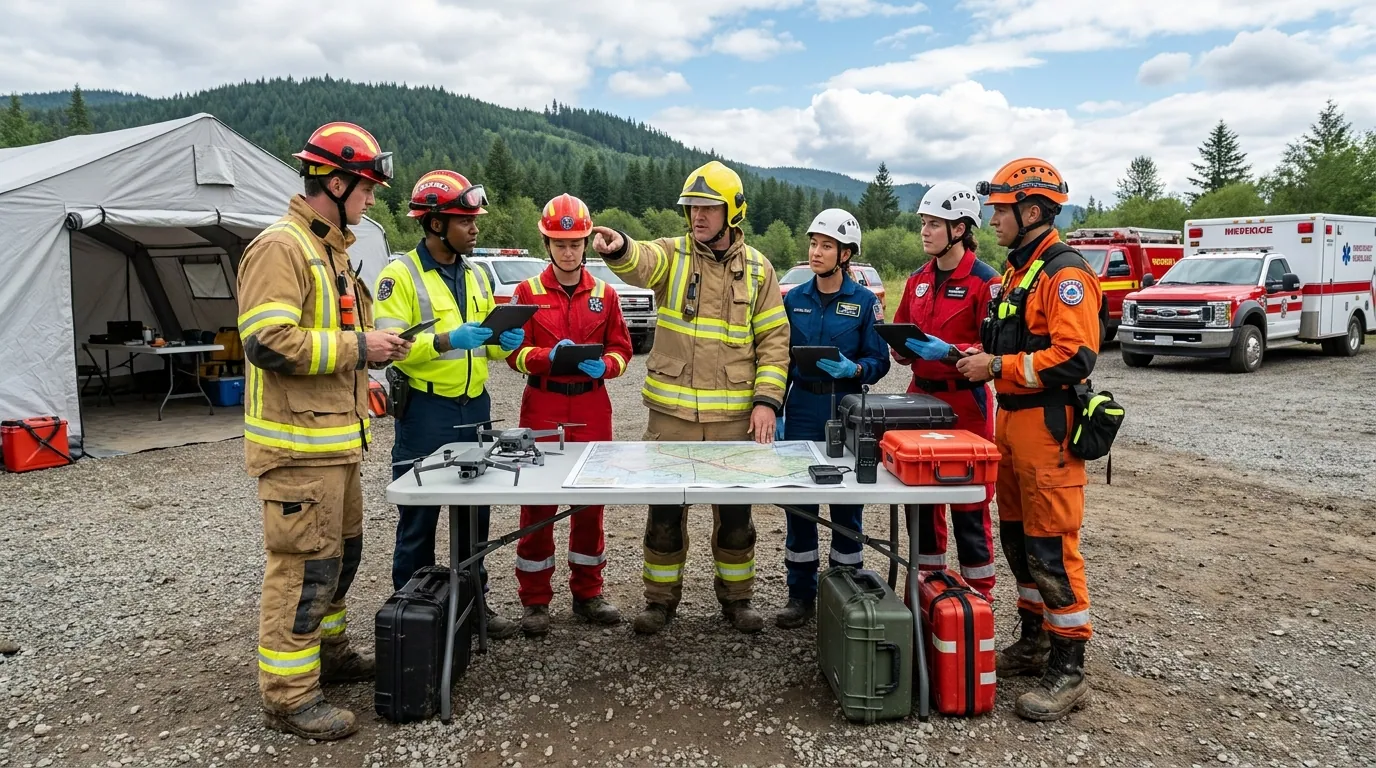
How can we empower the disaster management crew is an important question because disaster responders work in some of the most difficult, dangerous, and stressful situations. Whether they are responding to floods, earthquakes, hurricanes, fires, landslides, power outages, or medical emergencies, these teams need more than courage. They need training, tools, leadership, communication systems, mental health support, safety equipment, funding, and community cooperation.
A strong disaster management crew can save lives, reduce panic, protect property, and help communities recover faster. But crews cannot perform well if they are under-trained, under-equipped, poorly supported, or left to work without clear roles. Empowering them means building a complete system around them before, during, and after every emergency.
Quick Answer: How Can We Empower the Disaster Management Crew?
We can empower the disaster management crew by giving them the right skills, authority, equipment, emotional support, communication tools, and decision-making systems. A crew becomes stronger when every member knows their role, understands the emergency plan, has access to real-time information, and feels supported by leaders, communities, and institutions.
The most effective ways to empower disaster response teams include advanced training, simulation exercises, clear chain of command, standard operating procedures, emergency communication systems, real-time alerts, AI tools, GIS mapping, drones, mobile apps, PPE, mental health support, and after-action reviews.
In simple words, empowerment means helping the crew act with confidence, speed, safety, and coordination. It is not only about giving them devices or uniforms. It is about creating a response system where technology, leadership, teamwork, logistics, and human care work together.
Why Disaster Management Crews Need Empowerment
Disasters create confusion very quickly. Roads may be blocked, phone networks may fail, hospitals may become overcrowded, and affected people may need immediate help. In these situations, emergency response teams must make fast decisions with limited information.
A disaster crew often faces many challenges at once. These may include communication gaps, lack of supplies, unclear responsibilities, emotional pressure, damaged infrastructure, and public panic. If the crew does not have proper support, even skilled responders can become overwhelmed.
For example, during a flood, rescue teams may need to evacuate people, deliver food and clean water, guide volunteers, report ground-level data, and coordinate with police, fire departments, hospitals, and local officials. Without clear systems, this work becomes slow and risky.
That is why disaster crew safety, resource allocation, field operations, and situational awareness matter so much. Empowered crews can respond faster because they already know what to do, who to report to, what equipment to use, and how to communicate with the public.
Train Crews With Realistic Skills, Drills, and Simulations
The first step in empowering a disaster management crew is disaster response training. Training should not be limited to one workshop or one classroom session. Disaster responders need continuous learning because every emergency is different.
A strong training program should include first aid, search and rescue missions, emergency evacuation, fire safety, flood response, earthquake safety, medical aid, and basic logistics. Crews also need training in technical skills and non-technical skills such as communication, teamwork, decision-making, and emotional control.
Simulation exercises are especially useful because they prepare teams for real pressure. A tabletop exercise may help leaders test an emergency response plan, while a full-scale emergency drill may show how teams perform in field conditions. These drills reveal gaps before a real disaster happens.
Training should also include Psychological First Aid, because responders often meet people who are frightened, injured, grieving, or separated from family members. A trained crew can offer support without making the situation worse.
A simple training model may look like this:
| Training Area | Purpose |
| First aid and rescue | Saves lives during immediate response |
| Simulation exercises | Builds confidence under pressure |
| Communication drills | Reduces confusion in emergencies |
| Safety training | Protects responders in dangerous zones |
| Psychological First Aid | Helps crews support distressed people |
| After-action learning | Improves future response |
When crews practice regularly, they become calmer, faster, and more prepared.
Create Clear Roles, Leadership, and Chain of Command
A disaster response becomes weak when everyone is trying to help but no one knows who is responsible for what. That is why role clarity, task assignment, and a clear chain of command are essential.
Every disaster management team should know who handles rescue, who manages medical aid, who communicates with the public, who tracks resources, who coordinates volunteers, and who reports to senior leadership. This avoids duplication, delays, and confusion.
Professional disaster systems often use an incident command system or a similar structure to organize response. The goal is simple: create a clear line of authority so decisions can be made quickly. In large emergencies, unified command may be needed when multiple agencies work together.
Good leadership does not mean controlling every small action. It means giving teams the authority to act within clear limits. A field responder should not have to wait too long for approval when people are in danger. Empowered leadership gives crews direction, trust, and accountability.
A strong leader also creates a healthy team culture. They listen to field updates, respect local knowledge, support tired workers, and encourage honest reporting. In a crisis, leadership is not just about orders; it is about calm, clarity, and care.
Improve Communication and Real-Time Coordination
Poor communication is one of the biggest reasons disaster response fails. During emergencies, information changes quickly. A bridge may collapse, a shelter may fill up, a road may become unsafe, or a medical team may need supplies urgently. Crews need real-time coordination to respond effectively.
Empowering disaster crews means providing reliable emergency communication systems. These may include radios, mobile phones, satellite phones, SMS alerts, WhatsApp groups, emergency notification systems, and backup communication systems. In areas where phone networks fail, ham radio and radio communication can still support disaster relief.
Communication should also be clear and multilingual when needed. In many regions, affected people may speak different languages or dialects. Local language support helps reduce panic and improves trust.
A strong disaster communication system should answer four questions:
| Question | Why It Matters |
| Who sends updates? | Prevents mixed messages |
| Who receives updates? | Keeps teams informed |
| What channel is used? | Avoids information loss |
| How is information verified? | Reduces rumors and panic |
Crews also need SOP access, contact directories, public FAQs, and mission-critical updates. A crisis communication plan should be ready before disaster strikes. When communication flows clearly, teams can act faster and communities can follow instructions with more confidence.
Use Technology, AI, GIS, Drones, and Mobile Tools Wisely
Modern technology can strongly improve effective disaster response, but only when it is practical and easy for crews to use. Technology should reduce workload, not create extra confusion.
AI in disaster management can help organize information, answer common public questions, support incident reporting, and send personalized alerts. An AI chatbot can guide citizens toward shelter locations, emergency contacts, safety checklists, or relief stations. Chatbots can also help reduce pressure on manual helplines during high-volume emergencies.
GIS mapping and Geographic Information Systems are useful for identifying affected areas, safe routes, flood zones, shelter locations, and resource needs. Drones and aerial surveillance can support damage assessment, search operations, and remote monitoring where roads are blocked or unsafe.
Mobile apps and offline mobile tools help crews collect ground-level data, update task status, and submit field reports. QR codes at relief stations can help people access instructions, register needs, or find verified information.
Useful disaster response technologies include:
| Technology | How It Empowers Crews |
| AI chatbot | Answers public questions and shares SOPs |
| GIS mapping | Shows risk zones and safe routes |
| Drones | Supports search, monitoring, and damage assessment |
| Mobile forms | Collects field data quickly |
| Cloud-based platforms | Keeps teams connected |
| Smart inventory system | Tracks supplies and stockpiles |
| Digital incident log | Records decisions and updates |
However, technology must come with training. A tool is only useful when responders know how to use it during pressure.
Provide Equipment, PPE, and Field Safety Support
A disaster crew cannot protect others if the crew itself is unsafe. Proper emergency-response equipment, communication devices, and personal protective equipment are basic requirements.
Depending on the disaster type, crews may need helmets, gloves, masks, boots, reflective jackets, ropes, boats, stretchers, first aid kits, fire extinguishers, emergency lights, rescue tools, and medical supplies. For flood response, boats and life jackets may be essential. For fire response, protective clothing and breathing support may matter more. For earthquakes, cutting tools, helmets, and search equipment may be needed.
Safety should also include systems, not just equipment. Crews need safety briefings before deployment, responder accountability systems, route updates, rest areas, and field safety officers. Leaders should know where each team is working and whether they are safe.
Stockpiles and supply chains are also important. If gloves, fuel, medicines, food, water, or batteries run out, response slows down. Empowered crews need reliable access to resources before the emergency becomes worse.
Protect Mental Health and Prevent Responder Burnout
Disaster responders are often expected to be strong all the time, but they are human. They may work long hours, see traumatic scenes, face public pressure, and worry about their own families. Without support, this can lead to burnout, anxiety, emotional fatigue, and decision fatigue.
That is why mental health support must be part of disaster crew empowerment. Support can include peer check-ins, counselling, therapy referrals, wellness check-ins, rest cycles, and post-mission conversations. Leaders should also be trained in trauma-informed leadership so they can recognize when responders are struggling.
Psychological First Aid is useful not only for helping affected people but also for supporting responders. A crew culture that allows people to speak honestly about stress is healthier and safer.
A simple responder wellness system may include:
- Short rest breaks during long operations
- Shift rotation planning
- Peer support program
- Post-deployment support
- Confidential counselling access
- Debriefing sessions after difficult missions
Mental health is not a soft extra. It directly affects safety, judgment, teamwork, and long-term responder retention.
Strengthen Community Support and Volunteer Management
Disaster crews cannot do everything alone. Communities, volunteers, local leaders, schools, businesses, and families all play a role in disaster preparedness and response.
However, volunteers need structure. Without proper volunteer onboarding, untrained helpers may create confusion or put themselves in danger. A good volunteer system gives people clear roles, basic training, safety rules, and reporting channels.
Community participation can include public awareness campaigns, school disaster preparedness, household emergency kits, neighborhood response teams, and local disaster preparedness programs. A community emergency response team can support basic first aid, local communication, and early reporting before professional crews arrive.
Inclusive planning is also important. Disaster response must consider vulnerable populations, including children, older adults, people with disabilities, pregnant women, and people who need language support. Crews should know how to support accessible shelters, elderly evacuation, disability-inclusive response, and culturally appropriate communication.
When communities are prepared, disaster crews face less panic and can focus on the most urgent rescue and relief work.
Improve Logistics, Funding, and Interagency Cooperation
Empowering disaster response teams also requires strong logistics. Crews need food, clean water, medical supplies, transport assistance, fuel, temporary shelter materials, communication tools, and relief supplies. If resources do not reach the right place at the right time, even the best-trained crew will struggle.
Financial support, logistical support, and proper resource allocation are essential. Emergency supply chain management helps ensure that stockpiles are ready, transport routes are planned, and urgent supply needs are tracked.
Disasters also involve many organizations. Police, fire departments, hospitals, NGOs, local government, volunteers, and emergency teams must work together. This is why interagency collaboration and multi-agency coordination are so important.
A shared plan, shared SOPs, and a common operating picture can prevent confusion. Mutual aid agreements and public-private partnerships can also strengthen response capacity.
For example, if a flood affects several districts, one team may manage evacuation, another may handle medical aid, another may manage shelter locations, and another may deliver clean water. Without coordination, some areas may receive duplicate help while others are ignored. A well-coordinated system makes response fairer and faster.
Use Early Warning Systems and Inclusive Disaster Planning
Crews are easier to empower when communities receive warnings early. Early warning systems, emergency alert systems, hazard warning communications, and evacuation planning reduce the pressure on responders because people can move before danger becomes worse.
Risk communication should be simple, trusted, and timely. People need to know what is happening, what action to take, where to go, and which information sources are official. Verified emergency information also helps reduce rumors.
Inclusive disaster planning makes response more humane and effective. A warning message is not enough if some people cannot read it, hear it, understand it, or physically respond to it. Disaster crews need plans for people with disabilities, elderly residents, children, and communities with limited access to transport or digital tools.
Good planning may include accessible shelters, local language alerts, evacuation routes, public FAQs, text message alerts, PA systems, and community volunteers who can check on high-risk households.
When planning is inclusive, fewer people are left behind.
Review Every Response and Keep Improving
Empowerment does not end when the emergency response ends. After every disaster, crews should review what happened, what worked, and what failed. This is where after-action reviews, post-disaster feedback, incident reporting, and debriefing sessions become valuable.
A simple 3-question debrief survey can ask:
| Question | Purpose |
| What worked well? | Identifies strengths |
| What failed or caused delay? | Finds improvement areas |
| What should change before next time? | Updates future plans |
Field responders often notice problems that senior leaders may not see. They may know that a radio channel failed, a supply route was blocked, a volunteer process was confusing, or an SOP was unclear. Their feedback should be respected.
Continuous improvement also means updating training programs, emergency plans, contact directories, equipment lists, communication timelines, and SOPs. Over time, this builds stronger operational readiness and better community resilience.
A disaster management crew becomes truly empowered when every mission makes the next response better.
Common Mistakes That Weaken Disaster Management Crews
Many disaster response problems happen because basic systems are ignored. One common mistake is training crews only once and never refreshing their skills. Another mistake is relying on only one communication channel. If that channel fails, the whole response suffers.
Some organizations also buy technology without training crews to use it. A mobile app, AI chatbot, dashboard, or GIS tool is not useful if responders cannot access it under pressure.
Another major mistake is ignoring responder fatigue. Long shifts without rest can lead to poor decisions and emotional burnout. Similarly, unclear authority can delay action when urgent decisions are needed.
Other mistakes include poor volunteer management, weak equipment maintenance, lack of post-disaster review, ignoring vulnerable populations, and treating mental health support as optional.
A strong disaster management system avoids these mistakes by planning early, training regularly, supporting responders, and improving after every emergency.
FAQs About Empowering Disaster Management Crews
How can we empower the disaster management crew in simple words?
We can empower the disaster management crew by giving them proper training, clear roles, reliable communication tools, safety equipment, mental health support, strong leadership, community cooperation, and enough resources to respond quickly and safely.
What is the role of a disaster management crew?
A disaster management crew helps with rescue operations, evacuation, medical aid, relief distribution, communication, emergency planning, public safety, and disaster recovery. Their role is to reduce harm and support affected communities.
Why is training important for disaster response teams?
Training helps disaster response teams act calmly and correctly during emergencies. Drills, simulation exercises, first aid training, and safety refreshers improve speed, teamwork, and decision-making.
How does technology help disaster management crews?
Technology helps crews through AI chatbots, GIS mapping, drones, mobile apps, real-time alerts, digital incident logs, and smart inventory systems. These tools improve communication, tracking, and situational awareness.
Why is mental health support important for disaster responders?
Mental health support helps prevent burnout, emotional fatigue, stress, and decision fatigue. Responders who receive rest, peer support, counselling, and Psychological First Aid are better able to serve communities safely.
How can communities support disaster response crews?
Communities can support crews by following emergency instructions, preparing household emergency kits, joining volunteer training, sharing verified information, helping vulnerable neighbors, and participating in local disaster preparedness programs.
What equipment does a disaster management crew need?
A crew may need PPE, rescue tools, radios, satellite phones, first aid kits, helmets, gloves, boots, emergency lights, medical supplies, transport support, and disaster-specific equipment such as boats or fire safety tools.
Conclusion
To answer how can we empower the disaster management crew, the best approach is to build a complete support system around them. Crews need training, leadership, communication systems, technology, PPE, mental health care, logistics, funding, community support, and continuous improvement.
Empowered crews are not created during a disaster. They are prepared before it happens through planning, practice, coordination, and investment. When disaster responders have the right tools, clear authority, reliable information, and human support, they can protect communities with greater confidence and safety.
Disclaimer
This article is for general informational purposes only and is intended to provide helpful guidance on disaster management crew empowerment. Individual needs, results, resources, and situations may vary depending on location, organization, disaster type, and available support. Always use the information in a way that fits your specific circumstances and local emergency guidelines.











Leave a Reply