

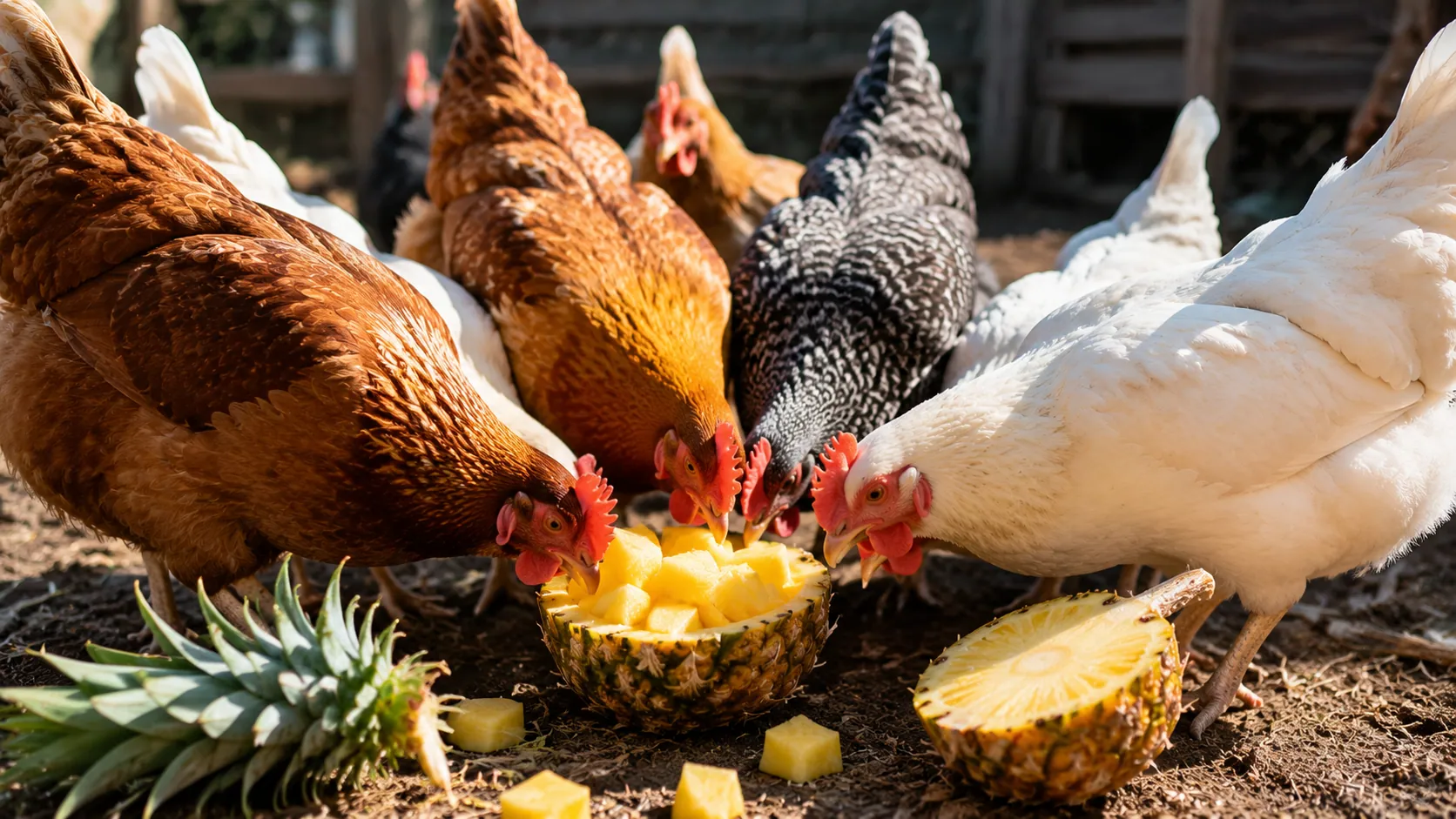
Yes, chickens can eat pineapple in small amounts as an occasional treat. Fresh, ripe pineapple can be a fun snack for a backyard flock, especially because many chickens enjoy juicy fruits. However, pineapple should never replace a chicken’s regular feed. A complete poultry feed is still the main source of protein, vitamins, minerals, and balanced nutrition that chickens need every day.
Like many backyard chicken treats, pineapple is safe only when it is served the right way. The soft yellow flesh is the best part to offer, while tough parts like the skin, crown, and large pieces of core are better avoided or handled carefully. Chickens may peck at pineapple eagerly, but that does not mean they should eat a lot of it.
In this chicken feeding guide, we’ll cover how much pineapple chickens can eat, which pineapple parts are safe, whether chicks can eat pineapple, and what to know about canned, dried, frozen, or cooked pineapple. We’ll also look at digestive risks, preparation tips, and times when you should skip pineapple completely.
Many backyard chicken keepers like using fruit scraps to reduce waste and add variety to the flock’s routine. That can be perfectly fine when done thoughtfully. Still, the healthiest chickens get most of their nutrition from balanced chicken feed, clean water, grit, safe foraging, calcium when needed, and careful treat habits. Pineapple can be a small bonus, not the foundation of the diet.
Is Pineapple Good or Bad for Chickens?
Pineapple is not toxic to chickens, so it is not automatically a dangerous food. At the same time, it is not an essential food either. The best way to think about pineapple for chickens is simple: it is a treat, not a daily diet item.
Fresh pineapple contains plenty of water, natural sugar, fiber, vitamin C, manganese, and an enzyme called bromelain. These nutrients may sound impressive, but they do not mean chickens need pineapple to stay healthy. Chickens already receive their most important nutrients from a properly balanced poultry ration.
The enzyme bromelain is often mentioned when people talk about pineapple. It has been studied in poultry nutrition, but there is an important difference between research using concentrated bromelain and a backyard hen eating a few small pineapple chunks. A few pieces of fruit will not act like a special supplement or health treatment. In fact, some broiler research has found that high-dose bromelain supplementation did not significantly improve growth performance and could reduce performance at certain levels. So it is better not to make exaggerated claims about “pineapple enzymes” improving chicken health.
The balanced answer is that pineapple can be good in moderation because it adds variety, moisture, and interest to a flock’s diet. This can be especially nice in warm weather when chickens enjoy juicy foods. But too much pineapple can be a problem because it is naturally sweet and acidic. Large amounts may upset digestion, loosen droppings, or reduce interest in regular feed.
So, is pineapple good for chickens? It can be a safe and enjoyable treat when served sparingly. It becomes a poor choice when it is overfed, spoiled, sugary, or used instead of complete feed.
How Much Pineapple Can Chickens Eat?
Chickens should only eat a small amount of pineapple once in a while. For most adult chickens, a few bite-size pieces are enough. A practical beginner-friendly serving is about one tablespoon of chopped fresh pineapple per adult chicken, offered no more than one or two times per week.
The goal is not to fill the flock up with fruit. Treats should stay limited so chickens eat their main feed first. Many poultry-feeding recommendations suggest that treats should make up only a very small part of a chicken’s diet. A safe rule is to keep pineapple and other extras under about 5% of daily intake, especially for laying hens that need steady nutrition for egg production.
Moderation matters because pineapple is high in moisture, natural sugar, and acidity. If chickens eat too much, they may develop loose droppings, digestive upset, poor nutrition balance, picky eating habits, weight gain, or reduced intake of layer feed. Overloading chickens with sugary foods may also contribute to crop and gut problems, especially if fruit is left out too long or begins to ferment.
A simple feeding tip is to offer pineapple later in the day, after your chickens have already eaten their regular feed. This helps prevent them from choosing sweet treats over the balanced food they actually need. Serve it in a clean dish, watch how they respond, and remove leftovers quickly.
When introducing pineapple for the first time, start with less than you think they need. If droppings look normal and the flock stays active, you can offer it occasionally as part of a careful treat rotation.
Which Parts of Pineapple Can Chickens Eat?
Not every part of a pineapple is equally useful or safe for chickens. The soft, ripe flesh is the best choice, while the tougher parts can be hard to peck, difficult to digest, or simply not worth feeding. Some chickens may try to peck at almost anything, including the peel or core, but that does not always mean it is the best option for them.
Here is a simple breakdown:
| Pineapple Part | Safe for Chickens? | Best Advice |
| Fresh flesh | Yes | Best part to feed in small pieces |
| Core | Sometimes | Tough; chop small or skip for easier eating |
| Peel/rind | Not ideal | Tough, rough, may hold residue; better to avoid |
| Crown/leaves | Avoid | Sharp, fibrous, and not useful as a treat |
| Juice | Usually avoid | Too sugary and easy to overfeed |
The fresh yellow flesh is the safest and easiest part to offer. It is soft, juicy, and simple for chickens to peck when cut into small chunks. If you are new to feeding fruit to chickens, this is the only part you really need to use.
Many people ask, can chickens eat pineapple core? The answer is sometimes, but it depends on how it is served. The core is firmer and more fibrous than the flesh. Some adult chickens may peck at it, but large hard pieces can be difficult for them to manage. If you want to offer a little core, chop it into very small pieces. For most backyard flocks, skipping the core is easier and safer.
Another common question is, can chickens eat pineapple skin? It is better to avoid it. Pineapple skin, also called pineapple rind, is tough, rough, and not pleasant for chickens to eat. It may also hold dirt, pesticide residue, or bacteria on the surface. Even if a few chickens peck at the rind, the safer beginner advice is to remove it and feed only the soft flesh.
Chickens should not eat the pineapple crown or leaves. They are sharp, fibrous, and have very little value as a treat. They can also create unnecessary risk if birds pull at long, tough fibers. Pineapple juice is also not a good choice because it is concentrated, sugary, and easy to overfeed. Chickens do better with small pieces of whole fruit than with sweet liquid.
If you want to use pineapple scraps for chickens, keep the useful scraps limited to soft, ripe fruit pieces. Avoid tough skin, sharp leaves, overly hard core pieces, and any pineapple that has started to spoil.
How to Safely Prepare Pineapple for Chickens
The safest way to feed pineapple to chickens is to keep it fresh, plain, clean, and portion-controlled. Pineapple should not be served as a messy pile of scraps in the coop, especially during warm weather. A little preparation makes the treat safer and easier for the flock to enjoy.
Start by washing the outside of the pineapple before cutting it. Even though chickens should not eat the peel, washing helps reduce the chance of transferring dirt or residue from the rind onto the fruit while slicing. Next, remove the tough outer skin and the spiky crown. Cut away any bruised, sour, moldy, or fermented areas.
Once the pineapple is cleaned, cut the ripe flesh into small bite-size pieces. Small chunks are easier for chickens to peck and swallow. Large slippery pieces can cause crowding, chasing, or wasted fruit. If you are feeding several chickens, scatter a few pieces in a clean feeding area or place them in a shallow dish so every bird has a chance to peck without fighting.
A good rule for safe pineapple preparation for chickens is to serve less than you think they need. Pineapple is sweet and juicy, so a small amount goes a long way. After feeding, remove leftovers quickly. Uneaten fruit can attract flies, ants, rodents, and bacteria, especially when it sits in bedding or dirt. Some poultry feeding guidance recommends removing uneaten pineapple after about 15–20 minutes, which is a smart habit for most juicy treats.
Here is a practical backyard tip: if your flock has never had pineapple before, offer only a few tiny pieces the first time. Watch how they respond, then check their droppings the next day. If the droppings become watery or the chickens seem less interested in regular feed, wait before offering pineapple again.
Warm weather needs extra caution. Fresh pineapple can spoil fast in summer heat, especially if it is left in direct sun. Serve it in a shaded area, use a clean dish, and clean up quickly. This keeps the treat enjoyable without turning it into a pest or sanitation problem.
Can Baby Chicks Eat Pineapple?
Baby chicks should usually not eat pineapple early in life. Even though pineapple is not toxic to chickens, chicks have different needs than adult hens and roosters. Their bodies are growing quickly, and their main diet should be a balanced chick starter feed that provides the right protein, vitamins, minerals, and energy for healthy development.
A cautious guideline is to avoid fruit treats until chicks are at least 6–8 weeks old. Before that age, their digestive systems are still small and sensitive, and they need consistent nutrition more than variety. Watery, sugary, or acidic foods like pineapple can upset their digestion or take up space that should be filled by proper starter feed.
If you introduce pineapple for chicks later, keep it tiny, soft, and very occasional. A few small pecks are enough. Do not give chicks large pieces, tough core, pineapple skin, canned pineapple in syrup, dried pineapple, or leftover pineapple from desserts.
There is also an important grit note. Chicks eating only commercial starter feed usually do not need extra foods. But once they begin eating treats, grass, fruit, vegetables, or other foods outside their starter ration, they need access to appropriate chick grit. Grit helps them grind and digest foods properly.
So, can baby chicks eat pineapple? Older chicks may try a very small amount once they are ready for treats, but young chicks should stick with chick starter, clean water, warmth, and safe brooder care. For new chicken keepers, it is better to be cautious and wait until the chicks are older before offering fruit.
Can Chickens Eat Canned, Dried, Frozen, or Cooked Pineapple?
Not all pineapple is equal when it comes to feeding chickens. The safest option is usually fresh pineapple, but some other forms may be okay in small amounts if they are plain and prepared carefully.
Fresh pineapple is the best choice for chickens. It should be ripe, plain, and cut into small pieces. Fresh pineapple gives chickens moisture and variety without added sugar, syrup, salt, or preservatives. If you are feeding pineapple for the first time, start with a few small chunks and watch how your flock handles it.
Frozen pineapple can also be safe for chickens if it is plain and served properly. It can be useful as a warm-weather treat, but it should not be rock-hard when offered. Very hard frozen chunks may be difficult to peck and could create a choking risk or cause chickens to fight over slippery pieces. Let frozen pineapple thaw slightly until it is soft enough for chickens to peck safely.
Many chicken keepers ask, can chickens eat canned pineapple? Canned pineapple is not the best option, especially if it is packed in heavy syrup. Syrup adds extra sugar that chickens do not need. If canned pineapple is the only option, choose pineapple packed in juice instead of syrup, drain it well, rinse it lightly, and offer only a tiny amount. Even then, it should be a rare treat, not a regular snack.
Dried pineapple is usually best avoided. It is often sticky, concentrated in sugar, and sometimes coated with extra sweeteners or preservatives. Because the water has been removed, chickens can eat more sugar in fewer bites than they would with fresh fruit. If you ever offer dried pineapple, it should be unsweetened, soft enough to peck, and given in a very tiny amount.
Cooked pineapple may be safe if it is plain, unsalted, and not mixed with harmful ingredients. However, many cooked pineapple dishes are made with sugar, butter, salt, sauces, alcohol, or seasonings. Chickens should not eat pineapple from desserts, cakes, sugary fruit salads, cocktails, or heavily seasoned leftovers.
Be especially careful with pineapple from human foods. Do not feed chickens pineapple from pizza toppings with salty meats, sweet glazes, canned fruit salads, alcoholic drinks, or spoiled leftovers. Plain fruit is simple. Processed pineapple dishes can quickly become unsafe or unhealthy for a backyard flock.
Risks of Feeding Pineapple to Chickens
Pineapple is safe in small amounts, but it can still cause problems when chickens eat too much or when the fruit is not fresh. The main concerns come from pineapple’s natural sugar, acidity, moisture, and spoilage risk.
Because pineapple is acidic and sweet, too much can lead to loose droppings or digestive upset. A small treat may not bother healthy adult chickens, but a large serving can make the coop messy and uncomfortable. Watery droppings can also create damp bedding, which may lead to odor, flies, and poor coop hygiene.
Some chickens may also become less interested in their regular feed if they receive too many sweet treats. This is a problem because layer feed or grower feed is designed to provide balanced nutrition. Pineapple does not contain the full protein, calcium, amino acids, and minerals chickens need every day.
Another risk is irritation. Pineapple’s acidity may bother some birds if they eat too much at once. While this is not usually a major issue from a few small pieces, it is another reason to keep portions small.
Moldy or fermented pineapple should never be given to chickens. Moldy fruit chickens find in scraps can make them sick, and fermented fruit may upset digestion or expose them to unwanted bacteria or toxins. If pineapple smells sour, feels slimy, has visible mold, or has been sitting outside too long, throw it away instead of feeding it.
Watch your flock after offering pineapple, especially the first time. Signs that pineapple may not be agreeing with your chickens include watery droppings, reduced appetite, unusual quietness, repeated diarrhea, crop problems, or a chicken separating from the flock.
If symptoms last more than a day, become severe, or include weakness, breathing issues, a swollen crop, or a bird that refuses food and water, contact a poultry-savvy veterinarian. Pineapple is usually not dangerous in small amounts, but ongoing symptoms should not be ignored.
When You Should Not Feed Pineapple to Chickens
There are times when pineapple should be skipped completely. Even a normally safe treat can become a bad idea if the fruit is spoiled, mixed with unsafe ingredients, or given to chickens that are already stressed or unwell.
Do not feed pineapple if it is moldy, fermented, slimy, overly sour, or left outside too long. Fresh pineapple should smell sweet and clean, not alcoholic, rotten, or sharp. If you would not want to handle it yourself, it should not go into the chicken run.
Avoid pineapple that is mixed with sugar, syrup, alcohol, salt, sauces, butter, or heavy seasoning. Chickens do not need sweet desserts, cocktail fruit, glazed pineapple, or leftovers from heavily seasoned meals. These foods can upset digestion and add ingredients that are not suitable for poultry.
You should also avoid pineapple when your flock is already dealing with digestive trouble. If your chickens have diarrhea, reduced appetite, crop issues, or signs of illness, keep the diet simple and focus on their normal feed and clean water. Treats can make it harder to tell whether a sick chicken is eating enough of its main diet.
Skip pineapple during stressful periods too. Heat stress, transport, predator scares, new flock introductions, illness recovery, or sudden weather changes can all affect digestion and appetite. In those moments, chickens need stability more than sweet treats.
There is also a practical coop reason to avoid juicy fruit. If you are already dealing with flies, ants, rodents, wet bedding, or dirty feeding areas, wait before offering pineapple. Juicy fruit can attract pests quickly and make sanitation worse. Clean and dry the setup first, then offer treats only in small amounts and remove leftovers quickly.
So, when not to feed pineapple to chickens comes down to common sense: avoid spoiled pineapple, processed pineapple, sugary pineapple, and pineapple during illness or poor coop conditions. A treat is only helpful when it supports good flock care instead of creating extra risk.
Will Pineapple Change Egg Taste, Egg Production, or Shell Quality?
Small amounts of pineapple are unlikely to noticeably change egg taste, egg color, egg production, or shell quality. If your hens eat a few pieces of fresh pineapple once in a while, you should not expect the eggs to suddenly taste fruity or look different.
Egg quality depends much more on the hen’s overall diet and health. Strong shells, steady laying, and good egg quality usually come from balanced layer feed, enough calcium, proper protein intake, clean water, daylight, age, stress level, and general flock health. Pineapple does not provide the complete nutrition laying hens need to produce eggs consistently.
That said, overfeeding pineapple or any sweet fruit can indirectly affect laying. If hens fill up on treats, they may eat less layer feed, which means they may miss important nutrients like calcium, protein, amino acids, and minerals. Too much fruit can also cause digestive upset, and a stressed or unwell hen may slow down egg production.
For laying hens, pineapple should never replace a complete layer ration or calcium sources such as oyster shell. Think of pineapple as a small flock treat, not an egg-boosting food. The best way to support egg production is to keep the daily diet steady, provide fresh water, offer calcium separately when needed, and use treats only in moderation.
Smart Ways to Offer Pineapple as a Flock Treat
The best way to offer pineapple is to keep it simple, clean, and controlled. Instead of throwing sticky fruit into the bedding, place a few small pineapple chunks in a clean dish, shallow pan, or washable feeding tray. This keeps the coop cleaner and makes it easier to remove leftovers.
A good practical habit is to feed pineapple after the morning feed, not before. Chickens should eat their regular feed first because that is where they get their balanced nutrition. Once they have had their main meal, a small amount of pineapple can be offered as a fun treat.
You can also mix pineapple with lower-sugar flock snacks, such as chopped leafy greens or cucumber pieces. This gives the flock variety without turning treat time into a sugar-heavy snack. During warm weather, a few softened frozen pineapple pieces can work as a refreshing treat, but they should not be hard like ice cubes. Let them thaw until they are soft enough for chickens to peck safely.
Some chickens love pineapple right away. Others may ignore it completely. That is normal. Chickens have individual preferences, and you do not need to force a food just because it is safe. If your flock does not like pineapple, remove it and try a different treat another day.
For enrichment, you can briefly hang a small piece of pineapple for supervised pecking, but only if it is secure and safe. Avoid large slippery chunks that could cause chasing, crowding, or choking risk. Treat time should be calm and useful, not stressful for smaller or lower-ranking birds.
Always remove uneaten pineapple quickly. Sticky fruit can attract pests, make bedding wet, and create sanitation problems. A smart pineapple flock treat is one that chickens enjoy briefly and that you can clean up without trouble.
Better Treats to Rotate With Pineapple
Pineapple can be part of a treat rotation, but it should not be the only fruit or snack your chickens receive. Variety is better than repeatedly feeding one sweet food. Rotating treats helps keep things interesting while reducing the chance of overfeeding sugar or upsetting digestion.
Good options include leafy greens, cucumber, watermelon, berries, pumpkin, squash, cooked plain eggs, mealworms, herbs, and small amounts of grains. These should still be given in moderation. Even healthy treats can become a problem if they replace complete feed.
Here is a simple comparison:
| Treat | Best Use | Main Caution |
| Pineapple | Occasional sweet fruit | Acidic and sugary |
| Watermelon | Hydration treat | Too much can loosen droppings |
| Leafy greens | Low-sugar variety | Avoid pesticide residue |
| Pumpkin | Seasonal fiber-rich treat | Not a dewormer replacement |
| Mealworms | Protein treat | Easy to overfeed |
Leafy greens are often a good everyday-style option when offered clean and pesticide-free, but they should still be treated as an addition to feed, not a replacement. Cucumber and watermelon can help add moisture during hot weather, though too much watery food may loosen droppings. Pumpkin and squash can be useful seasonal treats, but pumpkin should not be promoted as a guaranteed natural dewormer. Mealworms are popular with chickens, but they are rich and should be limited.
The main rule is simple: safe chicken treats should support the diet, not take over the diet. Complete poultry feed, clean water, grit, calcium for layers, and good flock management should always come first. Pineapple can fit into that routine as an occasional sweet treat, especially when balanced with lower-sugar snacks and sensible portion control.
Conclusion: Can Chickens Eat Pineapple?
Can chickens eat pineapple? Yes, chickens can eat pineapple when it is fresh, ripe, cut into small pieces, and served in moderation. It can be a fun treat for adult chickens, but it should never become a major part of their diet.
The soft pineapple flesh is the best part to feed. Avoid the tough rind, sharp leaves, large hard core pieces, moldy fruit, fermented fruit, syrup-packed canned pineapple, sugary desserts, and heavily processed pineapple leftovers. Baby chicks need extra caution because their main diet should be chick starter feed, and treats should wait until they are older and ready.
Too much pineapple can cause loose droppings, digestive upset, poor diet balance, and reduced interest in regular feed. For healthy hens and roosters, balanced layer feed or grower feed, clean water, grit, calcium when needed, safe housing, and good coop management matter much more than any fruit treat.
Pineapple can be a bright little snack for your flock, but the healthiest chickens are still raised on balanced feed, clean water, safe housing, and thoughtful treat habits.
Quick FAQ About Chickens and Pineapple
Can chickens eat pineapple every day?
No. Chickens should not eat pineapple every day. Pineapple is best served as an occasional treat, not a daily food. Too much can add extra sugar and acidity to the diet and may reduce how much balanced feed your chickens eat.
Can chickens eat pineapple skin?
It is better to avoid pineapple skin. The skin, or rind, is tough, rough, fibrous, and may hold dirt or residue. The soft yellow flesh is a safer and easier choice.
Can chickens eat pineapple core?
Chickens may peck at pineapple core, but it is tougher than the flesh. If you offer it, chop it into very small pieces. For most backyard flocks, skipping the core is the easier option.
Can chickens eat pineapple leaves?
No. Chickens should not eat pineapple leaves or the crown. They are sharp, fibrous, and not useful as a treat. Stick with small pieces of ripe pineapple flesh.
Can chickens eat canned pineapple?
Fresh pineapple is better. Canned pineapple, especially syrup-packed pineapple, can contain too much added sugar. If you use canned pineapple, choose pineapple packed in juice, drain and rinse it, and offer only a small amount rarely.
Can pineapple give chickens diarrhea?
Yes, too much pineapple may cause loose droppings or digestive upset. Pineapple is juicy, sweet, and acidic, so portion size matters. If your chickens develop watery droppings after eating pineapple, stop feeding it and return to their normal diet.
Can chickens eat frozen pineapple?
Yes, chickens can eat frozen pineapple in small amounts, but it should not be too hard. Let it soften slightly so they can peck it safely. Softened frozen pineapple can be a refreshing warm-weather treat.
Can roosters eat pineapple?
Yes. Adult roosters can eat small amounts of fresh pineapple just like hens. The same rules apply: serve it plain, ripe, chopped small, and only as an occasional treat.
Disclaimer
This article is for general informational purposes only and is not a substitute for professional veterinary advice. Individual chickens, flock conditions, diets, and health needs may vary. If your chicken shows signs of illness or digestive distress, contact a qualified poultry veterinarian or animal care professional.












Leave a Reply