

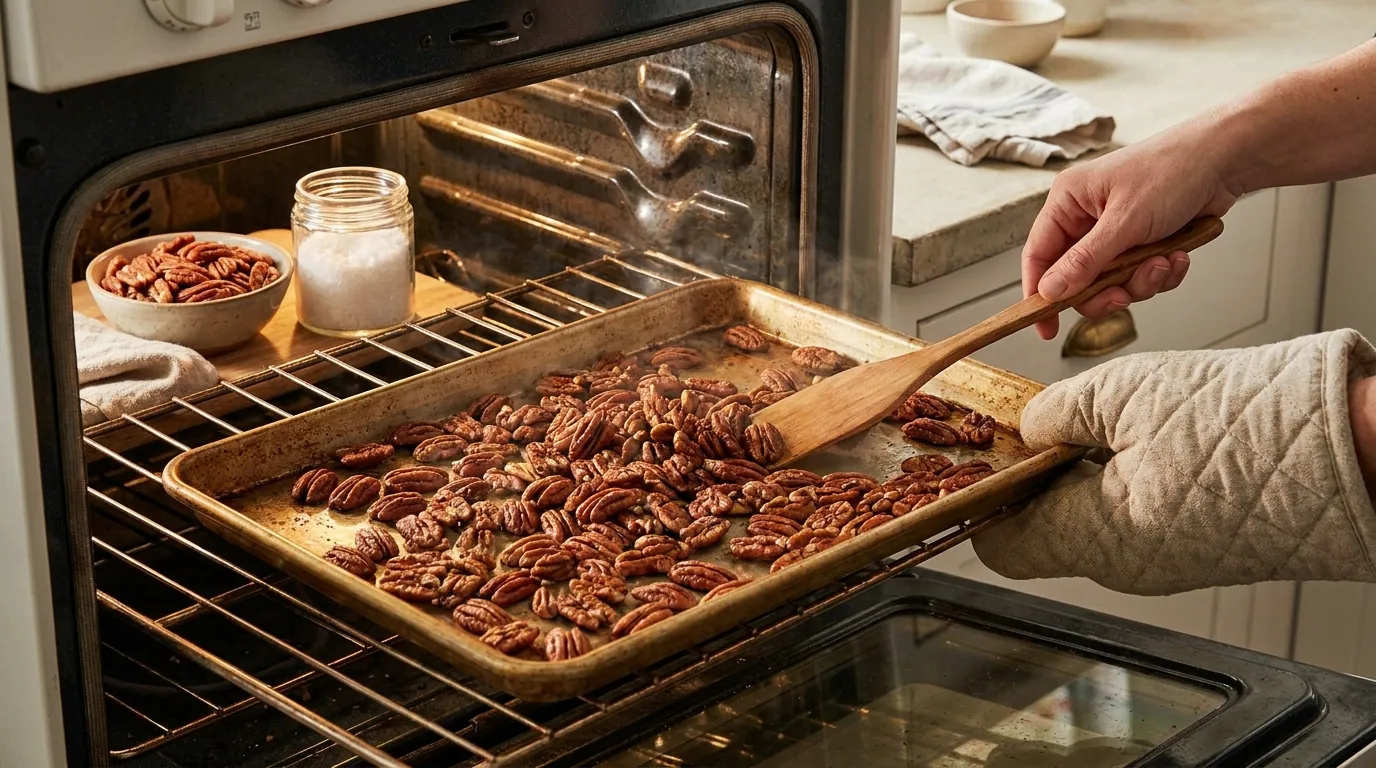
How to roast pecans in the oven is one of the easiest kitchen skills to learn, and it can make a huge difference in the way your pecans taste, smell, and crunch. A few minutes in the oven turns plain raw pecans into rich, fragrant, oven roasted pecans with a deeper nutty aroma, a better crunchy texture, and a warm, buttery flavor even when you do not add butter.
The best part is that you do not need a complicated recipe. With a baking sheet, a single layer of pecan halves, and the right roasting time, you can make roasted pecans for snacking, salads, desserts, pecan pie, holiday baking, breakfast bowls, and edible gifts. The key is knowing the best temperature, when to stir, how to avoid burning, and how to store the nuts so they stay crisp.
Below is a complete, beginner-friendly guide to making perfect toasted pecans in the oven every time.
Quick Answer: How to Roast Pecans in the Oven
To make roasted pecans in the oven, preheat the oven to 325°F or 350°F, spread raw pecans in a single layer on a rimmed baking sheet, and roast until they smell toasty and look slightly darker.
For the safest method, roast pecan halves at 325°F for 12–15 minutes, stirring once halfway through. For a faster method, roast them at 350°F for 8–10 minutes, but watch closely because pecans can burn quickly. Once they are done, remove them from the oven and let them cool completely before eating or storing.
A simple base ratio is:
| Ingredient | Amount |
| Raw pecan halves | 2 cups |
| Melted butter or olive oil | 1 tablespoon |
| Sea salt | ½ teaspoon |
You can also roast pecans plain with no oil or butter.
Ingredients for Oven-Roasted Pecans
A basic roasted pecan recipe only needs one ingredient: pecans. However, a little fat and seasoning can help create better flavor, especially if you want salted roasted pecans, butter roasted pecans, or a sweet holiday-style batch.
Start with raw pecans, preferably pecan halves. Halves roast more evenly than tiny pieces because they are less likely to burn around the edges. You can use whole pecans, raw unsalted pecans, pecan pieces, or chopped pecans, but the smaller the nut, the shorter the roasting time should be.
For fat, you can use melted butter, olive oil, avocado oil, coconut oil, or clarified butter. Butter gives the richest flavor, while olive oil and avocado oil work well for savory versions. If you are making oil-free roasted pecans, you can skip the fat completely. Plain pecans still toast beautifully because they naturally contain oils.
For seasoning, sea salt is the classic choice. You can also use Celtic sea salt, cinnamon, brown sugar, maple syrup, honey, garlic powder, smoked paprika, cayenne pepper, rosemary, thyme, or pumpkin pie spice.
For the most flexible flavor formula, use 2 cups pecans + 1 tablespoon butter or oil + ½ teaspoon salt + 1–2 teaspoons seasoning.
Best Temperature and Time for Roasting Pecans
One reason people get confused about how to roast pecans is that different recipes use different oven temperatures. Some recommend 300°F, others use 325°F, and many quick recipes use 350°F. All three can work, but they create slightly different results.
For most home cooks, 325°F is the best temperature for oven roasted pecans because it gives the nuts enough time to toast evenly without burning too fast. If you want a quicker batch, 350°F works well, but you need to check the pecans early. If you are roasting chopped pecans, making a sweet coating, or using a dark pan, a lower temperature is safer.
| Oven Temperature | Best For | Approximate Time | Notes |
| 300°F | Gentle toasting, chopped pecans, lower burn risk | 15–20 minutes | Best when you want slow, even color |
| 325°F | Everyday roasting | 12–15 minutes | Best balance of flavor and control |
| 350°F | Fast roasting | 8–10 minutes | Watch closely to prevent burning |
If your oven runs hot, start with 325°F. If using a convection oven or fan setting, reduce the temperature by about 25°F or begin checking several minutes earlier because moving air browns nuts faster.
Step-by-Step: How to Roast Pecans in the Oven
To make toasted pecans that are crunchy instead of burnt, the process matters as much as the ingredients.
First, preheat the oven. Use 325°F for a safer, more controlled roast or 350°F if you want a faster batch. Do not place pecans into a cold oven because they may heat unevenly.
Next, prepare a rimmed baking sheet. A rimmed pan keeps the nuts from sliding off when you stir them. You can line the pan with parchment paper for easier cleanup, or you can roast directly on an ungreased baking sheet. A light-colored baking sheet is usually better than a dark one because dark pans can brown the bottoms too quickly. Foil can work, but parchment is easier and less likely to make sticky sweet coatings cling.
Place the raw pecan halves in a large bowl. If using butter or oil, toss the pecans with 1 tablespoon melted butter, olive oil, or avocado oil for every 2 cups of pecans. Add ½ teaspoon sea salt or your favorite seasoning. Stir until the pecans are lightly coated, not greasy.
Spread the pecans in a single layer on the baking sheet. This is important. If pecans are piled on top of each other, they steam instead of roast, and some pieces may stay soft while others burn.
Roast the pecans, then stir halfway or shake the pan gently. This helps with even roasting and prevents hot spots. At 325°F, start checking around 10 minutes. At 350°F, start checking around 7 minutes.
The pecans are done when they smell nutty, look slightly golden brown, and have a deeper color. They may not feel fully crunchy while hot, but they will firm up as they cool completely.
Cook’s note: “Your nose is often a better timer than the clock. When pecans smell warm, nutty, and toasted, they are usually close to done.”
Pecan Halves, Pieces, or Chopped Pecans: Timing Tips
The size of the pecans changes the roasting time. Pecan halves are the easiest to roast because they are large enough to brown slowly and evenly. Pecan pieces roast faster, and chopped pecans can burn quickly because they have more exposed edges.
For the best texture, roast pecan halves first, let them cool, and then chop them if you need smaller pieces for cookies, muffins, salads, or pecan pie. This gives you better control and lowers the risk of bitter, burnt bits.
| Pecan Type | At 325°F | At 350°F |
| Whole pecans / large halves | 12–15 minutes | 8–10 minutes |
| Pecan pieces | 10–12 minutes | 7–9 minutes |
| Chopped pecans | 8–10 minutes | 5–7 minutes |
| Sweet coated pecans | Varies | Lower heat is usually safer |
If you see 1 or 2 pecans darker than the rest, stir the pan and check again soon. That is often a sign the batch is close to done.
Butter, Oil, or No Fat: Which Is Best?
You do not need oil to make toasted pecans, but fat changes the final flavor and texture. Plain pecans roast well because they contain natural oils. This is a good option if you want no added fats, a clean flavor, or pecans for baking recipes where you do not want extra salt or butter.
Butter roasted pecans taste richer and more snack-like. Melted butter helps sea salt, cinnamon, garlic powder, or spice blends stick to the nuts. If you use salted butter, reduce the added salt. If you use unsalted butter, you can control the seasoning more easily.
Olive oil works well for savory pecans, especially with rosemary, thyme, smoked paprika, or cayenne pepper. Avocado oil is mild and good for high-heat cooking. Coconut oil can work for sweet pecans, especially with cinnamon, brown sugar, or maple syrup.
For a balanced batch, use:
| Pecans | Fat | Salt |
| 1 cup pecans | 1½ teaspoons butter/oil | ¼ teaspoon salt |
| 2 cups pecans | 1 tablespoon butter/oil | ½ teaspoon salt |
| 4 cups pecans | 2 tablespoons butter/oil | 1 teaspoon salt |
Avoid adding too much oil or butter. Greasy pecans can roast unevenly and may feel soft instead of crisp.
Flavor Variations for Roasted Pecans
Once you know how to roast pecans in the oven, you can create many sweet, salty, spicy, and savory versions.
For salted roasted pecans, toss 2 cups pecans with 1 tablespoon melted butter or olive oil and ½ teaspoon sea salt. This simple version is perfect for snacking, salads, cheese boards, and holiday bowls.
For cinnamon sugar pecans, use melted butter, brown sugar, cinnamon, and a small pinch of salt. If you want a deeper holiday flavor, add pumpkin pie spice or a tiny splash of vanilla. Keep the oven closer to 300°F or 325°F because sugar can darken quickly.
For maple or honey roasted pecans, use a small amount of maple syrup or honey with butter and salt. Do not overdo the sweetener, or the nuts may become sticky instead of crisp.
For spicy Cajun roasted pecans, season the pecans with smoked paprika, garlic powder, cayenne pepper, black pepper, and salt. These are excellent for parties, snack mixes, and charcuterie boards.
For rosemary sea salt roasted pecans, toss pecans with olive oil, finely chopped rosemary, a little thyme, and flaky sea salt. This flavor works beautifully with brie, salads, roasted vegetables, and holiday appetizers.
For a keto snack or low carb snack, keep the pecans savory or use a sugar-free sweetener. Plain roasted pecans, salted pecans, and garlic-herb pecans are naturally easy to fit into many low-carb eating plans.
How to Avoid Burnt, Bitter, Soft, or Chewy Pecans
The most common problem with roasting pecans is burning. Pecans are rich in natural oils, so they can go from perfectly toasted to bitter very quickly. The best way to avoid burnt nuts is to use moderate heat, spread the pecans in a single layer, stir halfway, and pull them from the oven before they look too dark.
If your pecans taste bitter, they may be over-roasted or they may have been rancid before roasting. Fresh pecans should smell mild, sweet, and nutty. If they smell like old oil, paint, or chemicals, do not roast them.
If your roasted pecans are soft, they may not have cooled long enough. Pecans often become crunchier as they cool because moisture continues to evaporate. Let them sit on the pan or a cool plate until they are fully room temperature.
| Problem | Likely Cause | Fix |
| Burnt pecans | Oven too hot or roasted too long | Lower heat and check earlier |
| Bitter pecans | Over-roasted or rancid nuts | Use fresh pecans and roast gently |
| Soft pecans | Stored while warm | Cool completely before storing |
| Chewy pecans | Too much coating or moisture | Re-toast briefly at low heat |
| Uneven pecans | Pan overcrowded | Use a single layer |
| Greasy pecans | Too much butter or oil | Use a lighter coating next time |
You can re-toast pecans if they are slightly soft. Place them in a 300°F oven for a few minutes, then cool completely again. Do not re-toast pecans that taste burnt or rancid.
How to Store Roasted Pecans So They Stay Crunchy
Proper storage keeps roasted pecans fresh, crisp, and flavorful. The most important rule is to let the nuts cool completely before placing them in a jar, bag, or container. Warm pecans release steam, and that trapped moisture can make them soft.
For short-term snacking, store cooled pecans in an airtight container, glass jar, or mason jar at room temperature. Keep them in a cool, dry place away from sunlight and heat. For longer freshness, the refrigerator or freezer is better because pecans contain oils that can turn rancid over time.
| Storage Method | Best For | Suggested Shelf Life |
| Room temperature | Short-term snacking | About 1–2 weeks |
| Refrigerator | Better freshness | About 2–4 weeks |
| Freezer | Long-term storage | About 2–3 months |
| Vacuum sealed freezer storage | Maximum freshness | Longer storage |
Use a freezer Ziploc bag or airtight freezer container if freezing. Press out extra air before sealing. When ready to use, let frozen pecans come to room temperature before opening the container to reduce condensation.
Best Ways to Use Roasted Pecans
Toasted pecans are useful far beyond snacking. Their crunchy texture and rich flavor make them one of the easiest upgrades for everyday meals and holiday recipes.
Sprinkle them over salads with apples, pears, goat cheese, blue cheese, cranberries, or roasted squash. Add them to breakfast foods like oatmeal, hot cereal, cold cereal, pancakes, waffles, yogurt bowls, and fruit parfaits. Fold chopped roasted pecans into muffins, banana bread, brownies, shortbread, and chocolate chip cookies.
For desserts, roasted pecans add better flavor to pecan pie, chocolate pecan pie, pecan pie bars, butter pecan cookies, ice cream, and holiday cakes. For savory dishes, use them on roasted green beans, sweet potato casserole, Brussels sprouts, stuffing, baked brie, and grain bowls.
They also make excellent party food. Add them to a charcuterie board, cheese board, trail mix, snack mix, or holiday gift jar. For Thanksgiving, Christmas, parties, and edible gifting, a batch of salted, cinnamon, or rosemary roasted pecans feels homemade without requiring much time.
Are Roasted Pecans Healthy?
Roasted pecans can be a nutritious snack when eaten in reasonable portions. Pecans contain healthy fats, fiber, protein, and minerals such as magnesium and zinc. They also provide antioxidants and vitamin E. A typical 1 ounce / 28g serving of pecans is calorie-dense, so portion size matters.
Plain roasted pecans or lightly salted pecans are very different from heavily sugared candied pecans. If you want a keto snack, low carb snack, or gluten-free appetizer, choose plain, salted, garlic-herb, or rosemary pecans instead of sugar-coated versions.
Roasting does not turn pecans into junk food. The bigger nutrition difference usually comes from what you add: butter, oil, sugar, honey, maple syrup, or salt. For a lighter version, roast the nuts plain or use just enough oil to help seasonings stick.
FAQs About Roasting Pecans in the Oven
Do you need oil or butter to roast pecans?
No. You can roast pecans with no oil or butter because pecans naturally contain oils. However, melted butter or olive oil helps salt and seasonings stick and gives the pecans a richer flavor.
Can you roast pecans without parchment paper?
Yes. You can roast pecans directly on a baking sheet. Parchment paper simply makes cleanup easier and can help prevent sweet coatings from sticking.
Should you chop pecans before or after roasting?
For best results, roast pecan halves first and chop them after they cool. Chopped pecans roast faster and burn more easily.
Do pecans harden as they cool?
Yes. Pecans may feel slightly soft when they first come out of the oven, but they become crunchier as they cool completely.
Can you freeze roasted pecans?
Yes. Store cooled roasted pecans in an airtight freezer bag or container. For best texture, let them come to room temperature before using.
Do you need to soak pecans before roasting?
No. For a basic oven roasted pecans recipe, soaking is not necessary. Dry pecans roast better and become crunchier.
How can you tell if pecans are bad before roasting?
Bad pecans may smell rancid, sour, oily, or chemical-like. Fresh pecans should smell mild and nutty. If they taste bitter before roasting, throw them away.
Are roasted pecans and toasted pecans the same?
In everyday cooking, roasted pecans and toasted pecans often mean the same thing: pecans heated until they become fragrant, darker, and crunchier. “Roasted” sometimes implies a slightly longer oven method, while “toasted” can also refer to stovetop or dry-pan methods.
Conclusion
Learning how to roast pecans in the oven is simple once you understand the right temperature, timing, and visual cues. For the most reliable results, roast pecan halves at 325°F for 12–15 minutes or 350°F for 8–10 minutes, spread them in a single layer, stir halfway, and let them cool completely before storing.
From salted roasted pecans to cinnamon sugar pecans, spicy Cajun pecans, and rosemary sea salt pecans, this easy method gives you a crunchy, flavorful snack that also works beautifully in salads, desserts, pecan pie, breakfast bowls, holiday baking, and homemade gifts.
Disclaimer: This article is for general informational and cooking guidance purposes only and does not replace professional dietary, nutritional, or food safety advice. Roasting times and temperatures may vary depending on oven performance, pecan size, and recipe variations. Always monitor nuts closely while roasting, as pecans can burn quickly and affect flavor and texture.






Leave a Reply