

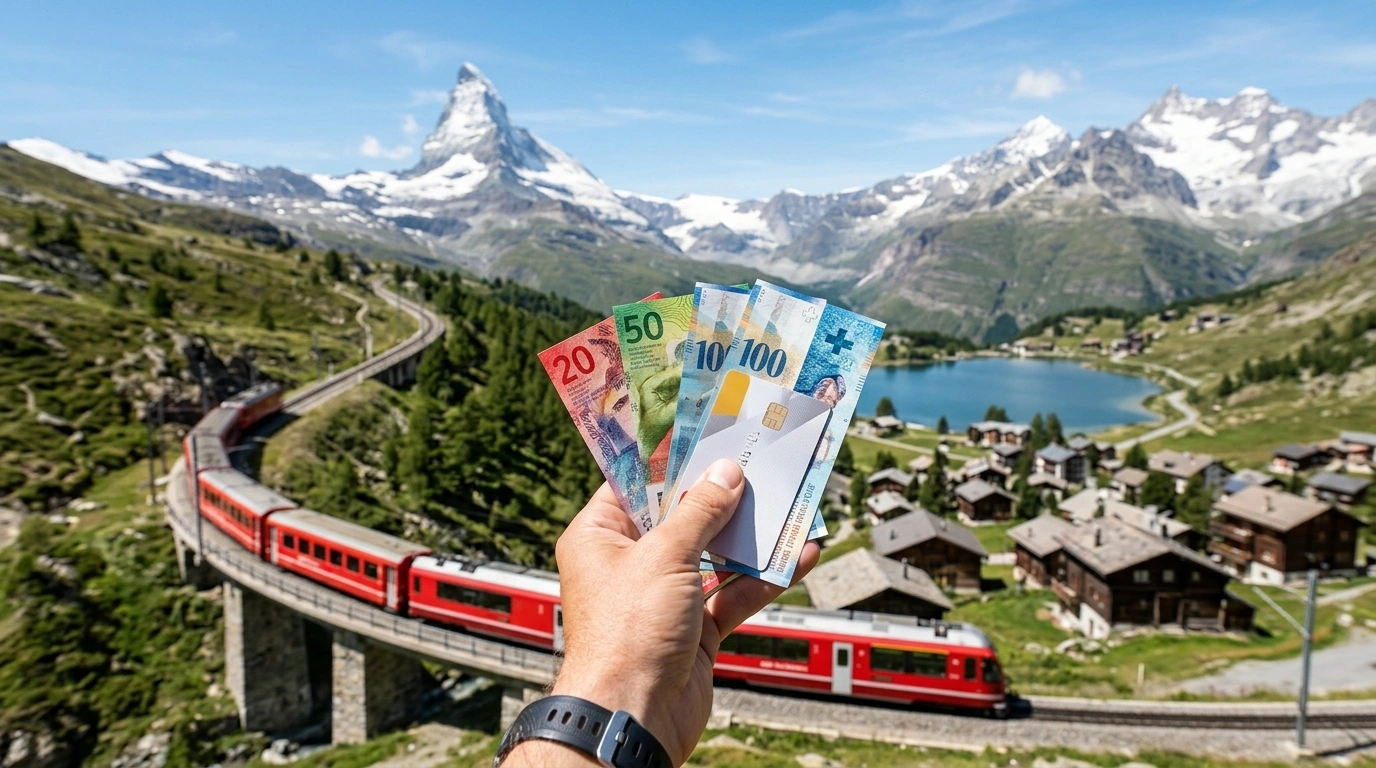
The honest answer is yes, Switzerland is expensive, but it is not automatically out of reach. Your final Switzerland travel budget depends on where you go, when you visit, how you get around, and whether you travel like a budget traveler, a mid-range traveler, or a luxury traveler. For many visitors, the biggest shock is not one single item. It is how quickly accommodation, food, trains, and mountain excursions add up.
That said, Switzerland is also one of the most organized, scenic, and efficient countries in Europe. You are paying for high wages, a strong economy, a very high quality of life, reliable public transport, and exceptional infrastructure in difficult mountainous terrain. So when people ask, “is Switzerland expensive for tourists?”, the better question is: how expensive is a trip to Switzerland for your style of travel?
In this guide, you will see realistic costs, a full Switzerland trip cost breakdown, sample budgets, pass comparisons, and practical ways to enjoy the country without destroying your wallet.
Is Switzerland expensive for tourists?
Yes, Switzerland is expensive for tourists, and it is often one of the priciest destinations in Europe. A simple meal can cost around 25.00 Fr. at an inexpensive restaurant, while a dinner for two at a mid-range restaurant can easily reach 100.00 Fr. A cappuccino around 5.04 Fr., bottled water around 4.06 Fr., and a fast-food combo around 15.00 Fr. show how everyday spending can climb fast.
Still, the country is not equally expensive for everyone. A backpacker focused on hostels, supermarkets, and fewer paid attractions can manage a much leaner Switzerland budget per day than a couple taking scenic trains, eating out often, and adding famous mountain rides. The country feels especially expensive when travelers book late, stay in major hotspots like Zurich, Geneva, Zermatt, or Interlaken, and buy full-price transport at the last minute.
So the short version is this: travel costs in Switzerland are high, but they are also predictable. If you plan well, Switzerland becomes much more manageable than its reputation suggests.
Why is Switzerland so expensive?
If you have ever wondered why Switzerland is so expensive, the reason goes beyond tourism. Switzerland has high wages, a strong currency, a small domestic market, and expensive labor. It also imports many goods, which raises import costs. Add strict standards, excellent public systems, and complex infrastructure built across mountains, and prices naturally rise.
This is why even basic categories such as Switzerland food prices, Switzerland hotel prices, and Switzerland transport costs often look higher than in nearby countries. You are not only paying for the product itself. You are also paying for the Swiss operating environment: salaries, land costs, energy, transport logistics, and a very high standard of service.
That is also why Switzerland can feel contradictory. Locals may earn an average monthly net salary after tax around 5,930.94 Fr., which helps explain domestic pricing, but visitors arrive with outside incomes and quickly feel the gap. In other words, from a tourist perspective, Switzerland feels costly because your spending power often does not match Swiss price levels.
Average daily budget: How much does Switzerland cost per day?
A realistic Switzerland daily budget usually falls into three broad ranges.
| Travel style | Estimated daily budget | What it usually includes |
|---|---|---|
| Budget traveler | 100–150 CHF per day | Hostel bed, supermarket meals, local transport, limited paid attractions |
| Mid-range traveler | 200–350 CHF per day | Budget hotel or simple private room, some restaurant meals, intercity trains, a few attractions |
| Luxury traveler | 500+ CHF per day | Comfortable hotels, scenic rail, dining out, premium excursions, taxis/private transfers |
A very strict traveler can sometimes get below that, especially with a hostel bunk, self-catering, and fewer mountain lifts. Some ultra-budget examples go as low as less than 70 CHF a day, but that usually means sacrificing comfort, convenience, and flexibility. On the other hand, a classic scenic trip with hotels, famous trains, and summit excursions can easily push a couple far beyond the mid-range category.
If you are asking how much spending money do you need for Switzerland, think of your total trip in layers: sleep, eat, move, and see. Switzerland becomes expensive when you upgrade even one of those layers every day.
Switzerland trip cost breakdown by category
A proper Switzerland trip cost breakdown starts with the four areas that shape almost every trip: accommodation, food, transport, and activities. Once you understand those, it becomes much easier to answer how much does a trip to Switzerland cost.
Accommodation costs in Switzerland
Accommodation costs in Switzerland are often the biggest piece of the budget after transport. A hostel bunk may start around 20 CHF, but in popular regions a more typical hostel dorm bed can land in the 30–60 CHF range. In ski areas, a dorm bed can climb to 50 CHF or more. A basic private hotel room often sits around 100–150 CHF, while a mid-range stay can be 150–300 CHF or more. In high-demand destinations, rates around $350 per night are not unusual.
This is why how much do hotels cost in Switzerland depends heavily on location. Zurich, Geneva, Lucerne, Interlaken, and Zermatt usually cost more than smaller base towns. Travelers who stay just outside the center or in less famous villages often save a meaningful amount. That same logic appears in housing data too: a 1-bedroom city-centre apartment may average around 1,615.13 Fr., while the same category outside centre can be about 1,332.01 Fr. Even for tourists, the “city centre vs outside city centre” trade-off is real.
If you want cheap Switzerland travel, your best accommodation strategy is simple: book early, avoid peak weekends, and consider staying one step away from the postcard-famous center.
Food and drink prices in Switzerland
Switzerland food prices catch many first-time visitors off guard because the little purchases add up as fast as restaurant meals. An inexpensive restaurant meal around 25.00 Fr., a meal for two around 100.00 Fr., and a fast-food combo around 15.00 Fr. are common reference points. A quick coffee around 5.04 Fr. and bottled water near 4.06 Fr. can make even a light day feel costly.
For cheaper eating, supermarkets are essential. Stores like Migros, Denner, Lidl, and Aldi help reduce Switzerland grocery prices compared with restaurants. Simple supermarket meals such as sandwiches, bakery items, salads, and ready-made meals make a big difference. A sandwich or baguette might cost 4–8 CHF, a kebab around 8–10 CHF, and a quick Migros meal around 15 CHF. A decent fixed lunch menu can fall in the 15–25 CHF range, which is often better value than dinner.
So if you are wondering how much does food cost in Switzerland for a week, it really depends on how often you eat out. A traveler who mixes breakfast groceries, picnic lunches, and only a few restaurant meals can spend far less than someone dining out every day. One of the smartest answers to where to eat cheaply in Switzerland is not a specific restaurant. It is a strategy: breakfast from the supermarket, one main paid meal per day, and tap water when possible.
Train, transport, and getting around costs
Switzerland transport costs are high, but the system is outstanding. Trains are clean, frequent, scenic, and extremely reliable. That is why people keep paying for them. Still, if you buy everything at full fare, transport can become one of the biggest line items in your cost of a trip to Switzerland.
Local transport might cost around 3.50 Fr. for a one-way ride, while a monthly public transport pass is around 81.00 Fr. For tourists, intercity fares matter more. A well-known example is a Zurich to Interlaken one-way train around 70–80 CHF at standard rates. Taxis are far more painful, with a taxi start around 6.50 Fr., then roughly 3.80 Fr. per km, plus waiting charges.
If you are asking how much do trains cost in Switzerland, the answer is: enough that planning matters. Early booking, Supersaver tickets, guest cards, and the right pass can cut costs dramatically. Rental cars are not automatically cheaper either. One sample case showed about $471 for a car rental over 7 days, and that still does not include fuel, parking, and toll-like extras. So the cheapest way to travel around Switzerland is not always a car. It depends on your route, number of travelers, and how many long rail days you plan.
Activities, mountain excursions, and sightseeing
This is the category that can quietly blow up a Switzerland holiday budget. Basic city sightseeing can be modest, with some museums in the 10–25 CHF range, but iconic mountain experiences are a different story. A round-trip cable car ticket in the $60–$75 range is not unusual, and headline attractions can be much more. Sample figures from competitor content included $134 for Lake Oeschinen, $77 for the Mürren Cable Car, $52 for the Allmendhubel Funicular, $50 for the Lauterbrunnen to Wengen mountain train, and even $200 each for Jungfraujoch.
That is why people asking about cable car cost in Switzerland or Jungfraujoch ticket cost are really asking about trip design. Switzerland becomes most expensive when travelers try to do every premium mountain excursion in one itinerary. It is usually better to choose one or two major paid experiences and fill the rest of the trip with lower-cost lakes, towns, hikes, and viewpoints.
Is the Swiss Travel Pass worth it?
The Swiss Travel Pass is one of the most searched topics around Switzerland travel pass prices, and for good reason. It can save money, but not for everyone.
A common range mentioned by competitors was roughly 230–250 CHF for a 3-day Swiss Travel Pass and 400–450 CHF for an 8-day pass, though exact prices vary. For families, there are child benefits too, including the 30 CHF Junior Swiss Travel Card and age-based discounts such as the 6–16 child bracket. There are also alternatives like the Swiss Half-Fare Card, Interrail, and Supersaver tickets, some of which can reduce fares by up to 70% if booked early enough.
So, is the Swiss Travel Pass worth it? Usually yes if you are moving around a lot, taking scenic routes, and valuing simplicity. Usually no if you are slow-traveling, staying in one area, or taking only a few long-distance journeys. The Half Fare Card vs Swiss Travel Pass question often comes down to itinerary speed. Fast itinerary, lots of train days, and multiple museum visits? The pass may make sense. Fewer train days and more time in one region? Point-to-point tickets or a half-fare strategy may win.
In other words, do not buy a pass just because Switzerland has a great train reputation. Buy it only if your actual numbers support it.
Sample Switzerland budgets for 3, 7, and 10 days
If you want practical planning, trip length matters more than abstract averages.
A 3-day Switzerland budget for a solo budget traveler might land around 300–450 CHF, assuming hostels, supermarkets, local transport, and one modest paid attraction. A mid-range couple could easily spend 900–1,400 CHF over the same period once you include private accommodation, restaurant meals, trains, and one mountain excursion.
For a 7-day Switzerland trip cost, the range widens fast. One family-based competitor example for 7 days and 6 nights produced totals around $3,697 with a rental car and $3,993 using the Swiss Travel Pass approach. A simpler backpacker week might be closer to 700–1,050 CHF excluding flights, while a mid-range week for a couple often reaches several thousand francs.
A 10-day Switzerland trip budget gives you more room to slow down, which can actually reduce daily averages. The mistake many travelers make is packing too many paid experiences into a longer trip. If you spread out train days, stay longer in one base, and cook occasionally, the per-day cost often improves.
So when people ask how much does a week in Switzerland cost, the best answer is not one number. It is a range shaped by accommodation style, transport pace, and how many premium Alpine activities you include.
Cheapest time to visit Switzerland
The cheapest time to visit Switzerland is usually during the shoulder season, when demand is lower than peak summer and lower than the heart of the winter ski season. Summer brings beautiful weather, lake travel, and peak mountain access, but it also brings higher hotel demand. Winter in ski regions can be even more expensive because accommodation and mountain transport spike around snow season.
For budget-conscious travelers, late spring and early autumn often offer the best balance of price and experience. You may find better room rates, less crowd pressure, and more flexibility on trains and local bookings. So if you are comparing peak season vs shoulder season Switzerland, shoulder season usually wins for value.
This matters because many people asking is Switzerland expensive in December or is Switzerland expensive in summer are really asking about timing. And timing can change the same trip from manageable to painful.
Which places in Switzerland are most and least expensive?
Not every destination carries the same price tag. Zurich and Geneva often feel the most expensive because they combine city pricing with premium accommodation. Zermatt can also be costly because it is iconic, scenic, and logistics-heavy. Interlaken, Lauterbrunnen, Mürren, and Wengen vary, but famous mountain bases generally come at a premium.
This is why Zurich vs Geneva cost or Interlaken budget travel are useful questions. If you want to reduce costs, staying in a less famous base town and visiting bigger sights as day trips can help. The same goes for choosing a slightly less central hotel or apartment.
So yes, most expensive cities in Switzerland deserve their reputation, but you can soften the blow by being flexible with your base. In Switzerland, geography is budget strategy.
Hidden costs tourists forget in Switzerland
One of the biggest content gaps on this topic is hidden costs of travelling in Switzerland. These are the expenses that do not sound huge individually but build up fast.
The first is the snack-and-drink problem. A coffee around 5 CHF and bottled water around 4 CHF seem harmless until you repeat them every day. The second is extra local taxes, such as tourist tax or hotel city tax, which may appear at checkout rather than in the headline room rate. The third is transport timing. Last-minute rail tickets often cost much more than early Supersaver options.
Then there are payment extras. Currency exchange fees, foreign card fees, and poor conversion choices at checkout can quietly inflate your budget. Even simple mistakes, like buying water constantly instead of using tap water in Switzerland, can chip away at your spending money.
If you want to know how to avoid overspending in Switzerland, start by controlling the little leaks, not just the big-ticket items.
How to visit Switzerland on a budget without missing the best parts?
You absolutely can you visit Switzerland on a budget, but it takes strategy. The first rule is to spend heavily only where Switzerland is truly unmatched. That might mean one legendary mountain excursion and then cheaper lake towns, hikes, museums, and scenic walks for the rest of the trip.
The second rule is to use budget tools the country already offers. Guest cards such as the Ticino Ticket, Appenzell Holiday Card, and Engadin Guest Travel Pass can add real value. The Swiss Hotel Card, around 99 CHF per year, can also help some travelers. Supermarkets like Migros, Denner, Lidl, and Aldi, along with apps like Too Good To Go, are perfect for cost-saving travel tips in daily life.
The third rule is to slow down. Constant movement raises rail costs and encourages rushed, expensive sightseeing. Fewer bases, more walking, smarter meals, and earlier booking are the foundation of budget travel Switzerland.
Is Switzerland expensive compared with France, Italy, or the UK?
In general, yes, Switzerland is usually more expensive than nearby countries like France and Italy, and it often feels pricier than much of the UK too. The difference is especially noticeable in restaurant meals, hotels, and transport. Travelers crossing over from Italy often feel the change immediately.
That said, Switzerland also delivers unusually high reliability, safety, cleanliness, and transport quality. So the comparison is not only about price. It is also about what that price buys. If you are asking how expensive is Switzerland compared to other European countries, the answer is that it sits near the top end, but it also offers one of Europe’s smoothest travel experiences.
Switzerland cost of living vs travel cost: what’s the difference?
A lot of searchers mix up Switzerland cost of living with travel cost, and they overlap, but they are not the same. Residents face long-term expenses like rent, utilities, health insurance, childcare, and property prices. Travelers mostly feel short-term costs like hotels, meals, trains, and attractions.
For residents, examples from competitor data included 1,500–3,000+ CHF for a 1-bedroom city-center rent, 150–300 CHF in utilities, 250–500 CHF health insurance per person, and family groceries in the 600–1,000 CHF range. Tourists do not pay those monthly obligations, but they do pay a premium for convenience and short stays.
So if your goal is trip planning, focus on the travel categories first. The broader cost-of-living picture is helpful mainly because it explains why Swiss tourism pricing looks the way it does.
Final Words: How expensive is Switzerland really?
So, how expensive is Switzerland really? It is expensive, but it is not impossible. For most visitors, the biggest drivers are accommodation, transport, and mountain activities, not just food alone. A careful traveler can keep a Switzerland daily budget around 100–150 CHF, while a more comfortable trip often falls in the 200–350 CHF range, and a premium trip goes much higher.
The good news is that Switzerland rewards smart planning more than many countries do. Choose your base carefully, do not overbook expensive excursions, compare the Swiss Travel Pass with simpler ticket options, and use supermarkets and guest cards wisely. If you do that, Switzerland still feels premium, but your trip can feel realistic instead of reckless.
Disclaimer: This article is for general travel and budgeting information only. Prices and costs may vary based on season, location, and personal travel choices. Always check current rates and official sources before planning your trip.



Leave a Reply