

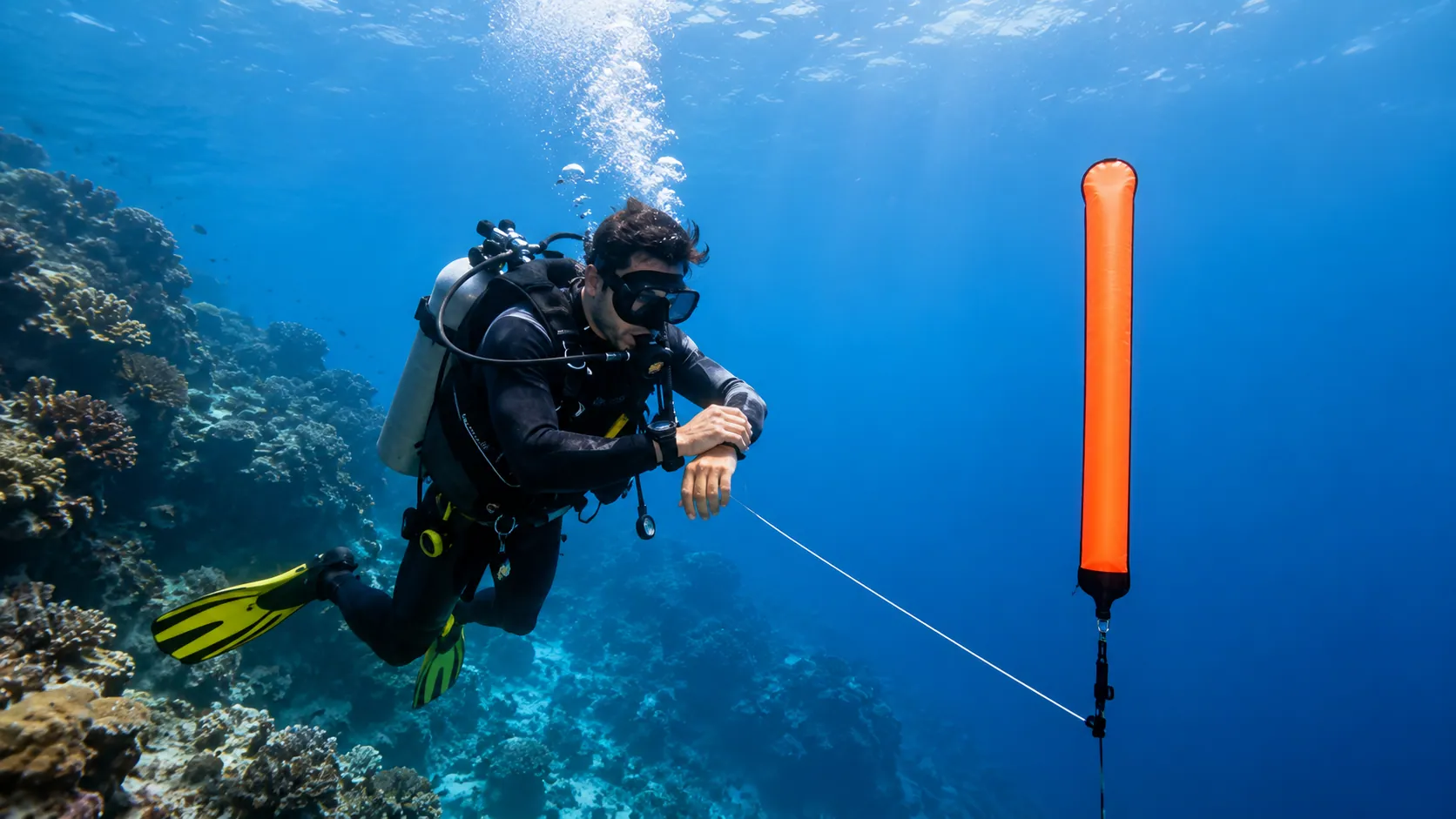
How to decrease the risk of bends in scuba starts with understanding that the bends, also called decompression sickness or DCS, is not something divers should take lightly. It can happen when dissolved gases, mainly nitrogen, form bubbles in the bloodstream or body tissues during or after ascent.
The good news is that safe habits can greatly lower your risk. You can reduce decompression stress by planning conservative dives, staying within no-decompression limits, making slow ascents, taking safety stops, allowing enough surface intervals, staying hydrated, and avoiding risky post-dive behavior.
However, no article, dive computer, or rule can promise complete protection. Decompression sickness prevention is about lowering risk, not eliminating it entirely. The smartest divers combine training, good judgment, proper equipment, and a conservative mindset every time they enter the water.
What Are the Bends in Scuba Diving?
The bends is the common name for decompression sickness, a diving-related condition that can occur when a diver comes up from depth and the pressure around the body decreases. While underwater, a diver breathes compressed gas from a scuba tank. As depth increases, pressure increases, and more nitrogen can dissolve into the diver’s tissues.
During a safe ascent, the body slowly releases this dissolved nitrogen through normal breathing. But if a diver ascends too quickly, stays too long at depth, skips required stops, or builds up too much residual nitrogen, the gas may form nitrogen bubbles. These bubbles can irritate tissues, block blood flow, or affect the nervous system, lungs, joints, or cardiovascular system.
That is why divers often search for how to prevent the bends in scuba diving or how to avoid decompression sickness. They want practical steps that make diving safer. The most important thing to remember is simple: DCS risk is closely connected to depth, time, ascent rate, and the diver’s physical condition.
What Causes Decompression Sickness While Diving?
Decompression sickness is mainly caused by pressure changes and gas absorption. When you descend, the pressure around your body rises. Under this pressure, your body absorbs more dissolved gases, especially nitrogen. The deeper you go and the longer you stay, the more nitrogen your body may absorb.
When you ascend, pressure decreases. If the ascent is slow and controlled, the body can release nitrogen gradually. But a rapid ascent can create a rapid pressure decrease, allowing nitrogen to form bubbles in tissues and blood. This is why one of the most important rules in scuba diving safety is to ascend slowly at the recommended ascent rate.
Several factors can increase DCS risk, including deep dives, long dives, repetitive dives, short surface intervals, dehydration, fatigue, alcohol, cold water, heavy exertion, and flying too soon after diving. A diver may also be more vulnerable because of individual health, fitness, age, or medical conditions.
In simple terms, the bends happen when the body cannot safely handle the amount of nitrogen absorbed during a dive. Good dive planning helps prevent that situation before it starts.
Can You Completely Prevent the Bends?
No diver can completely guarantee they will never get the bends. Even careful divers who follow their training and use a dive computer can still experience decompression sickness in rare cases. That is why the best phrase is “decrease the risk,” not “remove the risk.”
Your goal is to reduce decompression stress as much as possible. This means avoiding aggressive dive profiles, staying well inside your limits, making controlled ascents, and listening to your body. It also means knowing when not to dive. If you are dehydrated, exhausted, hungover, sick, congested, or feeling unwell, skipping the dive may be the safest decision.
A smart diver does not ask, “Can I just barely fit this dive into my limits?” A smart diver asks, “Can I make this dive with a comfortable safety margin?” That mindset is the foundation of safe scuba diving.
Plan Conservative Dives Before You Enter the Water
The best way to reduce your risk of decompression sickness begins before you even put on your gear. Dive planning helps you control your depth, time, ascent, gas supply, and surface interval. A conservative dive plan gives your body a better chance to manage nitrogen safely.
You should know your planned maximum depth, expected bottom time, turn pressure, ascent route, safety stop plan, and emergency plan. Use your dive computer or dive tables properly, but do not treat them as permission to push your body to the edge. A dive computer is a tool, not a guarantee.
A key part of decompression sickness prevention is staying within your no-decompression limits. These limits estimate how long you can remain at a certain depth without needing mandatory decompression stops. But staying just inside the limit does not mean the dive is risk-free. Leave a buffer whenever possible.
Conservative Planning Habit | Why It Helps
|—|—|
| Stay shallower when possible | Reduces nitrogen absorption |
| Shorten bottom time | Lowers nitrogen loading |
| Extend surface intervals | Allows more nitrogen release |
| Avoid pushing computer limits | Adds safety margin |
| Dive deepest first | Helps manage repetitive dive exposure |
| End the day with shallower dives | Reduces accumulated decompression stress |
For vacation divers and liveaboard divers, this matters even more. Multiple dives over several days can gradually build residual nitrogen, fatigue, and dehydration. Conservative planning helps you enjoy the trip without turning every dive into a race against the computer.
Ascend Slowly and Control Your Buoyancy
A slow ascent is one of the most important habits for anyone learning how to decrease the risk of bends in scuba. Many training agencies and dive computers use ascent-rate guidance around 30 feet per minute or 30 feet / 10 meters per minute, though divers should always follow their training, computer, and local dive procedures.
The reason is simple: a controlled ascent gives your body more time to release nitrogen safely. A rapid ascent increases the chance that dissolved nitrogen may form bubbles. It can also create other serious diving emergencies, especially if the diver is panicked or poorly weighted.
Good buoyancy control makes a slow ascent possible. If you are overweighted, underweighted, breathing erratically, or unfamiliar with your BCD control, you may find it hard to hold depth. This can lead to an uncontrolled ascent or a missed safety stop.
Practice neutral buoyancy often. Make small BCD adjustments. Breathe calmly. Watch your depth and ascent rate. Use a line when needed, especially in current or low visibility. A calm, controlled diver is much less likely to bolt to the surface.
Also pay attention to the final ascent. Some divers carefully ascend to the safety stop, wait at 15 feet, and then rush the last few feet to the surface. That final ascent still matters. Stay slow, controlled, and aware until you are safely back on the boat or shore.
Make Safety Stops Part of Every Recreational Dive
A safety stop is a short pause near the end of a dive that gives your body more time to off-gas nitrogen. For many recreational dives, a common safety stop is around 15 feet or 3–6 meters for 3–5 minutes.
Safety stops are especially useful after deeper dives, longer dives, repetitive dives, or dives that come close to the no-decompression limit. They are not the same as mandatory decompression stops. A safety stop is generally a recommended precaution, while a decompression stop is required by your dive plan or computer before surfacing.
Still, making safety stops a regular habit is one of the simplest ways to support safe diving practices. During the stop, hold your depth as steadily as possible. Avoid bouncing up and down, finning hard, or drifting upward without noticing. Your dive computer can help you monitor stop depth, time, and ascent rate.
If conditions make a safety stop difficult, such as rough seas, low air, strong current, or an emergency, follow your training and prioritize immediate safety. But whenever conditions allow, a calm safety stop is a smart habit.
Manage Repetitive Dives, Surface Intervals, and Multi-Day Trips
Many divers get into trouble not because of one extreme dive, but because of several moderate dives stacked together. Repetitive dives, short surface intervals, and multi-day dive schedules can increase nitrogen loading and fatigue.
After a dive, your body continues releasing nitrogen. A longer surface interval gives your body more time to reduce residual nitrogen before the next dive. That is why your second, third, or fourth dive of the day should usually be planned more conservatively.
This is especially important on dive vacations. A diver may be excited to do four dives a day, every day, for a full week. But travel, sun exposure, dehydration, alcohol, poor sleep, and physical effort can all add stress. Taking a lighter dive day or even a rest day during a week of diving can be a smart choice.
For liveaboards, repetitive dive planning is even more important. Use your dive computer consistently, avoid switching computers between dives, and do not ignore warnings. If your computer asks for a longer surface interval, a slower ascent, or a missed-stop response, take it seriously.
Stay Hydrated, Rested, Warm, and Fit Enough to Dive
Your physical condition matters. Dehydration, fatigue, cold stress, poor fitness, and heavy workload underwater can all make diving less safe. While hydration alone does not “prevent” the bends, being dehydrated may increase overall diving risk and reduce your body’s ability to handle stress.
Drink water regularly before and after diving. Do not wait until you feel thirsty. On tropical dive trips, sun, saltwater, wind, and travel can dehydrate you faster than you realize. On cold-water dives, heavy gear and exposure stress can also wear you down.
Rest is just as important. Diving while exhausted can lead to poor decisions, weaker buoyancy control, faster breathing, and panic. If you are too tired to think clearly, you are too tired to dive safely.
Cold water also matters. Being cold can affect comfort, circulation, and workload. Use proper thermal protection, such as the right wetsuit thickness or a drysuit when conditions require it. A diver who is shivering, struggling, or working hard at depth may increase decompression stress.
Fitness does not mean you need to be an athlete. It means you should be healthy enough to handle currents, surface swims, gear weight, boat ladders, and unexpected problems without becoming overwhelmed.
Avoid Alcohol, Heavy Exercise, and Heat Stress Around Diving
Alcohol and diving do not mix. Drinking before diving can affect judgment, hydration, coordination, and reaction time. Diving while hungover is also risky because hangovers often involve dehydration, fatigue, headache, and poor focus.
It is also smart to be careful with strenuous exercise after diving. Heavy workouts immediately after diving may affect circulation and decompression stress. Light movement is usually different from intense training, but after a serious dive day, your body may need rest more than a gym session.
Some divers also choose to be cautious with heat exposure after diving, including very hot showers, saunas, and deep tissue massage. These activities may affect circulation, and while advice can vary, a conservative approach is best when your body is still off-gassing.
A simple rule works well: after diving, rehydrate, eat, rest, stay warm but not overheated, and avoid anything that places unnecessary stress on your body.
Be Careful With Flying, Altitude, and Travel After Diving
Flying after diving is a major concern because airplane cabins have reduced pressure compared with sea level. Traveling to altitude too soon after diving may increase decompression stress while your body is still releasing nitrogen.
Many divers follow general guidance such as waiting at least 12 hours after a single no-decompression dive and 18–24 hours after repetitive dives, multiple dive days, or dives requiring decompression stops. Some divers choose an even more conservative window, especially after liveaboard diving or heavy dive schedules.
Altitude risk is not limited to airplanes. Mountain travel after diving, driving to high elevations, or diving at altitude may also require special planning. If you are diving in a place where you must drive over mountains afterward, plan this before the dive, not after.
A good travel plan should include your last dive time, flight time, number of dives, dive depth, surface intervals, and personal condition. When in doubt, choose the more conservative option.
Use Nitrox Carefully, But Do Not Treat It as a Guarantee
Enriched Air Nitrox, also called EANx or nitrox, contains a higher percentage of oxygen and a lower percentage of nitrogen than regular air. When used properly, nitrox can reduce nitrogen exposure for certain dive profiles.
However, nitrox does not remove DCS risk. It also introduces oxygen-related limits, including maximum operating depth, MOD, and PPO2 considerations. That is why divers need proper nitrox certification before using it.
Some divers use nitrox with air-based computer settings to add conservatism, but this should only be done if the diver understands the implications and follows training. Nitrox is a useful tool, not a magic shield. You still need slow ascents, safety stops, surface intervals, hydration, and conservative planning.
Know When Not to Dive
One of the most underrated ways to reduce the risk of the bends is knowing when to skip a dive. Divers often feel pressure because they paid for a trip, rented gear, or do not want to disappoint a buddy. But no dive is worth risking your health.
Avoid diving if you are sick, severely congested, dehydrated, hungover, injured, unusually tired, or mentally distracted. Also avoid dives beyond your training level. If a dive requires deep diving, decompression procedures, overhead environments, strong current skills, or special equipment, do not attempt it without the right training.
A fitness-to-dive questionnaire or medical evaluation may be useful if you have health concerns. This is especially important for divers with heart, lung, neurological, or circulation-related issues. When in doubt, ask a qualified dive medical professional before diving.
Good judgment is part of good diving. Sometimes the safest dive is the one you do not make.
Learn the Symptoms of the Bends and Act Quickly
Even with careful planning, divers should know the warning signs of decompression sickness. Symptoms can be mild, severe, or delayed. They may appear soon after surfacing or later.
Common symptoms include joint pain, muscle pain, unusual fatigue, dizziness, vertigo, nausea, itching, skin rash, numbness, tingling, pins and needles, weakness, shortness of breath, chest pain, confusion, paralysis, or unconsciousness.
Some cases are described as Type 1 decompression sickness, often involving pain, skin symptoms, or mild symptoms. More serious cases, sometimes described as Type 2 decompression sickness, may involve neurological, inner ear, lung, or cardiovascular symptoms. Do not try to self-diagnose the type. Treat any suspicious post-dive symptom seriously.
A diver who feels “off” after a dive should not ignore it, sleep it off, fly home, or get back in the water. DCS can worsen if action is delayed. Fast response can improve outcomes.
What to Do If You Suspect Decompression Sickness
If you suspect the bends, stop diving immediately and seek urgent medical help. Do not return to the water for in-water recompression unless directed by properly trained professionals in an appropriate setting. For recreational divers, this is not a do-it-yourself treatment.
If trained providers and equipment are available, 100% oxygen is commonly used as first aid for suspected DCS while emergency care is arranged. Keep the diver resting, monitor symptoms, and contact emergency medical services or a dive emergency organization such as DAN or Divers Alert Network.
Treatment may involve evaluation by medical professionals and, in some cases, recompression therapy in a hyperbaric chamber. A hyperbaric chamber places the diver in a pressurized environment to help reduce bubbles and support recovery.
Do not fly with DCS symptoms. Do not assume mild symptoms are harmless. Do not delay care because you feel embarrassed or uncertain. A suspected diving injury deserves proper medical attention.
Quick Checklist to Decrease the Risk of Bends in Scuba
Use this simple checklist before, during, and after diving:
- Plan conservative dives and avoid pushing no-decompression limits
- Use a dive computer or dive tables correctly
- Limit depth and bottom time
- Ascend slowly, around your trained safe ascent rate
- Avoid rapid or uncontrolled ascents
- Make a safety stop around 15 feet for 3–5 minutes when conditions allow
- Control buoyancy and avoid rushing the final ascent
- Take longer surface intervals between repetitive dives
- Stay hydrated, rested, warm, and properly fueled
- Avoid alcohol, hangovers, heavy post-dive exercise, and heat stress
- Wait before flying, often 18–24 hours after multiple dives
- Know the symptoms of DCS
- Have an emergency plan, oxygen access, and knowledge of the nearest medical help
This checklist does not replace training, but it gives divers a practical way to build safer habits.
Conclusion
Learning how to decrease the risk of bends in scuba is really about making conservative choices before, during, and after every dive. Decompression sickness is serious, but divers can lower their risk by planning carefully, ascending slowly, using safety stops, managing repetitive dives, staying hydrated, avoiding alcohol and fatigue, and waiting before flying.
The safest divers do not rely on one rule or one piece of equipment. They combine dive planning, buoyancy control, surface intervals, dive computer awareness, and honest self-checks. Most importantly, they act quickly if symptoms appear.
Scuba diving should be exciting, memorable, and safe. Respect your limits, listen to your training, and choose caution whenever your body, your computer, or the conditions tell you to slow down.
Disclaimer: This article is for general informational and scuba-diving education purposes only and does not replace professional dive training, medical advice, or emergency guidance. Scuba diving involves inherent risks, including decompression sickness and other diving injuries. Always follow certified training standards, dive conservatively, and seek immediate medical attention for suspected symptoms.







Leave a Reply