

Introduction
Which is one of the component of gearbox? One common answer is the gear set, but a complete gearbox also includes shafts, bearings, a housing, and a lubrication system. In many machines and vehicles, these parts work together to control speed, manage torque, and transfer mechanical power smoothly from one point to another.
This question often appears in a very short or awkward form, especially in student queries, MCQs, and beginner-level searches. The simple truth is that there is not just one single part inside a gearbox. A gearbox is a system made up of several connected parts, and each one has a job. The gears change the ratio between speed and force, the input shaft and output shaft move power through the unit, the countershaft helps redirect motion, the bearings reduce friction, and the housing with lubrication protects everything and keeps the parts working efficiently.
In this guide, you will learn the main components of a gearbox, what each part does, how manual transmission and automatic transmission systems differ, what common gearbox problems look like, and why understanding these parts matters whether you are a student, vehicle owner, or simply curious about gearbox components and functions.
What Is a Gearbox and What Does It Do?
A gearbox is a mechanical unit that transfers power from a source, such as an engine or motor, to another moving part. Its main job is to adjust speed and torque. In simple words, it helps a machine or vehicle use power in the most effective way.
Think of a car climbing a hill. It needs more turning effort, or torque, and less speed. On a smooth highway, it usually needs less torque and more speed. That change is made possible by the gear ratio inside the gearbox. By switching from one gear combination to another, the gearbox changes how power is delivered.
This is why a gearbox is so important in cars, trucks, heavy machinery, automotive equipment, and manufacturing systems. In industrial settings, industrial gearboxes are used to control output in conveyor belts, mixers, production lines, and other heavy-duty applications. In vehicles, the gearbox helps the drivetrain match road conditions, engine load, and desired performance.
You can think of it as the control center for rotary motion. Without a gearbox, power would still exist, but it would not be properly managed for real-world use.
The Main Components of a Gearbox
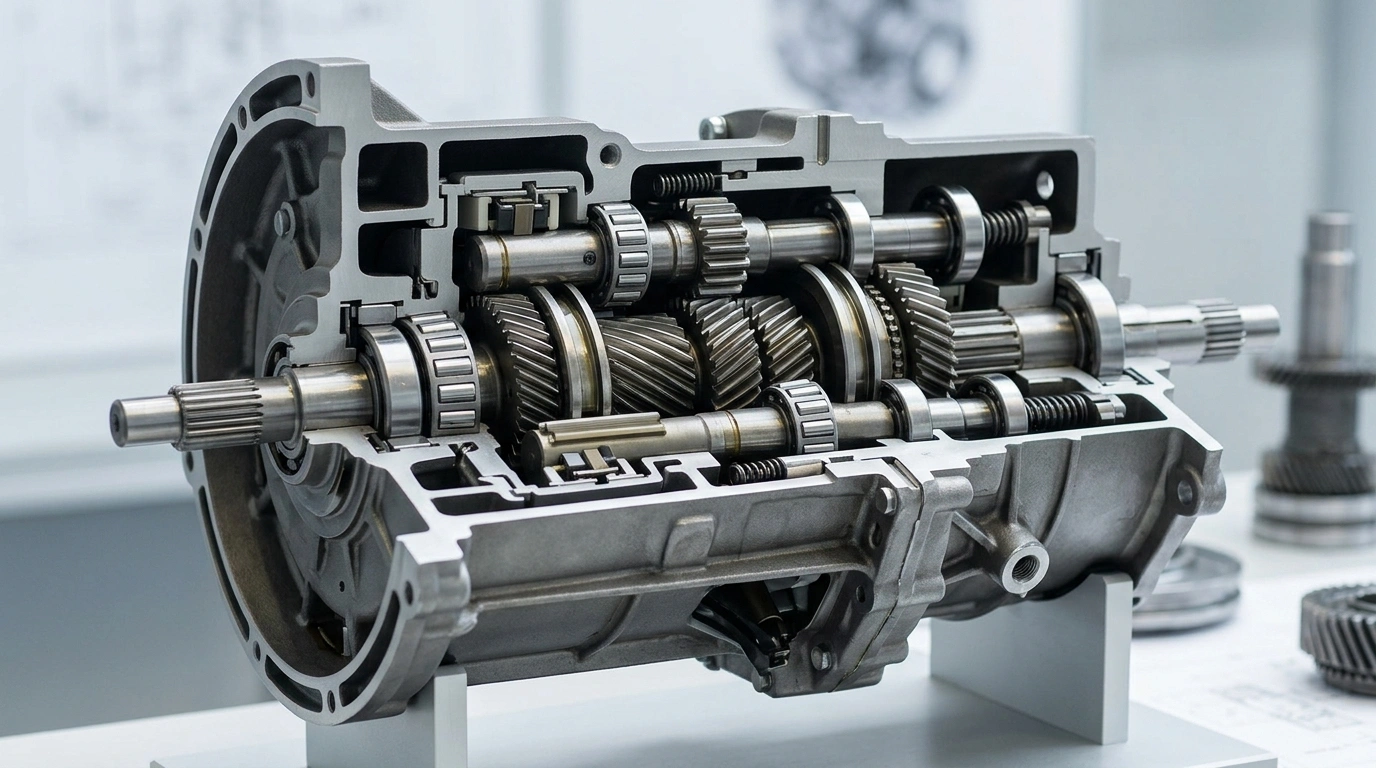
When people search for main components of a gearbox, they usually want a quick list before they go deeper. The core gearbox components are:
| Gearbox Part | What It Does | Why It Matters |
| Gear set | Changes speed and torque | Makes power usable |
| Input shaft / clutch shaft | Brings power into the gearbox | Starts the power flow |
| Countershaft / layshaft | Transfers motion between gears | Supports gear engagement |
| Main shaft / output shaft | Sends power out of the gearbox | Delivers final motion |
| Bearings | Reduce friction and support movement | Improve smoothness and service life |
| Housing / casing | Protects internal parts | Keeps parts aligned and safe |
| Lubrication system | Reduces wear and heat | Prevents early failure |
| Selector fork / synchronizers | Help gear engagement | Improve control and shifting |
So, if someone asks, “which component is part of a gearbox?”, valid answers include gear, shaft, bearing, housing, or lubrication system. The better answer, though, is to explain that a gearbox is made up of multiple components working together.
Gear Sets: The Part That Changes Speed and Torque
The gear set is usually the first part people think of when discussing gearbox parts. Gears are toothed wheels that mesh with one another. As they rotate, they transfer power from one shaft to another. This is how a gearbox changes speed, torque, and direction of movement.
Different gear designs are used for different needs. Spur gears are simple and common, but they can be noisy. Helical gears are smoother and quieter because their teeth engage more gradually. Bevel gears are useful when motion needs to change direction, often at 90-degree angles. Worm gears are found in some special applications where very high reduction ratios are needed.
This is where gear ratio becomes important. A lower gear often gives more torque and less speed, while a higher gear gives more speed and less torque. That is why gears are essential in both automotive and industrial applications.
In beginner terms, if you want a simple answer to how gears transmit power from one shaft to another, the answer is this: one rotating gear pushes another, and that controlled contact changes the way force is delivered. That is the heart of gearbox operation.
Shafts: Input, Countershaft, and Main Shaft Explained
The shafts inside a gearbox are just as important as the gears. While the gears change the ratio of movement, the shafts carry the power through the system.
The input shaft, often called the clutch shaft in many manual systems, receives power from the engine or motor. This is the first stage of power transfer. Once the engine turns, that motion enters the gearbox through this shaft.
The countershaft, also called the layshaft, works like a middle link. It carries gears that mesh with other gears in the transmission. In many designs, it helps shift power from the input side to the output side. If you are trying to understand countershaft function, think of it as the part that helps route and balance gear-driven motion inside the system.
The main shaft, sometimes called the output shaft, is the part that delivers the final motion from the gearbox to the next stage of the machine or vehicle. This is where controlled power leaves the gearbox and moves toward the wheels, conveyor, or other driven component.
A simple way to remember the relationship is this:
- Input shaft = power comes in
- Countershaft = power is managed and redirected
- Main/output shaft = power goes out
Many shafts include splines or keyways so parts can fit securely. They are usually made from strong materials such as alloy steels or hardened steel because they must survive heavy loads, repeated motion, and constant pressure.
If you are comparing input shaft vs output shaft, the difference is straightforward: one receives the power, and the other sends it onward after the gearbox has adjusted it.
Bearings: Why Smooth Rotation Matters
A gearbox cannot work well without bearings. These small but critical parts support rotating shafts and reduce friction between moving components. Without bearings, the internal parts would wear out much faster, create more heat, and lose efficiency.
There are different kinds of bearings used depending on the design and load. Common examples include ball bearings, roller bearings, tapered roller bearings, and thrust bearings. Some industrial systems may also use journal bearings or tilting pad journal bearings.
Bearings help handle both radial loads and axial loads. In simple language, they support forces coming from different directions while allowing smooth motion. That is why bearings directly affect service life, noise levels, and overall performance.
A worn bearing may create grinding noises, vibration, or unstable motion. This is one reason gearbox bearing failure is taken seriously. Even if the gears themselves are strong, bad bearings can damage the whole system over time.
Housing, Lubrication, Seals, and Protection
The housing or casing of a gearbox does more than just cover the inside. It holds the whole unit together, protects the internal parts, and keeps the gears and shafts aligned. In many systems, the housing is made from cast iron, cast steel, or aluminum alloys, depending on the strength, weight, and heat dissipation requirements.
Inside the housing, the lubrication system plays a major role. Gearbox oil or transmission fluid reduces wear, controls operating temperature, and prevents metal-to-metal damage. This is why gearbox lubrication importance should never be ignored. Good lubrication reduces power loss, limits heat buildup, and protects the gears, shafts, and bearings from premature wear.
Seals and gaskets are also important. They help prevent leaks and keep dirt, moisture, and other contaminants out. When these parts fail, the gearbox may start losing fluid, overheating, or suffering from internal damage.
So if someone asks about gearbox housing function, the answer is not just “it covers the parts.” It also supports alignment, helps protection, improves cooling, and allows lubrication to do its job.
Gear Selector Fork and Other Supporting Parts
Some gearbox components do not get much attention, but they are still essential. One example is the gear selector fork, sometimes called the gear shift fork. This part helps move gears or synchronizer sleeves into the correct position during shifting.
In a manual transmission, synchronizers help the selected gear engage more smoothly. Without them, gear changes would be rough and noisy. Supporting parts like the collar, stick shift mechanism, and shifter sleeve also contribute to gear control.
These parts may seem secondary compared with gears and shafts, but they matter a lot in real-world performance. Poor engagement, difficulty shifting, or rough gear changes often point to problems in these supporting parts.
Manual Gearbox Components vs Automatic Transmission Components
A common source of confusion is the difference between manual gearbox components and automatic transmission components. Both systems transfer power, but the parts they rely on are not exactly the same.
A manual transmission usually includes the clutch shaft, input shaft, countershaft, main shaft, gear selector fork, synchronizers, clutch disc, clutch pedal, and flywheel. The driver actively changes gears, so the design depends more on direct mechanical control.
An automatic transmission includes parts such as the torque converter, oil pump, planetary gear set, clutch packs, brake band, valve body, and transmission fluid. Instead of relying on the driver to operate a clutch, it uses hydraulic and mechanical systems to change gears automatically.
This is why manual gearbox components vs automatic gearbox components is such a useful comparison. In a manual system, the driver is more directly involved. In an automatic system, the transmission manages much of the shifting process itself.
For example, the torque converter function is to transfer engine power smoothly without the need for a manual clutch pedal. The planetary gear set function is to provide multiple gear ratios in a compact design. These automatic-specific parts are major reasons why automatic transmissions feel very different from manual gearboxes in day-to-day use.
What Types of Gearboxes Are There?
When people search for gearbox types, they often want to know not just the parts, but the major design categories too.
Traditional manual designs include sliding mesh gearbox, constant mesh gearbox, and synchromesh gearbox. These systems differ in how gears engage and how easily the driver can shift.
Modern automotive systems may include:
- Manual transmission
- Fully automatic transmission
- CVT
- AMT
- Dual clutch transmission
A CVT changes ratio smoothly rather than stepping through fixed gears. An AMT is an automated form of manual transmission. A dual clutch transmission uses separate clutches for fast and efficient gear changes.
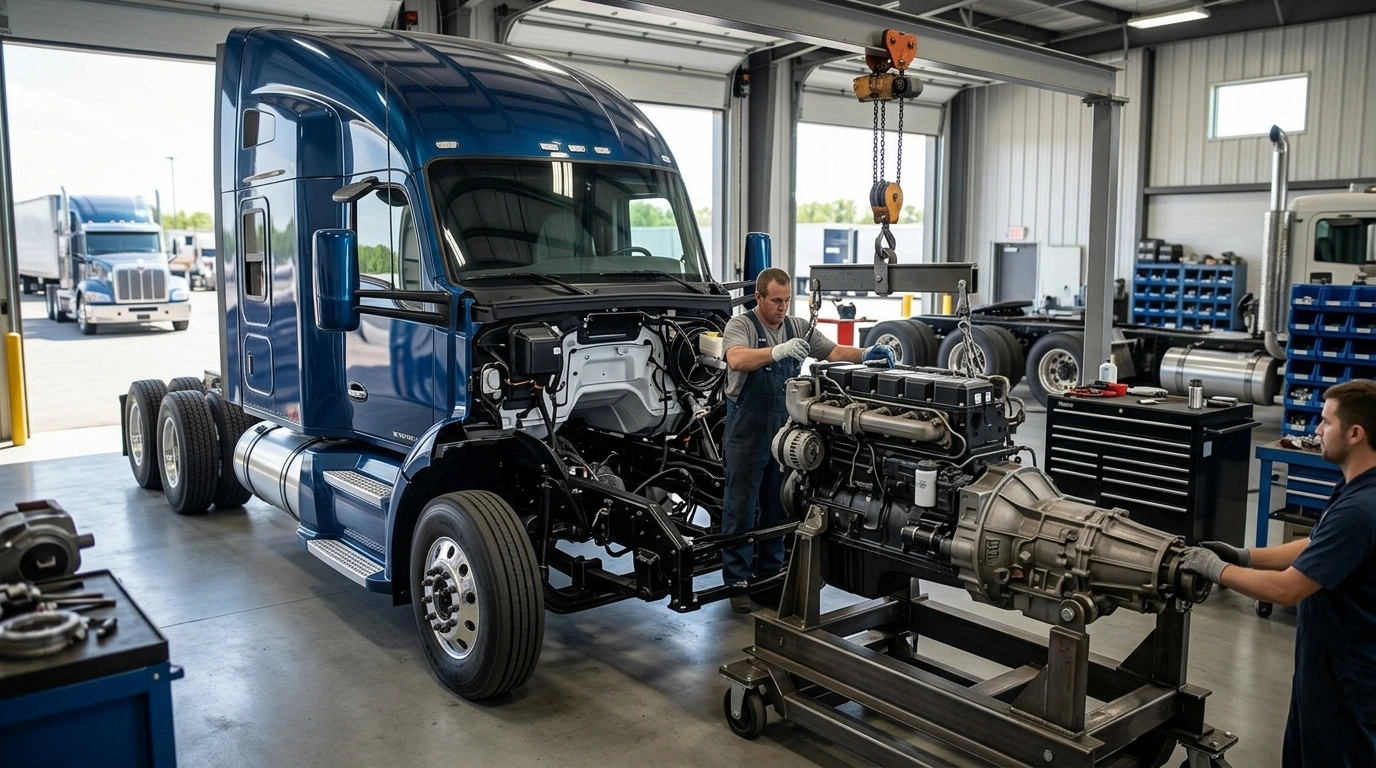
In larger vehicles, there may be up to 6 forward gears, up to 9 speed, or even up to 13 forward gears in trucks and heavy-duty machinery. These number-based examples help show how gearbox design changes based on use.
How the Main Gearbox Components Work Together
To understand how gearbox components work together, imagine the process as a chain.
First, power enters through the input shaft. Then the gear set and countershaft help redirect and adjust that motion. The selected gears determine the gear ratio, which changes speed and torque. The bearings allow the shafts to rotate smoothly. The housing keeps everything aligned and protected. The lubrication system reduces heat and wear. Finally, the main shaft or output shaft sends the controlled power onward.
That is the gearbox working principle in plain language. Power comes in, gets adjusted, stays supported and lubricated, and then moves out in a more useful form.
You can think of the gearbox as a team. Gears cannot do their job well without shafts. Shafts cannot perform well without bearings. Bearings and gears cannot survive long without lubrication. And all of them need the housing to hold them in position.
Gearbox vs Transmission: Are They the Same Thing?
Many beginners use gearbox and transmission as if they mean the same thing. In everyday conversation, that is common. But technically, the terms are not always identical.
A gearbox usually refers to the gear-driven assembly that changes speed and torque. A transmission can be a broader term that includes the gearbox plus other related components involved in delivering power through the vehicle or machine.
That means the difference between gearbox and transmission often depends on context. In many automotive discussions, people may use both words loosely. In technical discussions, the gearbox may be just one part of the larger transmission system.
This distinction helps searchers who ask, “is transmission and gearbox the same thing?” The best answer is: sometimes in casual use, yes; in technical use, not always.
Common Gearbox Problems and Signs a Component Is Failing
Like any mechanical system, a gearbox can develop faults over time. The key is knowing what the symptoms may point to.
If you hear grinding noises, the issue may involve the gears, bearings, or synchronizer-related parts. If there is a fluid leak, the problem may be caused by worn seals and gaskets. If the unit vibrates too much, the issue could involve the shafts, bearings, alignment, or mounting. In vehicles, a warning such as the engine light or transmission temperature light may suggest a deeper problem.
Some users ask, “how do I know if my gearbox is damaged?” Common warning signs include rough shifting, slipping, strange noises, overheating, fluid loss, or delayed response. In many cars, a gearbox may last 100,000 miles or much longer, and some well-maintained systems may even go 300,000 miles or more, depending on design and usage.
A practical rule is this: symptoms often match the type of component involved. Noise may point to gears or bearings. Leaks may point to seals. Overheating may point to lubrication issues. Poor shifting may point to selector fork, synchronizer, clutch-related, or valve body problems.
Quick Reference Table: Gearbox Parts and Their Functions
Here is a simple gearbox components table for quick revision:
| Part | Function | Why It Matters |
| Gear set | Changes speed and torque | Controls power delivery |
| Input shaft | Receives power from engine/motor | Starts gearbox operation |
| Countershaft | Transfers motion between gear pairs | Helps achieve proper ratio |
| Main shaft | Delivers final output | Sends power onward |
| Bearings | Support rotating parts | Reduce friction and wear |
| Housing | Protects and aligns internal parts | Keeps the system stable |
| Lubrication system | Cools and protects moving parts | Extends gearbox life |
| Selector fork | Helps engage the correct gear | Supports smooth shifting |
This kind of table is especially useful for students looking for gearbox parts and their functions in a quick, clear format.
FAQ: Short Answers to Common Gearbox Questions
Which is one component of a gearbox?
A gear, shaft, bearing, or housing can each be one component of a gearbox.
What are the 4 components of a gearbox?
A common simplified answer is gear sets, shafts, bearings, and housing with lubrication.
What are the 5 parts of a gearbox?
Another common answer includes clutch shaft, countershaft, main shaft, gears, and bearings.
How does a car gearbox work?
It transfers engine power through gears and shafts to adjust speed and torque before sending power to the wheels.
What type of gearbox is in my car?
It may be manual, automatic, CVT, AMT, or dual clutch transmission, depending on the model.
How to find out what gearbox is in my car?
Check the owner’s manual, manufacturer specifications, vehicle details, or gearbox code information.
Conclusion
If you have been asking which is one of the component of gearbox, the easiest correct answer is that a gear is one component, but the full picture is much broader. A working gearbox depends on gear sets, input and output shafts, countershafts, bearings, housing, lubrication, and supporting parts such as selector forks and synchronizers.
Understanding these gearbox components helps you answer exam questions, learn how machines work, and recognize early signs of trouble. It also helps you see the difference between a simple short answer and a complete technical explanation.
Disclaimer: This article is for general educational and informational purposes only. Mechanical components and configurations may vary based on design, application, and manufacturer specifications. Always refer to official manuals or qualified engineers for accurate technical guidance.







Leave a Reply