

Introduction
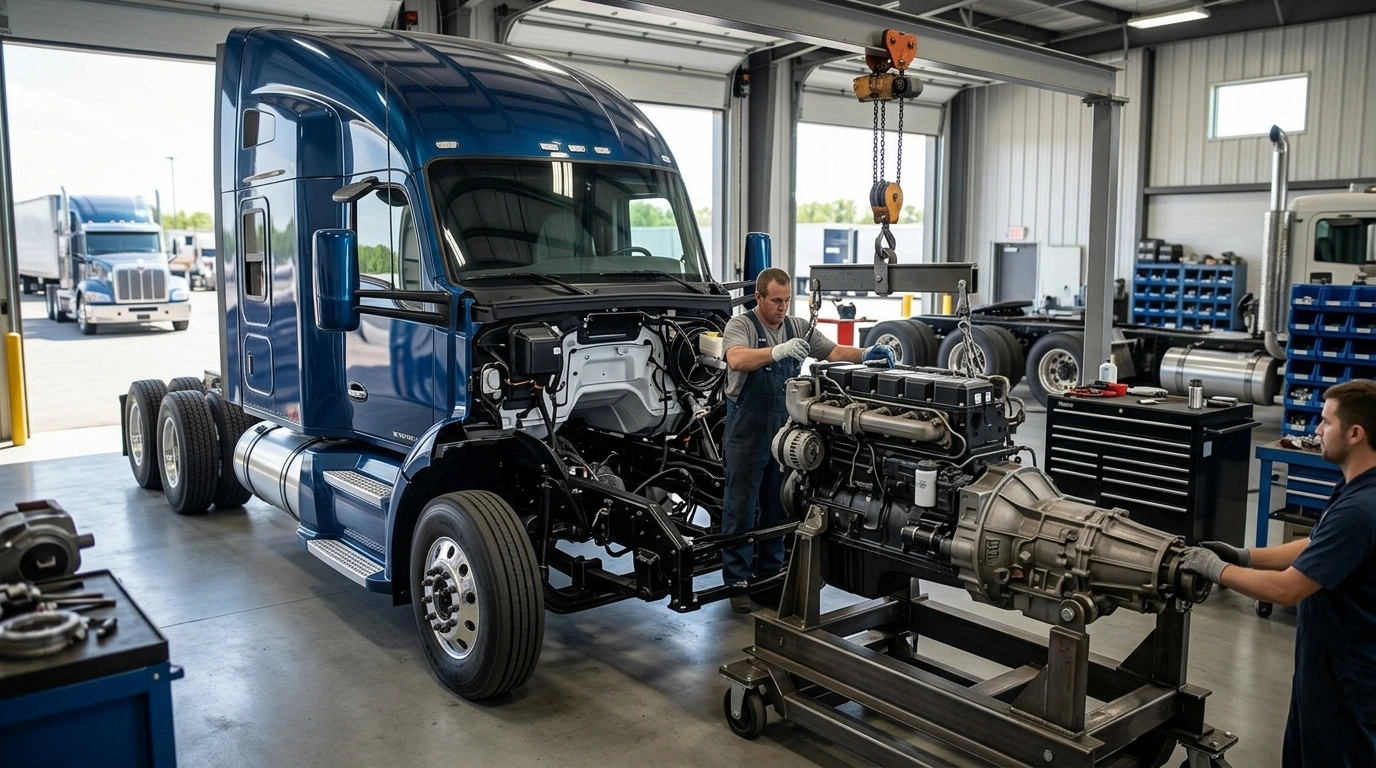
What are glider trucks? Glider trucks are heavy-duty trucks built from a new cab and chassis but finished with a used, rebuilt, or remanufactured powertrain, often taken from a donor truck. In simple terms, they give drivers a truck that looks and feels newer on the outside while using an older or proven engine, transmission, and drivetrain underneath.
That is exactly why owner-operators, small fleet owners, and independent operators have paid attention to them for years. Some like the chance to keep a trusted pre-emission engine. Others are drawn to lower upfront cost, simpler maintenance, or the idea of avoiding some of the complexity found in modern emissions-heavy trucks. At the same time, glider trucks also raise big questions about EPA rules, VIN and model year, emissions compliance, registration, and whether they are still a smart buy today.
If you have heard terms like glider kit, rolling glider, Peterbilt 379, Detroit Diesel 60 Series, Cat 3406, or even references to the 2007 emissions standards, this guide will connect all of it in plain English.
What Is a Glider Truck?
A glider truck is a completed truck built from what starts as a glider kit. The glider kit usually includes the cab, chassis, front axle assembly, suspension, and other new structural components, but it does not include a complete factory-installed engine and transmission. To turn that kit into a working truck, a builder installs a used, rebuilt, or remanufactured engine, plus supporting parts like the drivetrain, rear axle, and related components.
That is why many people use glider truck and glider kit as if they mean the same thing, but they are not identical. The glider kit is the incomplete package. The glider truck is the finished vehicle on the road.
In the heavy-duty world, especially with Class 8 trucks, this setup became popular because it allowed buyers to pair a newer body with an older powerplant they already trusted. For truckers who loved a proven Caterpillar C15, Caterpillar C13, Cat 3406, Cat 3126, or Detroit Diesel 60 Series, that was a huge selling point. Instead of buying a fully new truck with unfamiliar systems, they could keep an engine platform they knew how to maintain.
Glider Truck vs. Glider Kit: What’s the Difference?
This is one of the most important distinctions in the entire topic.
A glider kit is the package of new truck parts sold without a full factory powertrain. A glider truck is what you get after that kit has been completed with an engine, transmission, drivetrain, and other working components. In other words, the kit is the starting point, while the truck is the finished result.
You can think of it this way:
| Term | What it means | Typical components |
|---|---|---|
| Glider kit | Incomplete truck assembly | Cab, chassis, axle, suspension, some structural parts |
| Glider truck | Completed working vehicle | Glider kit plus engine, transmission, drivetrain, rear axle, and related parts |
This difference matters because many searchers asking “what are glider trucks” are really trying to understand the whole system, not just the kit itself. It also matters for title, registration, VIN, and model year discussions, because regulators and buyers do not always treat a kit and a completed truck the same way.
How Glider Trucks Work
A glider truck starts with a fresh shell. That usually means a new cab, chassis, front wheels, suspension, and structural hardware. Then the builder adds the working heart of the truck: the engine, transmission, and often a rear axle or related drivetrain parts from a donor truck.
In many cases, the engine is not just used as-is. It may be a rebuilt engine, remanufactured engine, or another type of refurbished diesel engine. That helps explain why some buyers see a glider as a middle ground between a brand-new truck and a fully used truck. The body and frame may be fresh, but the truck still carries a powertrain with history.
This setup appeals to buyers who want a truck they understand. A driver who has years of experience with a Detroit Diesel 60 Series or a Cat Acert may feel more comfortable with that proven setup than with a newer emissions-focused engine. Some builders and buyers also prefer engines from the 2005–2009 era or before the full impact of 2007 emissions standards, especially when they want fewer systems like EGR and SCR to manage.
That practical, step-by-step build logic is what makes the concept easy to understand: new truck shell, older or remanufactured working parts, finished as one road-ready truck.
Why Truckers Buy Glider Trucks
The main reason truckers buy glider trucks is simple: they want a combination of familiar reliability, lower operating stress, and, in some cases, lower total cost.
For many owner-operators, the biggest draw is the engine. A proven Cat 3406, Cat 3126, Caterpillar C15, or Detroit Diesel 60 Series carries a reputation for being dependable and easier to understand than some later engines. That matters when downtime can damage revenue faster than almost anything else. One truck sitting in a shop too long can be more painful than a higher monthly payment.
Some buyers also believe gliders can reduce the risk of costly downtime and high repair bills tied to newer systems. Stories of drivers facing over $20,000 in early repairs on modern trucks have shaped the conversation, whether every case is typical or not. In that context, a glider can feel like a more controlled purchase.
Fuel use is part of the appeal too. Supporters often talk about fuel economy, fuel-efficient rebuilds, and numbers like 7 MPG as proof that an older, well-matched setup can still perform well. Others focus on economics, arguing a glider may be 25% cheaper than a comparable brand-new vehicle or come in at 75% or less than the cost of a new vehicle, depending on how it is built and sourced.
There is also an emotional factor that should not be ignored. Some drivers simply love classic truck platforms like the Peterbilt 379, Freightliner Argosy, Kenworth, Western Star, or older Freightliner models. That sense of pride of ownership and even nostalgia is real in this market. A glider is not always just a business choice. Sometimes it is a personal one.
Common Engines and Truck Brands Found in Glider Builds
When people talk about glider trucks, certain names come up again and again. On the truck side, familiar brands include Peterbilt, Kenworth, Freightliner, Western Star, Volvo, International, and Mack. Among enthusiasts, the Peterbilt 379 is one of the most recognizable names tied to the glider world, including references to trucks like the 1996 Peterbilt 379 EXHD or 2007 Peterbilt 379.
On the engine side, the conversation often centers on long-respected diesel platforms. These include the Detroit Diesel 60 Series, Caterpillar C13, Caterpillar C15, Cat 3406, Cat 3126, and various Cat Acert or even twin-turbo Acert engines. These engines became part of the glider discussion because many buyers saw them as trusted powerplants with strong parts support and familiar service routines.
That does not mean every glider uses the same setup. Engine choice depends on budget, intended haul type, parts availability, and the buyer’s comfort level. But from an SEO and user-intent perspective, these names matter because they are part of how real searchers talk about gliders. Someone searching “best engines for glider trucks” or “why truckers like Peterbilt 379 gliders” is really looking for context, not just definitions.
Glider Trucks vs. New Semi-Trucks: Pros and Cons
The biggest advantage of a glider truck is that it can combine a newer physical structure with an older, proven engine and drivetrain. For some buyers, that means easier maintenance, better confidence in the truck’s behavior, and potentially fewer surprises. There can also be financial upsides, such as lower manufacturer’s price, easier access to familiar aftermarket parts, or marketing around factory backing and extended warranties, including terms like 1 year / 100,000 mile warranty or 12 months / 100,000 miles.
Another commonly mentioned advantage is tax treatment. Some glider discussions mention the 12% Federal Excise Tax, IRS Ruling 91-27, and the Safe Harbor Rule. Buyers interested in those issues usually want to know whether a glider structure changes how the truck is treated compared with a fully new truck. That is one reason the topic often crosses from trucking into legal and accounting territory.
But gliders also come with serious drawbacks. First, they are not simple from a compliance standpoint. A buyer may love the engine and layout but later run into trouble with emissions requirements, model year interpretation, or state-level title rules. Second, the market is not what it once was. OEM pullback, market shrinkage, and changing rules have made the category less straightforward than it looked during its growth years.
Here is a simple comparison:
| Factor | Glider Truck | New Semi-Truck |
|---|---|---|
| Initial cost | Often lower | Usually higher |
| Engine familiarity | Often higher | Depends on platform |
| Emissions complexity | Sometimes lower in older-engine setups | Usually higher |
| Warranty support | Limited or mixed | Usually stronger |
| Compliance certainty | Can be complicated | Usually clearer |
| Resale and registration | Can vary widely | More predictable |
So, are glider trucks worth it? For the right buyer, sometimes yes. But the answer depends on how much value you place on old-school reliability versus modern compliance certainty.
Are Glider Trucks Legal? EPA Rules, Emissions, and Compliance
This is where the topic gets complicated.
The legal debate around glider trucks grew stronger after the 2007 emissions standards and later federal climate and air-quality efforts. Regulators increasingly focused on whether a truck assembled from a new body and older refurbished diesel engines should meet the same standards as a newly manufactured vehicle. That led to years of debate involving the EPA, the Clean Air Act, new truck emissions requirements, and the question of whether glider vehicles should be treated as new motor vehicles.
A lot of the controversy centers on emissions output. Critics of glider builds have pointed to claims such as 20 to 40 times higher emissions compared with compliant newer trucks. Supporters, on the other hand, have argued for buyer choice, legacy engine reliability, and business practicality. That clash helped turn gliders from a trucking niche into a major policy issue.
Several timeline markers shaped this debate, including the October 2016 rule, the November 2017 proposal, January 2018 comments, and the July 2018 suspension. Public figures and agencies tied to these developments include Scott Pruitt, Andrew Wheeler, Xavier Becerra, CARB, and coalitions involving 12 states plus 15 other attorneys general.
For readers, the key takeaway is this: glider truck legality is not just about owning one; it is about how the vehicle is classified, where it is operated, how emissions rules apply, and whether current regulations recognize the truck as compliant. That is why phrases like glider truck EPA rules, glider truck emissions laws, and are glider trucks legal remain such important search terms.
Can You Register, Title, and Insure a Glider Truck?
This is one of the most practical questions, and it is often the least clearly explained.
A glider truck may create confusion because its physical parts do not all come from the same moment in time. The body may be newer, but the engine and drivetrain may be older. That raises questions about VIN, model year, body year not engine year, and how the truck is treated by state agencies, insurers, and lenders.
For registration and title purposes, buyers often need to confirm how the vehicle will be documented before money changes hands. The truck’s paperwork, component sourcing, and final classification can affect whether it is easy to register or whether extra steps are required. The same goes for insurance. Some insurers may be comfortable with gliders, while others may see them as specialized vehicles with more underwriting questions.
Financing can also be less predictable. A lender may look at resale risk, compliance uncertainty, or age of major components before approving a loan. That is why glider truck title and registration, glider truck insurance, and glider truck financing are strong gap keywords your article should cover clearly.
In plain language, the smart approach is this: before buying a glider, verify the title, VIN treatment, model year classification, local registration rules, and insurance eligibility first. It is much easier to solve those questions before purchase than after.
Glider Trucks in the U.S. vs. Canada
Regional differences matter a lot with glider trucks, especially between the United States and Canada.
In the U.S., the conversation is shaped mainly by the EPA, federal emissions policy, and state-level registration practices. A truck that seems acceptable in one state may face different scrutiny in another, especially when emissions or paperwork issues are involved. California, for example, often comes up in glider discussions because of its stronger emissions environment and the influence of CARB.
In Canada, the topic has often been treated more cautiously, especially where import and licensing restrictions are involved. Searchers asking about Canada glider kits or whether you can license the vehicle with an old engine in Canada are usually trying to understand whether a glider is even practical in the first place.
That is why a smart article should explain the issue carefully: glider trucks are not just a trucking decision; they are also a jurisdiction decision. A truck that makes sense on paper may become less attractive if the buyer cannot title, import, insure, or operate it easily in the place they live.
Why Glider Trucks Became Popular After 2007
To understand the rise of the glider market, you have to look at trucking history.
The 2007 emissions standards changed the game for heavy-duty diesel engines. As manufacturers moved deeper into emissions control systems, many truckers began to feel that newer engines were becoming more complex, more expensive to maintain, and less attractive than the older engines they already trusted. That created demand for trucks that could still use those legacy engines while offering newer body and chassis components.
This shift helped drive 2007–2012 glider kit growth, especially among buyers who preferred engines from the 2005–2009 period or earlier. The 2009 Caterpillar exit from on-highway truck engines also became part of the conversation, because it increased interest in keeping beloved older Cat platforms alive through glider builds. Through the 2010s, gliders gained a strong following among drivers who valued simplicity and control.
Later, the market faced more pressure from regulation, public scrutiny, and reduced support, contributing to 2018–2021 market shrinkage. Even so, the history explains why the search term still matters today: glider trucks were never just about hardware. They were a response to a major shift in trucking economics and technology.
Are Glider Trucks Still Worth It Today?
For some buyers, yes. For others, no.
A glider truck can still make sense if you highly value a familiar engine platform, you understand the compliance risks, and you have already confirmed how the truck will be titled, insured, and operated. Buyers who know exactly what they want and where they will use the truck may still see value in a glider setup.
But this is no longer a simple plug-and-play market. Market shrinkage, changing rules, reduced availability, and the reality of 2025–2026 regulatory updates all mean the buyer needs to be more careful than in earlier years. Even if the truck itself looks appealing, the surrounding paperwork and emissions reality may change the equation fast.
A good rule of thumb is this: glider trucks are most attractive to informed buyers who know the engine they want, understand the tradeoffs, and have already done the legal homework. They are less attractive to buyers who just want an easy ownership experience with clear compliance and resale certainty.
Quick FAQ About Glider Trucks
Do glider trucks use old engines?
Usually, yes. Many are built with used, rebuilt, or remanufactured engines taken from a donor truck.
Are glider trucks legal?
They can be, but legality depends on EPA rules, emissions treatment, and how the truck is classified and registered.
Why do owner-operators like glider trucks?
Because they may offer familiar engines, lower cost, easier maintenance, and fewer surprises than some newer trucks.
Are glider trucks the same as glider kits?
No. A glider kit is the incomplete package. A glider truck is the finished vehicle.
Can you register a glider truck anywhere?
Not automatically. VIN, model year, title rules, and local regulations all matter.
Do glider trucks qualify for an ELD exemption?
Not by default. Buyers asking about the pre-2000 model year ELD rule should verify how their vehicle is classified instead of assuming the engine age alone decides it.
Conclusion
Glider trucks sit at the crossroads of trucking tradition, business strategy, and regulation. They offer a unique mix of newer structure and older or remanufactured powertrain, which is exactly why they appeal to so many owner-operators and experienced drivers. At the same time, the real-world value of a glider depends on more than the engine alone. EPA compliance, VIN and model year, registration, and regional rules all shape whether the truck is truly practical.
So when someone asks, “what are glider trucks?”, the best answer is this: they are specialized trucks built to combine the feel of a newer vehicle with the familiarity of proven older mechanical systems. Whether that makes them a smart buy today depends on your goals, your location, and how carefully you evaluate the tradeoffs.
Disclaimer: This article is for general informational purposes only. Laws, regulations, and compliance requirements for vehicles may vary by location and change over time. Always verify with local authorities or qualified professionals before making decisions.








Leave a Reply