

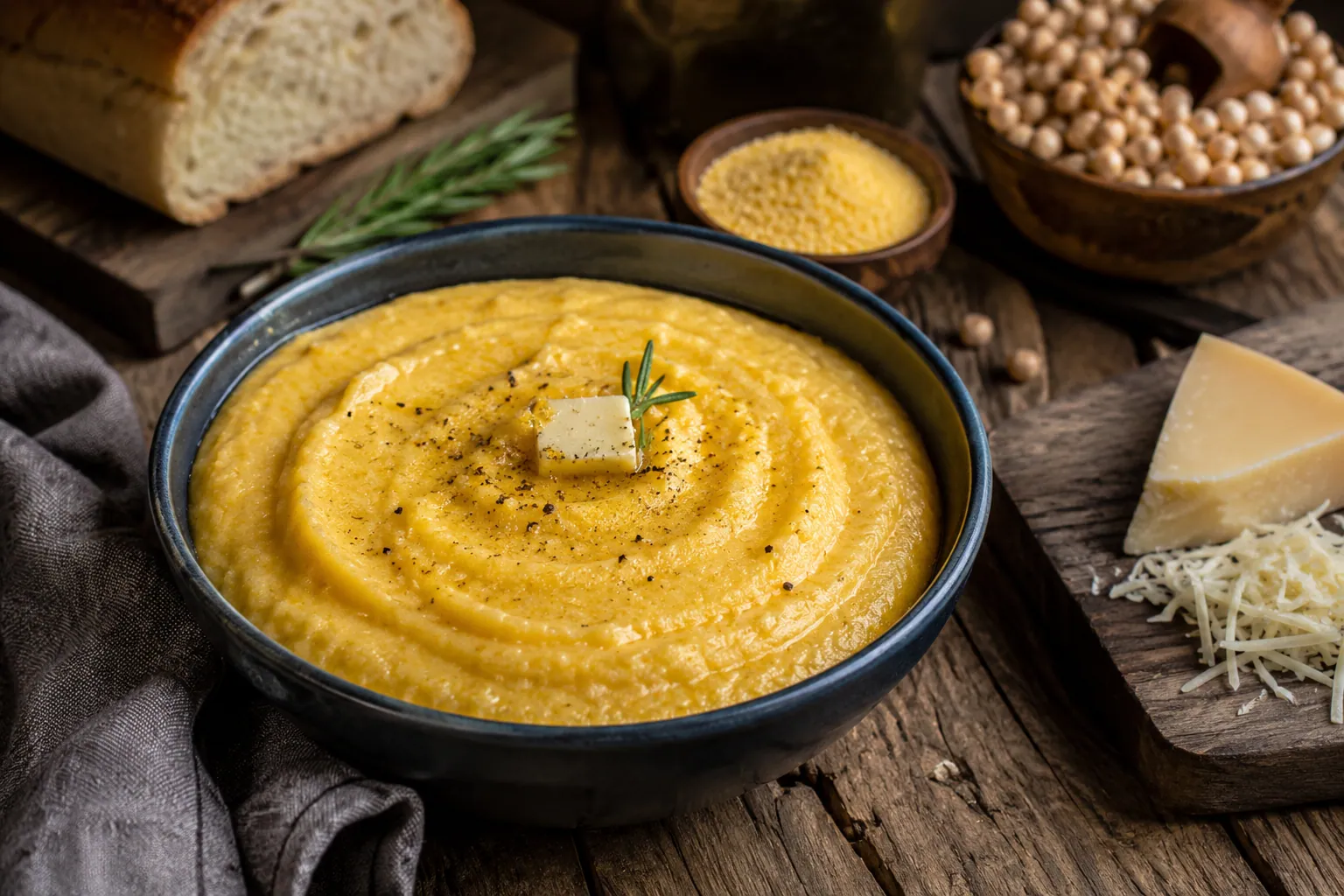
Palentu is a traditional-style Mediterranean comfort food that many people search for when they want to understand whether it is a chickpea-based dish, a form of palenta, or simply another name connected to polenta. The word can feel confusing because online results connect it with both chickpea flour recipes and cornmeal dishes from Italian, Croatian, Balkan, and Mediterranean food traditions.
In simple words, palentu can be understood as a rustic, warm, porridge-like dish made either with chickpea flour or closely associated with palenta / polenta, which is commonly made from cornmeal, corn grits, or kukuruzna krupica. Because of this mixed meaning, the best way to understand palentu is to look at its origin, ingredients, recipe method, health value, and difference from polenta.
This guide explains what palentu is, how to make it, whether it is healthy, how it compares with palenta, polenta, pura, žganci, kačamak, and mămăligă, and how to enjoy it as a simple, budget-friendly, gluten-free comfort food.
What Is Palentu?
Palentu is best described as a traditional Mediterranean-style dish with a soft, warm, porridge-like texture. In some modern food content, Palentu is described as an ancient Mediterranean power food made from chickpea flour, olive oil, garlic, herbs, water, and salt. This version is rich, earthy, and naturally suitable for many vegan, gluten-free, and plant-based diets.
However, many people searching for palentu are actually looking for palenta or polenta, both of which usually refer to a cooked cornmeal dish. In Croatian and Balkan cooking, palenta is commonly prepared from kukuruzna krupica, which means corn grits. In Italian cooking, polenta is a classic dish that can be served creamy, firm, grilled, baked, or sliced.
So, the keyword palentu sits between two food ideas. One is a chickpea-based Mediterranean dish, and the other is a cornmeal-based comfort food known across Europe and the Balkans. Both versions are simple, filling, and deeply connected with rustic kitchens, farmers, shepherds, and traditional home cooking.
Is Palentu the Same as Palenta or Polenta?
The short answer is: not always, but they are closely connected in search intent. If someone says palentu, they may be referring to a chickpea flour dish, but they may also be using a spelling variation of palenta or polenta.
Palenta is widely used in Croatian, Balkan, and regional European cooking. It usually means a dish made from corn grits, cornmeal, water, and salt. Polenta is the Italian name for a very similar dish, especially popular in Northern Italy and nearby regions. Both can be soft and creamy or cooled until firm enough to slice.
Here is a simple comparison:
| Term | Common Meaning | Main Ingredient | Common Region |
| Palentu | Ambiguous term; often linked with chickpea or palenta-style dishes | Chickpea flour or cornmeal-style ingredients | Mediterranean / online food searches |
| Palenta | Balkan/Croatian-style cornmeal dish | Kukuruzna krupica, corn grits, cornmeal | Croatia, Balkans, Istria |
| Polenta | Italian cornmeal dish | Cornmeal | Northern Italy, Mediterranean |
| Žganci / Pura / Kačamak / Mămăligă | Regional cornmeal dishes | Cornmeal or corn grits | Balkans, Slovenia, Serbia, Romania |
The main difference is ingredient identity. A chickpea palentu uses chickpea flour, while palenta / polenta usually uses cornmeal. But from a reader’s point of view, they often belong to the same family of warm, simple, traditional porridge-like meals.
The Origin and History of Palentu
The story of palentu is connected to old Mediterranean food culture, where simple ingredients were turned into filling meals. Traditional food did not need expensive products. People used what they had: grains, legumes, herbs, olive oil, water, salt, and slow cooking.
A chickpea-based version of palentu fits naturally into the wider history of Mediterranean diet cooking. Chickpeas have been used for centuries in Southern European and Mediterranean kitchens. Chickpea flour dishes such as socca, farinata, and panisse show how common ground legumes were in simple, nourishing food.
The cornmeal side of palentu connects more closely with polenta, palenta, pura, and žganci. These dishes became important in parts of Northern Italy, Croatia, Istria, and the wider Balkan region. They were often called poor man’s food because they were affordable, filling, and easy to prepare for families.
Today, the image of palentu has changed. What was once a survival food or humble farmhouse dish is now seen as a comfort food, gluten-free meal, and even a modern superfood-style recipe when made with chickpea flour and olive oil.
What Is Palentu Made Of?
The ingredients depend on which version of palentu you want to make. The chickpea-based palentu version is usually made with chickpea flour, water, olive oil, garlic, salt, and herbs such as rosemary, fennel, or bay leaves. This creates a rich, earthy, protein-friendly dish that works well with vegetables, sauces, and herbs.
The cornmeal-based palenta or polenta version is made with cornmeal, corn grits, or kukuruzna krupica. The base ingredients are usually very simple: water, salt, and corn grits. Many home cooks add butter, milk, cream, yogurt, or parmesan for a softer and richer taste.
A basic ingredient list looks like this:
| Version | Main Ingredients | Optional Additions |
| Chickpea Palentu | Chickpea flour, water, olive oil, garlic, salt | Rosemary, fennel, bay leaves, black pepper |
| Cornmeal Palenta / Polenta | Cornmeal or corn grits, water, salt | Butter, milk, parmesan, yogurt, broth |
| Creamy Palenta | Corn grits, more liquid, salt | Cheese, cream, herbs |
| Firm Palenta | Corn grits, less liquid, salt | Olive oil, butter, grilled toppings |
Both versions prove the same idea: palentu is built from simple pantry ingredients, but the result can be warm, filling, and deeply satisfying.
How to Make Palentu Step by Step
Making palentu is not difficult, but the key is slow mixing and the right ratio. Whether you are making chickpea palentu or cornmeal palenta, the biggest rule is to add the flour or grits gradually and stir well to avoid lumps.
For a basic chickpea palentu recipe, start by heating water with a little salt. In a separate bowl, mix chickpea flour with cool water to create a smooth paste. This helps reduce lumps. Slowly pour the paste into the hot water while stirring. Add olive oil, crushed garlic, and herbs. Cook gently on low heat until the mixture thickens. Depending on the texture you want, cooking can take around 30–45 minutes.
For a cornmeal palenta recipe, bring salted water to a boil, then slowly add corn grits or kukuruzna krupica while whisking. Once the mixture thickens, reduce the heat and continue stirring with a wooden spoon. Traditional homemade palenta can take up to 1 hour, especially when using coarser corn grits. Instant palenta may cook in about 5 minutes, but it usually has a different texture and flavor than slow-cooked homemade palenta.
A practical kitchen rule is: slow heat creates better texture. High heat may burn the bottom, while poor stirring can create grudice, or lumps. If the palentu becomes too thick, add a little warm water, milk, or broth. If it is too watery, cook it longer on low heat.
Best Palentu Ratios for Creamy, Firm, and Sliceable Texture
The best ratio depends on whether you want creamy palenta, firm palenta, or sliceable pieces for grilling and baking. This is where many beginners struggle, because the same dish can have completely different textures.
A common homemade ratio is 2:1, meaning 2 cups of water for 1 cup of corn grits. This creates a thicker, rustic texture. For a softer and creamier version, many cooks use more liquid. A 1:4–5 ratio works well for loose, creamy palenta. For firm slices, a 1:2–3 ratio works better.
| Texture Goal | Suggested Ratio | Best Use |
| Thick homemade palenta | 2:1 | Rustic side dish |
| Creamy palenta | 1:4–5 | Bowl meals, sauces, stews |
| Firm palenta | 1:2–3 | Slicing, frying, baking, grilling |
| Instant palenta | Follow package guide | Fast meals |
If you want a chef-style flavor trick, lightly roasting corn grits before cooking can deepen the taste. Some cooks roast corn grits around 180°C before boiling them in water or broth. This adds a warmer, nuttier flavor and makes simple palenta feel more special.
Nutritional Benefits of Palentu
Palentu can be a healthy food when prepared with simple ingredients and eaten as part of a balanced diet. The exact nutrition depends on whether it is made from chickpea flour or cornmeal.
A chickpea-based palentu is naturally rich in plant protein, fiber, and complex carbohydrates. Chickpeas also contain important minerals such as iron, magnesium, and potassium. This makes chickpea palentu a strong option for people who want a more filling plant-based food.
Cornmeal-based palenta or polenta is usually lower in protein than chickpea palentu, but it is still a satisfying source of energy. It is often naturally gluten-free, which makes it useful for people avoiding wheat. When prepared with olive oil, vegetables, mushrooms, or herbs, it becomes a simple and nourishing meal.
The health value depends heavily on toppings. A bowl of palentu with sautéed vegetables, herbs, and yogurt is lighter than one loaded with butter, cream, and cheese. Both can be enjoyable, but balance matters.
Think of palentu as a base. It can become a healthy comfort food, a budget-friendly meal, or a rich festive side dish depending on what you add.
Palentu in Modern Diets: Vegan, Gluten-Free, Mediterranean, and Budget-Friendly
One reason palentu is gaining attention is that it fits many modern eating styles without needing complicated ingredients. A simple chickpea version can be vegan, gluten-free, plant-based, and suitable for Mediterranean diet cooking. A cornmeal version can also be gluten-free and affordable.
For clean eating, palentu works well because it can be made from basic whole-food ingredients: flour or grits, water, salt, herbs, and olive oil. It does not need heavy processing. It can also be part of sustainable nutrition, especially when made from local corn, stone-ground cornmeal, or pantry legumes.
For families, it is also practical. Palentu is cheap, filling, and flexible. You can serve it as breakfast, lunch, dinner, or a side dish. In colder months, it works beautifully as winter comfort food, especially with stews, mushrooms, tomato sauce, or roasted vegetables.
Ways to Eat Palentu: Sweet, Savory, Soft, Fried, or Grilled
The best thing about palentu is how flexible it is. You can eat it soft and creamy in a bowl, or you can cool it, slice it, and cook it again as fried, baked, or grilled pieces.
For savory meals, palentu pairs well with mushrooms, cheese, sautéed vegetables, tomato sauce, garlic herbs, and stews. In Balkan-style meals, palenta is often served with yogurt, sour cream, gulaš, sarma, or brudet. In Italian-style meals, polenta is often served with meat sauce, parmesan, butter, or mushrooms.
Sweet palentu is less common but still delicious. You can serve creamy cornmeal palenta with milk, honey, fruit, cinnamon, or a little butter. This makes it useful as a breakfast dish or simple dessert.
Leftover firm palenta can be cut into squares and pan-fried until golden. You can also make baked polenta slices or grilled polenta squares. This makes leftovers feel like a new meal instead of repeated food.
Common Mistakes When Making Palentu
The most common problem when making palentu is lumps. Lumps happen when chickpea flour, cornmeal, or corn grits are added too quickly to hot liquid. The best solution is to add the dry ingredient slowly while whisking, or mix it with cool water first to form a smooth paste.
Another mistake is using heat that is too high. Palentu thickens as it cooks, so it can stick to the bottom of the pot. Low heat and steady stirring help create a smoother texture. A wooden spoon, whisk, or even an electric mixer can help if the mixture becomes too thick.
Some beginners also use the wrong ratio. Too little liquid creates a stiff, rubbery texture. Too much liquid creates watery palentu. If this happens, do not panic. Add warm liquid if it is too thick, or cook it longer if it is too loose.
The final mistake is under-seasoning. Palentu is simple, so salt, olive oil, herbs, broth, garlic, butter, or parmesan can make a big difference.
How to Store, Reheat, and Use Leftover Palentu
Leftover palentu can be very useful. Once it cools, it becomes firmer, especially if it is cornmeal-based. Store it in an airtight container in the refrigerator and use it within a few days for the best quality.
To reheat creamy palentu, add a splash of warm water, milk, or broth and stir it over low heat until soft again. For firm leftover palenta, slice it into pieces and fry, grill, or bake it. This works especially well for leftover palenta, fried leftover polenta, and grilled polenta squares.
You can also use firm slices as a base for toppings. Add mushrooms, cheese, tomato sauce, roasted vegetables, or herbs. This turns a simple leftover into a fresh meal.
Regional Variations: Palenta, Pura, Žganci, Kačamak, and Mămăligă
Across Europe and the Mediterranean, many cultures have their own version of a simple cornmeal dish. Palenta is common in Croatia and nearby regions. Polenta is strongly associated with Italy, especially Northern Italy. Žganci are found in Slovenian and Croatian traditions. Pura is another regional name, while kačamak appears in Serbian and Balkan food culture. In Romania and Moldova, a similar dish is known as mămăligă.
These dishes are not always identical, but they share the same spirit. They use humble ingredients, often cornmeal or corn grits, and turn them into a filling meal. They can be eaten with milk, yogurt, cheese, meat, vegetables, or stews.
This is why palentu belongs in a larger food family. Whether you call it palentu, palenta, polenta, pura, žganci, kačamak, or mămăligă, the idea is similar: simple ingredients, warm texture, and deep cultural comfort.
Is Palentu Good for Babies, Weight Loss, or Special Diets?
Palentu may fit certain special diets, but the preparation matters. A plain cornmeal palenta can be soft and easy to eat, which is why some families use similar dishes as simple baby or toddler food. However, for babies, ingredients should be age-appropriate, soft, low in salt, and introduced carefully according to family and pediatric guidance.
For weight loss, palentu is not magic, but it can be useful. A bowl made with water, herbs, vegetables, and a reasonable amount of olive oil can be filling without being overly heavy. A version loaded with cream, butter, and cheese will be richer and higher in calories.
For gluten-free diets, both chickpea flour and cornmeal are naturally gluten-free ingredients, but packaged products should still be checked for cross-contamination. For vegan diets, choose olive oil, herbs, mushrooms, vegetables, and plant-based toppings instead of dairy.
Quick Comparison Table: Palentu vs Palenta vs Polenta
| Feature | Palentu | Palenta | Polenta |
| Main meaning | Ambiguous Mediterranean-style dish | Balkan/Croatian cornmeal dish | Italian cornmeal dish |
| Common ingredient | Chickpea flour or cornmeal-style base | Corn grits / kukuruzna krupica | Cornmeal |
| Texture | Creamy, thick, or sliceable | Creamy or firm | Creamy, firm, grilled, baked |
| Diet fit | Can be vegan and gluten-free | Usually gluten-free | Usually gluten-free |
| Best served with | Herbs, vegetables, olive oil | Yogurt, cheese, stews | Mushrooms, sauces, parmesan |
This table shows why the keyword palentu should be explained carefully. It is not enough to say it is only one thing. A strong article should explain the meaning, the recipe, and the connection with palenta and polenta.
A Simple Palentu Case Study: From Plain Side Dish to Full Meal
Imagine a home cook with only corn grits, water, salt, yogurt, and mushrooms. At first, this looks like a very basic pantry meal. But with the right method, it becomes a complete comfort dish.
The cook starts with a 2:1 ratio for thicker palenta, stirs slowly with a wooden spoon, and lets it rest for 10–15 minutes after cooking. Then they sauté mushrooms with garlic and herbs, spoon them over the warm palenta, and add a little yogurt on the side.
The result is affordable, filling, and balanced. This is exactly why dishes like palentu, palenta, and polenta have lasted for generations. They are simple enough for everyday life but flexible enough to feel special.
A useful kitchen saying for this dish is: “The simpler the base, the more important the technique.” With palentu, good texture, patient stirring, and thoughtful toppings matter more than expensive ingredients.
FAQs
What is palentu?
Palentu is a Mediterranean-style food term that may refer to a chickpea flour dish or a search variation connected to palenta and polenta, which are usually cornmeal-based dishes.
Is palentu the same as polenta?
Not exactly. Polenta is usually made from cornmeal, while some descriptions of palentu use chickpea flour. However, people often search these terms together because both are warm, porridge-like traditional foods.
Is palentu made from chickpeas or corn?
It can be connected to both. A chickpea-based palentu uses chickpea flour, while palenta or polenta versions use cornmeal, corn grits, or kukuruzna krupica.
Is palentu healthy?
Palentu can be healthy when made with simple ingredients like chickpea flour, cornmeal, olive oil, herbs, vegetables, and moderate seasoning. The health value depends on toppings and portion size.
Is palentu gluten-free?
Most chickpea flour and cornmeal bases are naturally gluten-free, but packaged ingredients should be checked if gluten cross-contamination is a concern.
Can palentu be eaten cold?
Yes. Like firm polenta, cooled palentu or palenta can be sliced and eaten cold, fried, baked, or grilled.
What is the best ratio for palenta?
For thick homemade palenta, a 2:1 ratio can work. For creamy palenta, use more liquid, often around 1:4–5. For firm slices, use around 1:2–3.
Why does palentu get lumpy?
Lumps form when flour or grits are added too quickly. Add them slowly while stirring, or mix with cool water first before adding to hot liquid.
Conclusion:
Palentu is worth trying if you enjoy simple, traditional, and flexible comfort food. Whether you make it with chickpea flour as a Mediterranean-style power food or understand it through palenta and polenta as a cornmeal dish, it offers warmth, texture, and cultural depth. It can be creamy, firm, vegan, gluten-free, budget-friendly, rustic, or modern depending on how you prepare it. For the best result, focus on the right ratio, slow cooking, good seasoning, and toppings that match your taste.
Disclaimer:
This article is for general informational purposes only. Food choices, health needs, cooking results, and personal preferences may vary from person to person. Always use your own judgment and consult a qualified professional when needed.




Leave a Reply