

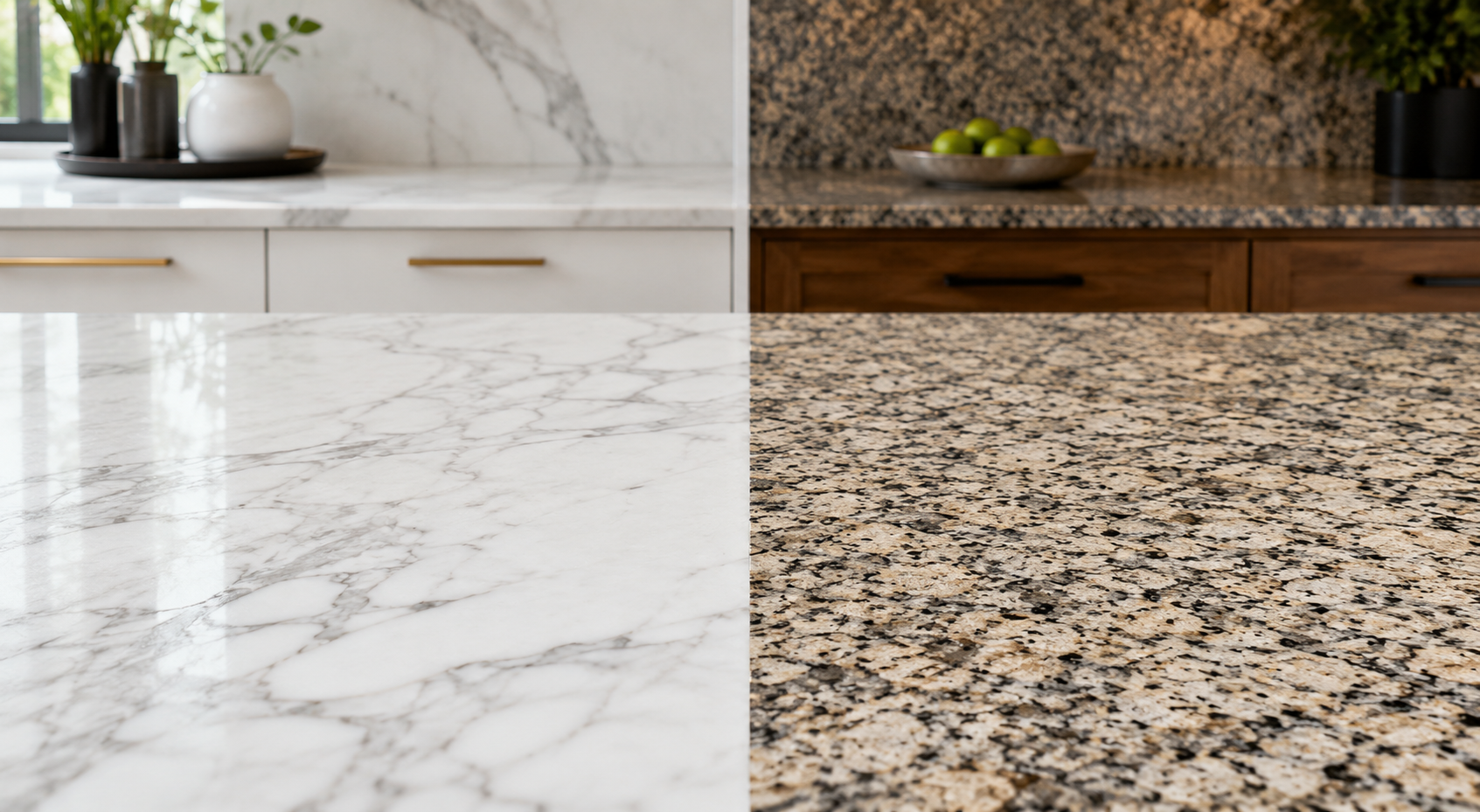
What is the difference between marble and granite is one of the most common questions homeowners ask when planning a new kitchen, remodeling a bathroom, or choosing natural stone for flooring and feature walls. At first glance, both look premium, elegant, and durable. But once you look closer, the difference between marble and granite becomes much clearer. They come from different geological processes, have different levels of hardness, porosity, heat resistance, and maintenance needs, and they suit different lifestyles.
If you are comparing marble vs granite for kitchen countertops, bathroom vanity tops, flooring, or even outdoor applications, the right choice depends on how you live, how much upkeep you are comfortable with, and the look you want in your home. Some people love the timeless beauty and soft veining of marble. Others prefer the tougher, more practical performance of granite with its speckled appearance and stronger resistance to daily wear.
This guide explains granite vs marble in simple language, with real-world advice on durability, stain resistance, cost comparison, and long-term value.
Marble vs Granite at a Glance
Before going deep into the details, here is a quick comparison table that shows the main marble granite difference in a way that is easy to scan.
| Feature | Marble | Granite |
|---|---|---|
| Stone type | Metamorphic rock | Igneous rock |
| Main composition | Mostly calcium carbonate / calcite | Mostly quartz, feldspar, and mica |
| Look | Soft veining, elegant patterns | Speckled patterns, grains, flecking |
| Hardness | Around 3 to 5 on Mohs scale | Around 6–7 on the Mohs hardness scale |
| Porosity | More porous | Less porous |
| Stain resistance | Lower, especially if unsealed | Better than marble when sealed |
| Etching risk | High from acidic substances | Much lower |
| Maintenance | Higher | Lower |
| Best for | Luxury bathrooms, feature areas, lower-wear spaces | Busy kitchens, family homes, high-use areas |
| Cost | Can be premium, especially designer slabs | Wide range, often practical for more households |
If you want a countertop material comparison chart, this is the short answer: marble wins on classic beauty, while granite usually wins on toughness and ease of maintenance.
What Are Marble and Granite?
To understand what is the difference between marble and granite, it helps to start with where each stone comes from.
Marble is a metamorphic rock. It begins as limestone or sometimes dolomite, then changes under intense heat and pressure inside the earth. This process transforms the original stone into a denser material rich in calcite and calcium carbonate. That is why marble often has a smoother, softer look with elegant irregular veins or even dramatic gold veins.
Granite, by contrast, is an igneous rock. It forms when magma cools slowly beneath the earth’s crust. Because it cools over time, large mineral crystals develop inside it. Those crystals usually include quartz, feldspar, and mica, which create granite’s familiar grainy texture and sparkly look.
This geological difference affects almost everything that matters to buyers. It affects the hardness, scratch resistance, porosity, and even the way each surface reacts to spills, heat, and everyday use. So when people ask, is granite harder than marble, the answer is usually yes, and the reason starts with its formation.
Appearance: How Marble and Granite Look Different
One of the biggest reasons people choose one stone over the other is appearance. If you are wondering how to tell marble from granite, the easiest clue is the pattern.
Marble usually has flowing veining that looks soft, artistic, and refined. Some slabs feel almost like natural artwork. This is why marble is strongly associated with luxury appeal, timeless elegance, and classic interior design. It works beautifully in spaces where you want a bright, polished, upscale feel. Book-matched marble slabs, where the patterns mirror each other, are especially popular in high-end homes.
Granite usually looks more granular. Instead of long veins, you see mineral dots, crystals, and speckled effect patterns. Some slabs have bold contrast, while others are subtle and earthy. Granite can feel rustic, modern, dramatic, or understated depending on the color mix and finish.
So the visual difference between marble and granite is simple. Marble looks more fluid and veined. Granite looks more crystalline and speckled. If your style leans toward traditional aesthetics, luxury bathrooms, or statement surfaces, marble may feel more attractive. If you want a natural but slightly tougher and more varied look, granite often fits better.
Another important detail is finish. Both stones can come in glossy finish, matte finish, or polished and honed options. A polished slab reflects more light and looks more formal. A honed or matte surface feels softer and may hide some marks better, though it can also show use differently over time.
Durability and Hardness: Which Stone Lasts Better?
When buyers compare granite vs marble for high-traffic areas, durability becomes the deciding factor.
Granite is generally harder. On the Mohs scale, it often falls around 6 to 7 on the Mohs scale, while marble is commonly around 3–4 on the Mohs scale or 3 to 5 on Mohs scale depending on the exact slab. In practical terms, granite is usually more resistant to scratches, small impacts, and the normal wear and tear that comes from family life.
That does not mean marble is weak. Marble is still a durable natural stone, and many marble installations last for decades. But it is more likely to show micro-scratches, surface dulling, and light damage in busy spaces. If you have children, cook often, or simply want a surface that handles everyday life with less worry, granite usually offers a more forgiving experience.
This is why many professionals recommend granite as the best stone for family homes and one of the best countertop materials for busy kitchens. It is also a stronger choice for heavy foot traffic, walkable surfaces, and work-heavy kitchens where pots, dishes, and utensils are constantly in use.
A simple way to think about it is this: if you prioritize performance first, granite usually wins. If you prioritize beauty first and are willing to protect the surface, marble can still be a wonderful choice.
Practical rule: Granite suits homes that need strength and convenience. Marble suits homes that want beauty and character, even if that means more care.
Porosity, Staining, and Etching
One of the most important differences between the two stones is how they react to spills and acids. This is where the topic of porosity matters.
Marble is more porous, which means it can absorb liquids more easily if it is not properly sealed. That is why people ask, does marble stain easily. The honest answer is yes, it can. Coffee, oil, wine, and sauces may sink in more quickly than they would on granite. Marble is also more vulnerable to etching, which is a surface reaction caused by acid substances like lemon juice, vinegar, and some cleaners. This is why phrases like marble etching from lemon juice matter in real homes.
Granite is also a porous stone, but it is usually less porous than marble. When sealed properly, it tends to offer better stain resistance and less risk of visible etching. So in the debate over granite vs marble stain resistance, granite usually has the advantage.
This does not mean granite is impossible to stain. People also ask, does granite stain easily, and the answer is that any porous surface can stain if left unsealed or neglected. But in everyday life, granite tends to give homeowners more breathing room.
For kitchens, this matters a lot. A marble surface may develop a soft patina over time, which some people love because it gives character. Others see it as damage. Granite typically keeps its original finish more easily, especially in cooking-heavy households.
Heat Resistance and Daily Kitchen Performance
Many people assume that because both stones come from heat-related geological processes, they are automatically worry-free in kitchens. That is only partly true.
Both materials have good heat resistance compared with many manufactured surfaces. Some comparisons mention figures like 350°F, 540°C, or even 650°C when discussing stone performance. But real-life kitchen use is not only about high temperatures. It is also about repeated stress, spills, and rapid temperature changes.
Granite generally performs better in kitchens because it combines good heat tolerance with better scratch resistance, lower water absorption, and lower maintenance needs. That is why many homeowners feel granite is the best countertop for cooking-heavy kitchens.
Marble can still work in kitchens, especially in baking areas where cool surfaces are useful, but it requires more caution. Hot pans, acidic ingredients, and frequent spills can leave visible changes over time. So if you are asking is granite better than marble for kitchen countertops, the answer for most busy homes is yes.
Maintenance and Cleaning Requirements
If your main concern is daily upkeep, this section may make the choice easy.
Marble maintenance is more demanding. Marble usually needs regular sealing, and it should be cleaned with a pH-neutral cleaner or neutral pH cleaner. Harsh sprays, acidic cleaners, or rough scrubbing can increase surface wear. People often search how often to reseal marble countertops, and while the exact timeline varies, marble usually benefits from closer attention.
Granite also benefits from sealing, but in most cases, it is easier to live with. Many homeowners search how often to seal granite countertops, and the answer depends on the slab and finish, but granite usually asks for less frequent maintenance than marble.
So in the comparison of marble vs granite sealing requirements, granite is generally lower effort. It is also easier in the everyday routine of daily cleaning. A soft cloth, mild soap, and proper care are usually enough.
If you want to know how to clean marble vs granite, the answer is simple: use gentle cleaners for both, avoid harsh chemicals, wipe spills quickly, and reseal as needed. But if you want the more low-maintenance home option, granite is usually the better fit.
Cost Comparison: Which Is More Expensive?
When people compare granite vs marble price, they often expect a simple answer. In reality, both materials come in a wide price range depending on quality, origin, thickness, finish, rarity, and installation.
In some premium markets, pricing examples may appear in ranges like £300–450 per square metre installed, £450–600 per square metre installed, or even £1,500–2,250 per square metre for luxury stone selections. Those numbers show why cost analysis should never stop at the slab price alone.
The real comparison should include:
- Material cost
- Installation considerations
- Maintenance cost over time
- Repair cost
- Long-term value
In many real projects, granite offers stronger value because it combines durability with lower upkeep. Marble can still be worth the investment if you care most about prestige, design, and a high-end finish. But when comparing marble vs granite maintenance cost, marble often ends up costing more over time because of sealing, touch-ups, and the possibility of visible wear.
If you are asking which adds more home value, marble or granite, both can improve appeal, but granite may be the more practical value choice for buyers who want beauty without constant care.
Best Uses: Kitchens, Bathrooms, Flooring, and Outdoor Spaces
The best stone depends on where you plan to use it.
For kitchen countertops, granite is usually the safer recommendation. It handles heat, spills, and daily use better. For busy families, granite is often the clear winner.
For bathroom vanity tops, both stones can work well. Marble adds softness and luxury, especially in low-impact bathrooms. Granite works better if you want a tougher surface that resists water spots and product spills more easily.
For marble vs granite flooring, granite is often the stronger option in high-traffic areas because of its hardness. Marble flooring looks stunning, but it can show wear faster, especially in active homes.
For decorative features like fireplace surrounds, feature walls, or elegant side tables, marble can be a showstopper. Its timeless beauty makes it ideal for statement design.
For outdoor applications, granite usually has the advantage because it handles outdoor exposure, UV exposure, and weather extremes better. In climates with freeze-thaw cycles or strong sun, granite is often more practical. So if you are comparing marble vs granite in hot climates or humid conditions, granite often gives better performance.
Here is a simple use-case summary:
| Area | Better Choice | Why |
|---|---|---|
| Busy kitchen | Granite | Better durability and lower maintenance |
| Luxury bathroom | Marble | Elegant, soft, high-end look |
| Family home flooring | Granite | Better for wear and heavy use |
| Decorative wall or feature | Marble | Strong visual impact |
| Outdoor kitchen or patio detail | Granite | Handles weather more reliably |
Marble vs Granite: Pros and Cons
A quick marble vs granite pros and cons summary can help if you are still undecided.
Marble pros:
It offers unmatched elegance, beautiful veining patterns, classic style, and a premium feel that few materials can copy.
Marble cons:
It is more porous, more likely to etch, more likely to show scratches, and usually needs more maintenance.
Granite pros:
It is harder, tougher, more practical for daily use, and usually better for kitchens and family homes.
Granite cons:
It may not have the same soft, luxurious look as marble, and some slabs can still be expensive depending on color and rarity.
This is why granite countertop pros and cons often appeal to practical buyers, while marble countertop pros and cons appeal to design-driven buyers.
How to Choose Between Marble and Granite
If you are wondering which one is better for your needs, marble or granite, start with your lifestyle.
Choose granite if you want a strong, reliable, lower-maintenance surface. It is ideal for family homes, busy kitchens, heavy use, and homeowners who do not want to worry about every spill.
Choose marble if your priority is appearance, elegance, and a softer natural pattern. It is ideal for homeowners who appreciate character and are comfortable with careful maintenance.
A simple decision guide looks like this:
- Choose granite for durability, daily cooking, and lower upkeep.
- Choose marble for visual beauty, high-end bathrooms, and decorative surfaces.
- Choose based on budget, maintenance tolerance, and how much wear the area will get.
That is the heart of how to choose between marble and granite based on lifestyle.
Marble vs Granite vs Quartz
Modern buyers often compare more than two surfaces. That is why marble vs granite vs quartz countertops has become such an important topic.
Quartz is an engineered stone, not a fully natural slab like marble or granite. It often offers excellent consistency, lower porosity, and easier care. If your top priority is convenience, quartz may compete strongly with granite. If your top priority is natural beauty, marble and granite still hold a unique place.
So where does that leave you? Granite is often the best balance of natural beauty and practical use. Marble is the beauty-first option. Quartz is the convenience-first option.
Frequently Asked Questions
Is granite harder than marble?
Yes. Granite is generally around 6–7 on the Mohs hardness scale, while marble is usually around 3 to 5 on Mohs scale.
Can marble be used as kitchen counters?
Yes, but it needs more care. It is more likely to etch and stain, especially in busy kitchens.
Which is more expensive, marble or granite?
It depends on the slab, but marble is often seen as the more premium option, especially in luxury designs.
Which lasts longer, marble or granite?
Both can last for decades, but granite usually keeps its original look more easily in daily-use spaces.
How often do they need sealing?
Both may need sealing, but marble often needs it more often than granite.
Conclusion
So, what is the difference between marble and granite? The biggest difference is that marble is a more elegant, softer, higher-maintenance metamorphic rock, while granite is a harder, tougher, lower-maintenance igneous rock. Marble is loved for its veining, luxury feel, and classic beauty. Granite is trusted for its durability, easier upkeep, and stronger everyday performance.
If your goal is a surface that can handle real family life with less stress, granite is usually the better choice. If your goal is timeless style and visual impact, marble can be worth the extra care. In the end, the best choice is the one that matches your home, your habits, and the kind of beauty you want to live with every day.









Leave a Reply