

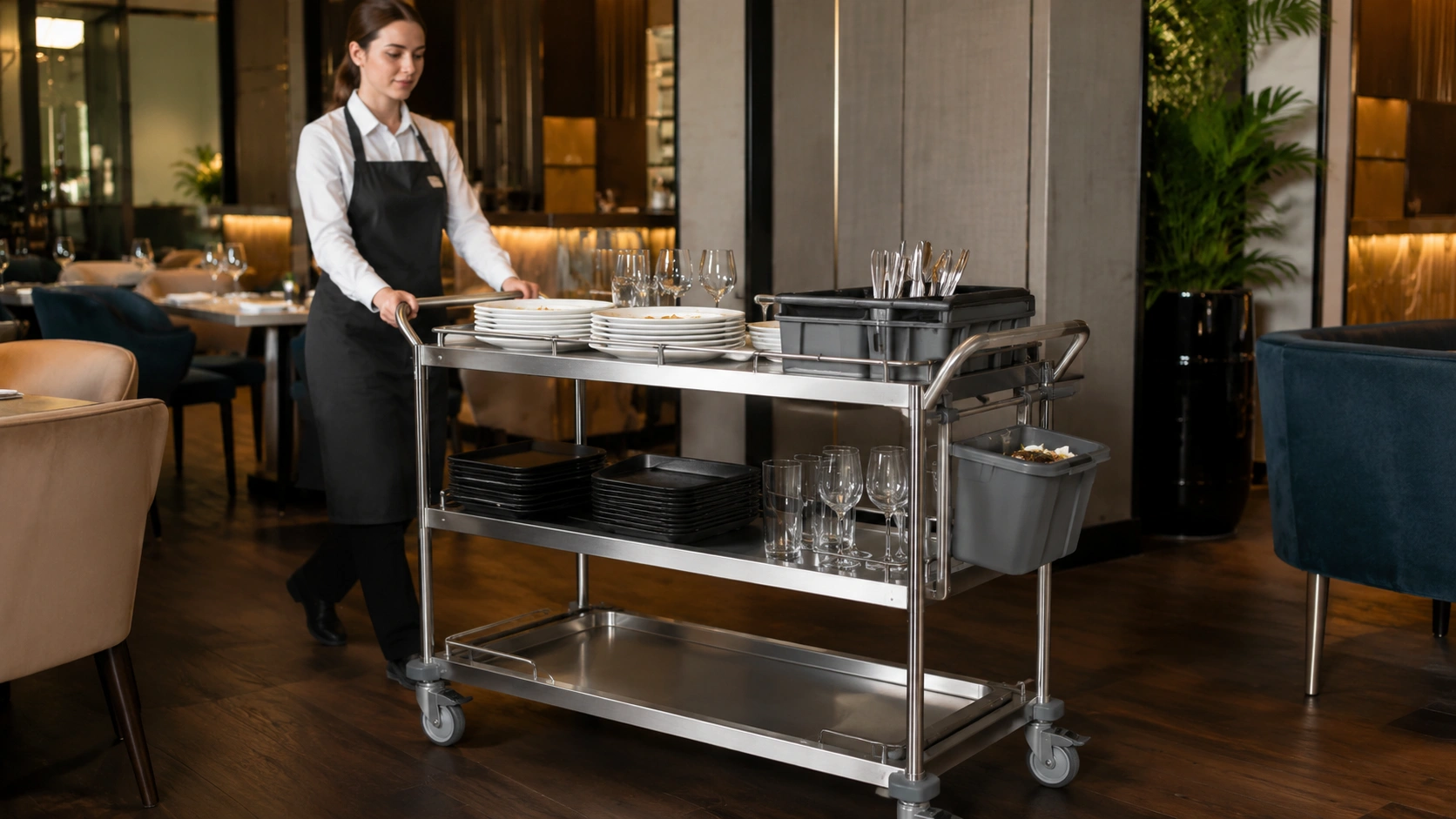
Afruimwagens are practical clearing trolleys used in restaurants, hotels, cafés, cafeterias, catering companies, hospitals, schools, warehouses, and busy workspaces to move dirty dishes, trays, glasses, cutlery, food waste, supplies, and equipment more efficiently. In English, an afruimwagen is often called a clearing trolley, bussing cart, service trolley, dish clearing trolley, or utility cart.
For businesses that handle food service, table clearing, room service, buffet service, or workplace transport every day, the right afruimwagen can make a noticeable difference. It helps staff reduce walking, avoid carrying heavy loads by hand, improve workflow efficiency, maintain better hygiene, and keep service areas organized.
This guide explains what afruimwagens are, where they are used, which types are available, and how to choose the best model for your workplace. Whether you are planning to buy a RVS afruimwagen, a plastic trolley, a three-tier trolley, or an afruimwagen met bakken, this article will help you make a smarter buying decision.
What Are Afruimwagens?
Afruimwagens are mobile carts designed to help staff clear, collect, transport, and organize items during daily operations. The Dutch word afruimwagen literally refers to a trolley used for clearing away items, especially in horeca and food-service environments.
In practical use, an afruimwagen can transport used dishes, dirty plates, bowls, glasses, trays, napkins, cutlery, food waste, cleaning supplies, linens, and kitchen tools. In English-speaking markets, similar products are called clearing trolleys, bussing carts, service trolleys, or kitchen transport carts.
Although some online content may describe afruimwagens as traditional wagons or cultural carts, the most common commercial search intent today is linked to horeca equipment and workplace trolleys. People searching for afruimwagen kopen, horeca afruimwagen, or RVS afruimwagen usually want a practical product for restaurants, hotels, catering, commercial kitchens, or institutional facilities.
A good afruimwagen is more than just a cart with wheels. It is a tool for organized workflow, safe handling, clean work areas, and faster movement between the dining room, kitchen, dishwashing area, storage room, or service zone.
Where Are Afruimwagens Used?
Afruimwagens are widely used in places where staff need to move many items quickly and safely. In restaurants and cafés, they help clear tables after guests finish eating. Instead of carrying plates, wet glasses, and sharp cutlery by hand, staff can place everything on a stable trolley and move it to the dishwashing area in one organized trip.
In hotels, afruimwagens are useful for buffet service, banquet halls, room service operations, and breakfast areas. They help staff collect trays, plates, glassware, and leftover food without disrupting guest flow.
In cafeterias, schools, universities, and staff canteens, afruimwagens are often used near tray-return stations. They make it easier to collect dining trays, sort waste, and move items to the kitchen or cleaning area.
Catering companies also depend on clearing trolleys during events. At weddings, conferences, business lunches, and outdoor functions, a mobile catering trolley helps teams clear tables, transport supplies, and keep temporary service areas tidy.
Outside horeca, afruimwagens can also work as utility carts in hospitals, clinics, nursing homes, warehouses, retail spaces, corporate offices, manufacturing units, and logistics facilities. They may carry medical supplies, documents, boxes, tools, packages, equipment, or cleaning items.
In every setting, the purpose is similar: reduce manual labor, save time, improve movement, and keep the workplace more organized.
Key Benefits of Using Afruimwagens
The biggest advantage of afruimwagens is efficiency. In a busy restaurant, hotel, cafeteria, or commercial kitchen, every second counts. Staff who clear tables by hand often make several trips between the dining area and kitchen. With a clearing trolley, one staff member can move more items in fewer trips.
This improves workflow efficiency and supports faster table turnover. When tables are cleared quickly, guests wait less, service feels smoother, and the dining area stays presentable. For businesses with high customer volume, this can improve both staff productivity and customer experience.
Afruimwagens also reduce physical strain. Carrying heavy trays, stacked plates, wet glasses, and food containers can put pressure on the back muscles, shoulders, and arms. A stable trolley with ergonomic handles, smooth-rolling wheels, and proper load capacity helps reduce fatigue and lowers the risk of accidents.
Another major benefit is hygiene. A well-designed afruimwagen keeps dirty dishes, food waste, cutlery, and trays organized instead of scattered across tables or counters. Models with removable bins, waste bins, or cutlery containers help separate items and support cleaner work areas.
Afruimwagens also improve safety. Plates, glasses, and trays are less likely to fall when they are placed on strong shelves or in dedicated compartments. With good wheel brakes, staff can park the trolley safely while loading or unloading.
In short, a professional afruimwagen supports:
| Benefit | Why It Matters |
| Workflow efficiency | Fewer trips and faster task completion |
| Table turnover | Tables can be cleared and reset faster |
| Staff productivity | Employees can handle more work with less effort |
| Hygiene | Dirty dishes and waste stay organized |
| Safety | Less risk of spills, breakage, and injuries |
| Space optimization | Supplies and dishes stay in one mobile space |
Types of Afruimwagens
There are different types of afruimwagens, and the best choice depends on your workplace, workload, and cleaning needs.
RVS Afruimwagens
A RVS afruimwagen is made from stainless steel. This is one of the most popular choices for professional kitchens and horeca environments because stainless steel is strong, easy to clean, moisture-resistant, and suitable for daily use.
Stainless steel afruimwagens are ideal for restaurants, hotels, catering companies, and commercial kitchens where hygiene and durability are important. They are often chosen for heavy workloads, hot kitchen areas, and frequent cleaning with professional cleaning products.
Plastic Afruimwagens
Plastic afruimwagens are usually lighter and easier to move. They can be useful in small cafés, offices, schools, or lower-intensity environments. Heavy-duty plastic models can still be durable, but they may not offer the same professional appearance or long-term strength as stainless steel.
Two-Tier and Three-Tier Trolleys
A two-tier trolley has two shelves, while a three-tier trolley offers extra storage space. Two-tier shelves are useful when staff need open access to larger items. Three-tier shelves are better when space is limited and more items need to be carried in one round.
Afruimwagens with Bins
An afruimwagen met bakken is especially useful for sorting. One bin can hold cutlery, another bin can collect food waste, and another can carry used napkins or small items. Some horeca buyers search specifically for an afruimwagen met 3 bakken or afruimwagen met 5 bakken because these models help organize dirty dishes and waste more efficiently.
Tray Runner and Gastronorm Models
Some afruimwagens include tray runners, side runners, or space for GN containers and Gastronorm bins. These are useful in cafeterias, buffets, self-service restaurants, hospitals, and canteens where trays or food containers need to be moved regularly.
Afruimwagens vs Serveerwagens vs Transportwagens
Many buyers confuse afruimwagens, serveerwagens, and transportwagens. They look similar, but their main purpose is different.
| Equipment Type | Main Use | Best For |
| Afruimwagen | Clearing dirty dishes, trays, waste, and tableware | Restaurants, hotels, cafeterias |
| Serveerwagen | Serving clean food, drinks, and tableware | Front-of-house service |
| Transportwagen | Moving supplies, equipment, boxes, or goods | Kitchens, warehouses, storage areas |
| Dienbladenwagen | Holding and transporting trays | Canteens, schools, hospitals |
| Regaalwagen | Moving racks, trays, or production items | Bakeries, kitchens, production areas |
The main difference is that an afruimwagen is usually focused on clearing and collecting used items, while a serveerwagen horeca model is used to serve clean items to guests. A transportwagen horeca is broader and may be used for moving equipment, boxes, ingredients, or supplies.
When choosing between them, think about the main job. For dirty dishes and table clearing, choose an afruimwagen. For serving food, choose a serveerwagen. For heavy goods or storage movement, choose a transportwagen.
How to Choose the Right Afruimwagen
When planning to buy an afruimwagen, do not choose only by price. The right model should match your daily workload, available space, hygiene standards, and staff needs.
1. Choose the Right Material
For professional horeca, a RVS afruimwagen is usually the strongest choice. Stainless steel is durable, corrosion-resistant, easy to sanitize, and suitable for contact with moisture, food waste, and cleaning chemicals.
Plastic models are lighter and may be suitable for small cafés, offices, or light-duty use. Aluminum and composite materials may also be useful where lightweight design is important.
2. Check Load Capacity
Load capacity matters because an afruimwagen may carry heavy plates, bowls, glassware, food containers, and trays. Some professional trolleys can carry around 150 kg to 200 kg, but the exact weight limit depends on the model.
Never overload a trolley. Overloading can damage wheels, weaken shelves, increase accidents, and reduce long-term performance.
3. Look at Wheels and Brakes
Good wheel quality is essential. Choose smooth-rolling wheels, swivel casters, and preferably wheel brakes if the trolley will be used in busy or sloped areas. Brakes help keep the trolley stable while staff load or unload dishes.
For hotels, hospitals, and guest-facing areas, noise-free wheels can also be important. Loud wheels can disturb guests, patients, or office workers.
4. Consider Size and Dimensions
A large afruimwagen can carry more items, but it may be hard to move through narrow corridors, small kitchens, or crowded dining rooms. A compact trolley is easier to maneuver but may require more trips.
Before buying, check door widths, kitchen layout, storage space, and the distance between dining areas and dishwashing zones.
5. Decide on Shelves, Bins, and Compartments
If you only need to move plates and trays, open shelves may be enough. If you need to separate cutlery, food waste, glasses, and napkins, choose an afruimwagen met bakken or compartments.
For self-service cafeterias, tray runner models can be more practical. For restaurants, a trolley with shelves and removable bins may offer the best balance.
6. Think About Long-Term Value
A cheap afruimwagen can seem attractive, but it may cost more over time if wheels break, shelves bend, or the frame rusts. A professional model with strong materials, good brakes, durable shelves, and easy maintenance often delivers better long-term value.
Hygiene, HACCP, and Safe Handling
For horeca and food-service businesses, hygiene is not optional. A good afruimwagen should support cleanliness, safe handling, and proper separation of dirty items.
In restaurants, hotels, hospitals, and cafeterias, trolleys often carry dirty dishes, leftover food, wet glasses, cutlery, and waste. If these items are not handled properly, they can increase the risk of cross-contamination and create messy work areas.
This is why many professional buyers prefer stainless steel. A RVS afruimwagen has smooth surfaces that are easier to clean and sanitize. It is also more resistant to moisture and cleaning chemicals.
Businesses that follow HACCP principles should think about how the trolley fits into their food-safety workflow. For example, clean dishes and dirty dishes should not be mixed. Food waste should be separated from reusable tableware. Trolleys should be cleaned at the end of each shift or after heavy use.
Basic cleaning steps include wiping shelves, emptying bins, removing food waste, checking wheels, and storing the trolley in a dry place. Regular cleaning protects both hygiene standards and the life of the equipment.
Maintenance Tips for Afruimwagens
Even a strong afruimwagen needs proper maintenance. Daily use, heavy workloads, moisture, and constant movement can slowly wear down wheels, brakes, shelves, and handles.
Clean the trolley regularly, especially after carrying food waste or dirty dishes. Stainless steel surfaces should be wiped and dried to prevent marks and maintain a professional appearance. Plastic bins should be removed, emptied, washed, and allowed to dry.
Inspect wheels often. If a trolley becomes hard to push, the wheels may need cleaning or lubrication. Hair, food debris, dust, or packaging materials can get stuck around casters. Wheel brakes should also be tested to make sure they still hold the trolley in place.
Check for loose screws, damaged parts, cracked bins, bent shelves, or unstable handles. Small problems are easier to fix early than after the trolley becomes unsafe.
A well-maintained afruimwagen can last for many years, especially when staff avoid overloading and store it properly after use.
Common Mistakes When Buying Afruimwagens
One common mistake is buying the wrong size. A trolley that is too large may not fit through tight spaces, while a trolley that is too small may force staff to make too many trips.
Another mistake is ignoring wheel quality. Cheap wheels can become noisy, unstable, or difficult to push. For busy horeca operations, smooth movement is essential.
Some buyers focus only on price and forget about load capacity, frame strength, hygiene, and maintenance requirements. A low-cost trolley may not be the best option if it cannot handle daily use.
It is also risky to buy a trolley without brakes if staff work on uneven floors or in busy service areas. Brakes improve safety and make loading easier.
Finally, buyers sometimes choose a model without thinking about what will be transported. Plates, glasses, trays, food waste, and cutlery may need different shelf layouts or bins. A good buying decision starts with understanding real daily use.
Best Afruimwagen by Use Case
For restaurants and cafés, the best afruimwagen is usually compact, easy to maneuver, and strong enough for plates, glasses, bowls, and cutlery. A model with shelves and a bin for cutlery or waste can improve table clearing.
For hotels and banquet halls, larger trolleys are useful because staff may need to clear hundreds of meals or hundreds of place settings during breakfast, events, or conferences. Quiet wheels and a professional appearance are also important in guest areas.
For catering companies, mobility matters. A catering trolley should be sturdy, easy to move, and practical for temporary event venues. Removable bins and flexible compartments can help teams adapt quickly.
For schools, universities, cafeterias, and staff canteens, tray runner models or trolleys with multiple shelves are useful. They help collect trays and keep self-service areas organized.
For hospitals, clinics, and nursing homes, hygiene is the priority. Stainless steel, smooth surfaces, easy cleaning, and controlled waste handling are important.
For warehouses, offices, logistics, and retail spaces, a multi-purpose utility cart may be enough. In these settings, the trolley may move documents, boxes, packages, tools, products, or office supplies rather than dishes.
Future Trends in Afruimwagens and Trolley Design
Modern afruimwagens are becoming more practical, ergonomic, and adaptable. Many businesses now look for modular designs, quiet wheels, lightweight materials, and better storage options.
In larger workplaces, future trolley design may include smart tracking technology to help teams locate equipment, monitor usage, or manage operations more efficiently. Eco-friendly materials may also become more common as businesses focus on sustainability.
The next generation of afruimwagens will likely focus on four things: better mobility, easier cleaning, stronger materials, and more flexible organization.
FAQs
What are afruimwagens?
Afruimwagens are clearing trolleys used to collect and transport dirty dishes, trays, cutlery, glasses, food waste, supplies, and equipment in restaurants, hotels, cafeterias, hospitals, and busy workspaces.
What does afruimwagen mean in English?
An afruimwagen can be translated as a clearing trolley, bussing cart, service trolley, or dish clearing cart.
What is an afruimwagen used for?
It is used for table clearing, moving used dishes to the dishwashing area, collecting trays, sorting waste, transporting supplies, and improving workplace organization.
Is a stainless steel afruimwagen better than plastic?
A stainless steel afruimwagen is usually better for professional kitchens because it is durable, hygienic, and easy to clean. Plastic models can be useful for lighter work or smaller spaces.
How many shelves or bins should an afruimwagen have?
It depends on use. A two-tier trolley is good for larger items, while a three-tier trolley gives more storage. An afruimwagen met 3 bakken or 5 bakken is useful for sorting cutlery, waste, and dishes.
What should I check before buying an afruimwagen?
Check the material, size, load capacity, wheel quality, brakes, shelves, bins, handle comfort, hygiene needs, and maintenance requirements.
Conclusion
Afruimwagens are essential tools for businesses that need faster table clearing, better hygiene, safer transport, and smoother workflow. The right afruimwagen can reduce staff strain, improve service speed, support cleaner work areas, and deliver long-term value.
When choosing one, consider your environment, material preference, load capacity, wheels, brakes, shelves, bins, and cleaning needs. For professional horeca, a strong RVS afruimwagen is often the best choice. For lighter work, a plastic or compact model may be enough.
Disclaimer:
This article is for general informational purposes only. Product needs, workplace requirements, preferences, and results may vary depending on each business, environment, and usage situation. Always choose equipment based on your specific operational needs.










Leave a Reply