

Introduction
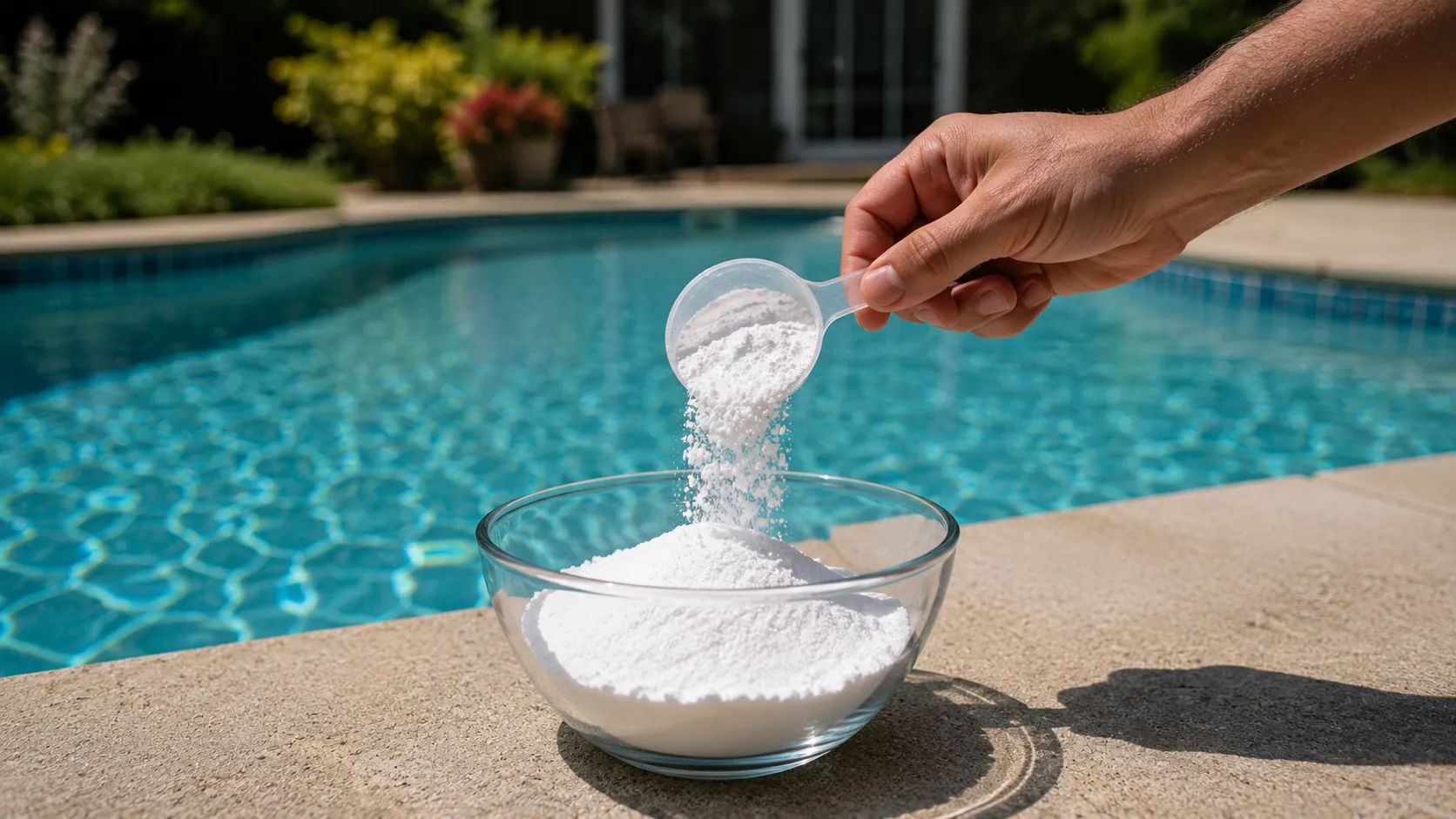
What does baking soda do to a pool? In simple terms, baking soda helps make pool water more balanced by raising total alkalinity and sometimes slightly increasing pH. Baking soda is also known as sodium bicarbonate, and it is commonly used in pool care because it helps control acidity and keeps the water chemistry more stable.
However, baking soda is not a cure-all for every pool problem. It does not replace chlorine, kill algae, work as a pool stabilizer, or clean dirty water by itself. Its main job is to help with pool alkalinity, which supports better pool pH balance and helps prevent sudden swings in water chemistry.
Many new pool owners use baking soda in pool water because it is familiar, affordable, and often found as the active ingredient in pool alkalinity increaser products. But it only helps when the pool actually needs it. If your total alkalinity is low, or if your pH is slightly low and unstable, baking soda may be useful. If the pool is green, cloudy from algae, low in chlorine, or has filtration problems, baking soda alone will not fix the issue.
The best approach is to test your water first. Once you know your pool alkalinity, pH, chlorine, and other basic levels, you can decide whether sodium bicarbonate pool treatment is the right next step. Used correctly, baking soda can be a simple and helpful part of good pool water chemistry, but it should always be added with a clear purpose, not as a guess.
The Main Job of Baking Soda: Raising Pool Alkalinity
The main reason pool owners add baking soda to a pool is to raise pool alkalinity. Total alkalinity is one of the most important parts of pool water chemistry because it works like a pool water buffer. In simple words, it helps keep the pool’s pH from changing too quickly.
When the total alkalinity pool level is too low, the water can become unstable. The pH may rise and fall more easily, which makes the pool harder to manage. One day the water may test slightly acidic, and after a small chemical change, rainstorm, or heavy pool use, the pH may shift again. This can lead to swimmer discomfort, equipment concerns, and constant testing frustration.
Baking soda helps because it contains sodium bicarbonate. When added to pool water, it adds bicarbonate to the water, which increases total alkalinity. This is why many pool alkalinity increaser products use sodium bicarbonate as a key ingredient. The helpful part is that sodium bicarbonate alkalinity treatment usually has a stronger effect on alkalinity than on pH, so it is often used when alkalinity is low but the pH does not need a major increase.
For many residential pools, a commonly recommended total alkalinity range is around 80–120 ppm. However, the best range can vary depending on your pool type, sanitizer system, surface material, and local water conditions. Saltwater pools, plaster pools, vinyl pools, and pools with special equipment may have slightly different needs.
That is why baking soda should not be added by guesswork. Before using baking soda for pool alkalinity, test the water carefully and compare the results with your test kit instructions, pool product label, or advice from a local pool professional. If the test shows low alkalinity pool levels, baking soda may be the right tool to bring the water back into better balance.
How Baking Soda Affects Pool pH
Many pool owners ask, does baking soda raise pH in pool water? The answer is yes, but only slightly. Baking soda can help move pH upward a little because it is alkaline, but its main job is still to raise total alkalinity, not to act as a strong pH increaser.
This is where many new pool owners get confused. If you have a low pH pool and your total alkalinity is also low, baking soda may help improve both levels. But if your pH is very low while your alkalinity is already in the correct range, baking soda may not be the best choice. In that case, a product such as soda ash, also called sodium carbonate, is usually used because it raises pH more strongly.
A simple way to understand baking soda vs pH increaser is this:
| Product | Main Purpose | Best Used When |
| Baking soda / sodium bicarbonate | Raises total alkalinity | Alkalinity is low and pH may be slightly low |
| Soda ash / sodium carbonate pool product | Raises pH more strongly | pH is low but alkalinity may not need much increase |
For healthy swimming, pool water should stay within a safe pH range. CDC guidance commonly recommends keeping pool pH between 7.0 and 7.8, while also maintaining the correct disinfectant level. For everyday residential pool care, many pool owners aim for about 7.2 to 7.6 because that range is usually more comfortable for swimmers and helps chlorine work more effectively.
The key point is that good pool pH balance starts with testing. Do not add baking soda just because the water feels “off” or looks cloudy. Test pH and alkalinity first. If alkalinity is low, baking soda can be a smart choice. If only pH is low, comparing soda ash vs baking soda can help you choose the right product and avoid pushing alkalinity too high.
Signs Your Pool May Need Baking Soda
Baking soda may help your pool when a water test shows low total alkalinity, especially if the pH is also unstable. Since alkalinity helps buffer pH, low alkalinity can make the water harder to control. You may adjust the pH one day, only to find that it changes again soon after rain, heavy swimming, or normal chemical use.
Some common signs of low alkalinity in pool water may include:
| Possible Sign | What It May Mean |
| pH readings change quickly | The water may not have enough alkalinity to stay stable |
| Pool water feels acidic or harsh | Low pH or low alkalinity may be affecting comfort |
| Eye or skin irritation | Water balance or sanitizer levels may be off |
| Metal parts look worn or corroded | Acidic water can be hard on ladders, rails, heaters, and fittings |
| You keep adjusting pH often | Low alkalinity may be causing an unstable pool pH |
However, symptoms alone are not enough to know when to add baking soda to pool water. Cloudy water, irritated eyes, or harsh-feeling water can also come from low chlorine, high chlorine, poor filtration, high calcium hardness, high stabilizer, algae growth, or other chemical imbalances.
The safest first step is always pool water testing. Use a reliable test strip, liquid test kit, or digital tester to check the main levels before adding anything. At minimum, test total alkalinity, pH, chlorine, calcium hardness, and cyanuric acid. These numbers tell you what the pool actually needs instead of forcing you to guess.
A helpful rule for new pool owners is simple: if the water “looks off,” do not add baking soda blindly. Test first, then treat the specific problem. If the test confirms low alkalinity, baking soda can be a useful and affordable way to bring the water back toward balance.
How Much Baking Soda to Add to a Pool
The amount of baking soda you need depends on two things: your pool size and how much you need to raise the total alkalinity. A common baking soda dosage pool rule is that about 1.5 pounds of baking soda per 10,000 gallons of pool water can raise alkalinity by about 10 ppm.
This does not mean every pool needs the same amount. A small above-ground pool may need only a little, while a larger in-ground pool may need several pounds. That is why it helps to know your pool volume before adding anything. If you are unsure, use a baking soda pool calculator or check your pool manual, installer paperwork, or water capacity chart.
Here is a simple example:
| Pool Size | Goal | Approximate Baking Soda Amount |
| 10,000 gallons | Raise alkalinity 10 ppm | 1.5 lb |
| 15,000 gallons | Raise alkalinity 10 ppm | 2.25 lb |
| 20,000 gallons | Raise alkalinity 10 ppm | 3 lb |
For example, if your 10,000-gallon pool has total alkalinity at 70 ppm and you want to raise it to about 80 ppm, you may need roughly 1.5 pounds of baking soda. If the same pool needs a 20 ppm increase, the amount would be closer to 3 pounds.
Still, it is usually smarter to add less than the full calculated amount at first. Pool water can react differently depending on current pH, water source, chemicals already in the pool, and circulation. Add part of the dose, let the pump run, then retest the water before adding more. This careful approach helps prevent overshooting alkalinity and creating a new balancing problem.
When measuring pool gallons baking soda amounts, avoid guessing with kitchen spoons or random scoops. Use a scale or clearly measured product amount when possible. Baking soda is simple to use, but accurate dosing is what makes it effective.
How to Add Baking Soda to Pool Water Safely
Knowing how to add baking soda to pool water correctly is just as important as knowing how much to use. Baking soda is a common pool-balancing product, but it should still be added carefully. Using too much at once, adding it without testing, or mixing it with other chemicals can create new water balance problems.
Follow these steps for safer use:
- Test alkalinity and pH first
Before adding anything, test your pool water. Check total alkalinity and pH at a minimum. If alkalinity is already in the proper range, baking soda may not be needed. - Calculate your pool volume
Baking soda dosage depends on pool size. A small above-ground pool needs much less than a large in-ground pool, so estimate your gallons as accurately as possible. - Measure the correct amount of baking soda
Use your test results and pool volume to measure the dose. Avoid guessing. If you are unsure, start with a smaller amount and adjust after retesting. - Add baking soda slowly around the pool
It is usually best to add baking soda with pump running so the water can move and distribute it evenly. Walk around the pool and broadcast the baking soda slowly across the surface instead of dumping it all in one spot. - Brush any settled powder from the floor
If baking soda settles on the pool floor, gently brush it so it can dissolve and circulate. This is especially important for vinyl liners and smaller pools where concentrated piles may sit in one area. - Let the water circulate
Good pool water circulation helps the baking soda mix properly. Let the pump run for several hours so the water has time to balance. - Retest before adding more
Always retest pool water after several hours or the next day before adding another dose. Water chemistry needs time to respond, and adding more too quickly can push alkalinity higher than you intended.
Some pool professionals prefer adding pool chemicals in stages instead of adding a large amount all at once. This is a smart approach for baking soda, too. Smaller additions reduce the risk of cloudy water, wasted product, and chemical imbalance.
For proper pool chemical safety, never mix baking soda directly with chlorine, acid, shock, or other pool chemicals in a bucket. Store pool products separately, keep containers dry, and follow the instructions on the product label. Baking soda is simple to use, but safe handling and careful testing still matter.
Baking Soda vs. Soda Ash vs. Alkalinity Increaser
It is easy to confuse baking soda, soda ash, and alkalinity increaser because they all affect pool water balance. However, they are not always used for the same problem. Choosing the wrong product can make the water harder to manage, especially if you are trying to adjust pH and alkalinity at the same time.
Here is the simple difference:
| Product | Main Use | Best When | Common Mistake |
| Baking soda / sodium bicarbonate | Raises alkalinity | Total alkalinity is low | Using it as a strong pH increaser |
| Soda ash / sodium carbonate | Raises pH more strongly | pH is low | Adding too much and clouding the water |
| Alkalinity increaser | Raises alkalinity | Often similar to baking soda-based products | Paying more without checking ingredients |
The main difference in baking soda vs soda ash is how strongly each product affects pH. Baking soda, or sodium bicarbonate, is mainly used to raise alkalinity pool levels. It may raise pH slightly, but that is not its strongest effect. Soda ash, also called sodium carbonate, is used when you need to raise pH pool levels more directly.
This is why understanding sodium bicarbonate vs sodium carbonate matters. If your total alkalinity is low, baking soda is usually the better choice. If your pH is low but alkalinity is already fine, soda ash may be more appropriate. Adding baking soda in that situation may raise alkalinity too much without fixing the pH as efficiently as needed.
The comparison of alkalinity increaser vs baking soda is also useful for new pool owners. Many pool alkalinity increaser products use sodium bicarbonate as the active ingredient, which is the same basic compound as baking soda. That does not mean every product is identical, though. Pool products may have specific instructions, concentrations, or labeling requirements, so always check the ingredient list and follow the directions on the package.
A practical rule is simple: test first, then choose the product that matches the actual problem. Use baking soda for low alkalinity, soda ash for low pH when alkalinity is acceptable, and a labeled alkalinity increaser when you prefer a pool-specific product with clear dosage directions.
Can Baking Soda Clear a Cloudy Pool?
Many pool owners ask, does baking soda clear cloudy pool water? The honest answer is: sometimes, but only in a specific situation. Baking soda may help improve pool water clarity if the cloudiness is connected to low alkalinity or unstable pH. When alkalinity is too low, the water chemistry can become unstable, and that imbalance may make the pool harder to keep clear.
However, baking soda for clear pool water is not a complete solution by itself. Baking soda does not kill algae, replace chlorine, remove leaves or dirt, clean the filter, or fix poor circulation. If the pool is cloudy because of algae, low sanitizer, high calcium hardness, heavy debris, or a filter problem, baking soda alone will not solve the issue.
Common cloudy pool causes include:
| Cause of Cloudy Water | Will Baking Soda Fix It? | What Usually Helps |
| Low alkalinity or unstable pH | It may help | Test and balance alkalinity/pH |
| Low chlorine | No | Adjust sanitizer level |
| Algae growth | No | Brush, filter, and treat algae properly |
| Dirty or weak filter | No | Clean, backwash, or inspect the filter |
| High calcium hardness | No | Test hardness and adjust water balance |
| Heavy debris or poor circulation | No | Vacuum, brush, and run the pump |
A good troubleshooting order is:
Test water → balance alkalinity and pH → check chlorine → inspect the filter → brush and vacuum → shock only if needed.
This order matters because adding products blindly can make the water worse. For example, if you add too much baking soda to a pool that does not need it, you may create cloudy pool after baking soda problems by pushing alkalinity too high. If algae or low chlorine is the real issue, the water may stay cloudy even after adding baking soda.
The best approach is to treat baking soda as one tool, not the whole repair plan. If testing shows low alkalinity, baking soda can help bring the water back into balance. But if your pool is cloudy for another reason, focus on sanitizer levels, filtration, brushing, vacuuming, and full water testing before adding more chemicals.
What Baking Soda Does Not Do in a Pool
Baking soda can be helpful for balancing pool water, but it should not be treated as a cure-all. Its main job is to raise total alkalinity and support pH stability. It does not replace the basic parts of pool care, such as sanitizer, filtration, brushing, and regular testing.
Here is what baking soda does not do in a pool:
| Baking Soda Does Not… | Why It Matters |
| Replace chlorine or bromine | Your pool still needs a proper pool sanitizer to help control germs and keep the water safe. |
| Kill algae | If you are wondering, does baking soda kill algae in pool water, the answer is no. Algae problems need proper sanitizer levels, brushing, filtration, and sometimes shock treatment. |
| Remove bacteria or germs | Baking soda helps with water balance, not disinfection. It does not make unsafe water safe to swim in. |
| Act as cyanuric acid or stabilizer | If your pool needs stabilizer, baking soda is not the right product. Pool stabilizer cyanuric acid is a different chemical used to help protect chlorine from sunlight. |
| Lower chlorine | Baking soda does not remove excess chlorine from pool water. |
| Lower pH | Baking soda usually raises alkalinity and may slightly raise pH. It will not lower high pH. |
| Fix every cloudy pool | Cloudy water can come from algae, low sanitizer, dirty filters, poor circulation, high calcium hardness, or other problems. |
| Replace regular testing and filtration | Balanced water still needs a clean filter, good circulation, and routine water testing. |
This is important because some pool owners try using baking soda instead of chlorine, especially when they want a simple or affordable fix. That can create unsafe water. Chlorine, bromine, or another approved sanitizer is still needed to help control bacteria, algae, and other contaminants.
Baking soda also should not be confused with pool stabilizer. If someone asks, is baking soda pool stabilizer, the answer is no. Baking soda raises alkalinity, while stabilizer usually refers to cyanuric acid, which helps protect chlorine from breaking down too quickly in sunlight.
The safest way to think about baking soda is this: it is a water-balancing product, not a cleaning product, sanitizer, algaecide, or full pool treatment. Used for the right reason, it can be helpful. Used for the wrong problem, it can waste time and may make pool chemistry harder to manage.
What Happens If You Add Too Much Baking Soda to a Pool?
Adding a little too much baking soda usually does not create an instant emergency, but it can make your pool water harder to balance. The main issue is that too much baking soda in pool water can raise total alkalinity higher than it should be.
When you have a high alkalinity pool, the pH can become more difficult to adjust. You may add a pH-lowering product and notice the pH keeps drifting back up, or the water may seem cloudy even though the filter is running. In some pools, high alkalinity can also increase the risk of pool scaling, especially when calcium hardness and pH are also high.
Common signs that you may have added too much baking soda include:
| Possible Problem | What It Means |
| Alkalinity tests too high | Baking soda raised the buffer level beyond the ideal range |
| pH is hard to lower | High alkalinity can resist pH adjustment |
| Cloudy water appears | Excess alkalinity may contribute to cloudiness |
| White scale forms on surfaces or equipment | High alkalinity, high pH, and high calcium can increase scaling risk |
| Water balance feels frustrating | The pool may need careful correction instead of more chemicals |
If baking soda made pool cloudy, avoid adding more products right away. Let the pump run, brush the pool, and retest the water after it has circulated. Sometimes the water clears as the baking soda dissolves and the filter catches fine particles. If the alkalinity is still too high, you may need to lower pool alkalinity carefully.
Practical fixes may include waiting, retesting, improving circulation, or using aeration strategies as part of a controlled adjustment process. In some cases, pool owners use acid to lower alkalinity, but this should be done slowly and only according to the product label. Adding too much acid can create a new problem by dropping pH too far.
It is a good idea to contact a pool professional if your alkalinity is far outside the recommended range, if scale is forming, or if your pool has plaster surfaces, a heater, a salt system, or ongoing water balance problems. These pools can be more sensitive to high alkalinity and scaling, so careful correction is safer than guessing.
Is Baking Soda Safe for Pools, Swimmers, and Pool Equipment?
Baking soda is generally safe for pools when it is added correctly and used for the right reason. In pool care, baking soda is valued because it helps create balanced pool water by raising total alkalinity and supporting pH stability. When water is balanced, it usually feels more comfortable for swimmers and is easier to manage.
Still, pool safety should never depend only on the fact that baking soda was added. Before swimming, especially after adding any pool chemical, it is best to test the water first. Your pool should have proper pH, sanitizer, and alkalinity levels before people get in. Health guidance for swimming pools emphasizes maintaining both proper pH and the right sanitizer level, because balanced water and disinfectant work together to support safer swimming.
Many pool owners ask, is baking soda safe for pools? Yes, when used in the correct amount. The bigger risk usually comes from adding too much, adding it without testing, or using it when the pool actually needs a different treatment. If the pool has low chlorine, algae, very high pH, or filtration problems, baking soda will not make the water safe by itself.
If you want to swim after adding baking soda, let the water circulate first and test again before entering. The pool pump should have enough time to mix the baking soda through the water so it does not sit in concentrated areas. This is especially important in smaller pools, above-ground pools, and pools with vinyl liners.
Baking soda can also support pool equipment protection when it helps bring water back into balance. Water that is too acidic may be harsh on metal fixtures, ladders, heaters, pool surfaces, and some equipment parts. On the other hand, water with high alkalinity, high pH, or high calcium hardness may increase scaling risk. Good pool care is about balance, not simply adding more product.
For proper pool chemical safety, store baking soda and all pool chemicals in dry, separate containers. Do not mix baking soda directly with chlorine, acid, shock, or other chemicals in a bucket. Always follow the product label, test before and after treatment, and ask a pool professional for help if your water readings are far outside the normal range.
Baking Soda for Different Pool Types: Chlorine, Saltwater, Vinyl, Fiberglass, and Plaster
Baking soda works in a similar way across most pool types because it affects the water chemistry, not the pool surface directly. Whether you have a chlorine pool, saltwater pool, vinyl liner, fiberglass shell, plaster surface, or above-ground pool, baking soda mainly helps raise total alkalinity and support pH stability.
However, each pool type has a few special things to watch.
| Pool Type | How Baking Soda Helps | What to Watch For |
| Chlorine pools | Helps stabilize alkalinity and pH so chlorine can work more consistently | Do not use baking soda as a replacement for chlorine |
| Saltwater pools | Supports alkalinity and pH balance, just like in traditional chlorine pools | Salt systems can affect pH, so regular testing is still important |
| Vinyl pools | Helps balance water without being harsh when used correctly | Avoid dumping piles of undissolved baking soda directly on the liner |
| Fiberglass pools | Can help with alkalinity control | Watch for scaling if alkalinity, pH, and calcium hardness are high |
| Plaster pools | Helps support proper water balance | Plaster pool water balance is especially important because poor chemistry can affect the surface |
| Above-ground pools | Useful for correcting low alkalinity | Smaller water volume makes overdosing easier |
For baking soda in saltwater pool systems, remember that saltwater pools are not chemical-free. They still need regular testing for pH, alkalinity, chlorine, salt level, cyanuric acid, and calcium hardness. Baking soda may help if alkalinity is low, but it will not fix a salt cell issue, low chlorine output, or poor circulation.
With vinyl pool baking soda use, the main concern is how you add it. Do not pour a heavy pile into one spot and let it sit on the liner. Broadcast it slowly around the pool with the pump running, and brush any settled powder so it dissolves evenly.
For fiberglass pool alkalinity, balance matters because high alkalinity combined with high pH or high calcium hardness can increase the chance of scale. Fiberglass pools often have smooth surfaces where scale can become noticeable, so avoid adding more baking soda than the test results call for.
Plaster pools also need careful balance. Low alkalinity and low pH can make water more aggressive, while high alkalinity, high pH, and high calcium can encourage scale. That is why plaster pools should be tested regularly and adjusted slowly.
If you are using baking soda above ground pool treatment, be extra careful with dosage. Above-ground pools often hold fewer gallons than in-ground pools, so even a small measuring mistake can raise alkalinity more than expected. Start with a partial dose, circulate the water, and retest before adding more.
Common Mistakes Pool Owners Make With Baking Soda
Baking soda is simple to use, but it can still cause problems when it is added without a plan. Most pool baking soda mistakes happen because owners are trying to fix water quickly without testing first. The pool may look cloudy, feel harsh, or seem unbalanced, so they add baking soda and hope it solves everything. Sometimes it helps, but only when low alkalinity is the real issue.
One of the biggest mistakes is adding baking soda without testing. Baking soda raises total alkalinity, so if your alkalinity is already normal or high, adding more can create a pool chemical imbalance. This may make pH harder to control and could even contribute to cloudy water or scaling.
Another common mistake is guessing the dose. Kitchen measurements, random scoops, or “a little extra just in case” can easily lead to too much baking soda, especially in smaller pools. Baking soda should be measured based on pool volume and current alkalinity level, not added by instinct.
Pool owners also sometimes add too much at once. It is better to add baking soda in stages, let the pump circulate, and retest before adding more. This gives the water time to respond and helps prevent overshooting the target alkalinity range.
A few other common mistakes include:
| Mistake | Why It Causes Problems |
| Expecting baking soda to kill algae | Baking soda does not sanitize water or remove algae. |
| Confusing baking soda with soda ash | Baking soda mainly raises alkalinity, while soda ash raises pH more strongly. |
| Ignoring chlorine levels | Cloudy or unsafe water often comes from sanitizer problems, not just alkalinity. |
| Retesting too soon | The water needs time to circulate before the reading is reliable. |
| Adding multiple products back-to-back | This can make troubleshooting harder and may worsen the imbalance. |
A practical new pool owner tip is to slow down when the water looks wrong. Many pool owners panic when the pool turns cloudy and start adding products one after another. A better approach is to test the water, correct one issue at a time, let the pump run, then retest before making the next adjustment.
Good baking soda pool troubleshooting is really about patience. Baking soda can be useful, but it works best when it is used for a confirmed low-alkalinity problem, measured carefully, and followed by proper circulation and testing.
Quick Troubleshooting Guide: Should You Use Baking Soda or Something Else?
If you are asking, should I add baking soda to my pool, the best answer depends on your test results. Baking soda is useful for low alkalinity, but it is not the right fix for every water problem. A quick comparison can help you avoid adding the wrong product.
| Pool Problem | Is Baking Soda the Right Fix? | Better Next Step |
| Low alkalinity | Yes | Add a measured amount of baking soda |
| Low pH but normal alkalinity | Maybe not | Consider soda ash or a pH increaser |
| Green water | No | Test chlorine and treat algae properly |
| Cloudy water | Sometimes | Test alkalinity, pH, chlorine, and filter performance |
| High alkalinity | No | Do not add more baking soda |
| Low stabilizer/CYA | No | Use proper pool stabilizer |
| Low chlorine | No | Add sanitizer according to the product label |
This kind of pool chemical troubleshooting helps prevent guesswork. For example, if you have green pool baking soda will not solve the problem because baking soda does not kill algae. Green water usually means the pool needs proper sanitizer, brushing, filtration, and possibly shock treatment, depending on the test results.
If you have a low chlorine pool, baking soda is also not the answer. Chlorine or another approved sanitizer is needed to help control germs and algae. Baking soda can support water balance, but it does not disinfect the water.
The same idea applies to pool stabilizer vs baking soda. Pool stabilizer, usually cyanuric acid, helps protect chlorine from sunlight. Baking soda raises alkalinity. These two products do completely different jobs, so one should not be used as a replacement for the other.
A simple rule is to match the product to the test result. If total alkalinity is low, baking soda may be the right choice. If pH, chlorine, stabilizer, algae, or filtration is the real issue, use the correct treatment for that specific problem. This keeps the pool easier to balance and helps avoid creating new water chemistry problems.
Expert-Backed Pool Testing Routine Before and After Baking Soda
A good pool testing routine is the safest way to know whether baking soda is actually needed. Since baking soda mainly raises total alkalinity, you should never add it just because the water looks cloudy, feels harsh, or seems “off.” Test first, adjust carefully, and then test again after the water has circulated.
Before adding baking soda, use a reliable pool water test kit, test strips, or a digital tester to check these levels:
| What to Test | Why It Matters |
| pH | Affects swimmer comfort, water balance, and sanitizer performance |
| Total alkalinity | Shows whether baking soda is needed to stabilize pH |
| Free chlorine | Tells you how much active sanitizer is available |
| Combined chlorine | Helps show whether chlorine is being used up by contaminants |
| Cyanuric acid | Helps protect chlorine from sunlight in outdoor pools |
| Calcium hardness | Matters for scaling, surface protection, and overall balance |
| Salt level | Needed if you have a saltwater pool system |
The two most important numbers to check before using baking soda are pH and total alkalinity. If you test alkalinity and pH and find that alkalinity is low, baking soda may be helpful. If alkalinity is already high, adding baking soda can make the pool harder to balance.
Sanitizer readings are just as important. Free chlorine helps keep pool water properly sanitized, while pH affects how comfortable the water feels and how well chlorine performs. That is why health guidance for pool care emphasizes keeping both pH and disinfectant levels in the proper range, especially during hot weather, heavy swimming, or after rain.
After adding baking soda, let the pump run long enough for the water to circulate well. Then retest before adding more. Some pool owners retest too quickly and get misleading results because the baking soda has not fully mixed through the pool yet.
A simple routine looks like this:
- Test pH, total alkalinity, and sanitizer before adding baking soda.
- Add a measured amount only if alkalinity is low.
- Run the pump so the water circulates properly.
- Brush any settled powder from the floor.
- Retest after several hours or the next day.
- Adjust again only if the new test results show it is needed.
This careful process protects swimmers, pool surfaces, and equipment. It also keeps you from chasing one chemical problem after another. Baking soda works best when it is part of a measured water-balance plan, not a quick guess.
Conclusion
So, what does baking soda do to a pool? The simple answer is that it helps with pool alkalinity and water stability. Baking soda raises total alkalinity, can slightly raise pH, and may make pool water easier to balance when low alkalinity is the real problem.
As part of regular baking soda pool maintenance, it can be a useful and affordable tool. It helps create more balanced pool water, supports steadier pH levels, and may make the water feel less harsh when the chemistry is off. But baking soda is not a replacement for chlorine, shock, stabilizer, brushing, filtration, or regular testing.
The safest approach is to use baking soda only after testing the water. If your alkalinity is low, add a measured amount, let the pump circulate the water, and retest before adding more. If the issue is algae, low chlorine, poor filtration, high stabilizer, or another imbalance, baking soda is not the right fix by itself.
A good pool alkalinity guide always comes back to one idea: treat the actual test result, not the symptom alone. Baking soda works best when it is used as a measured water-balance tool, not as a guess or quick fix for every pool problem. That is the key to easier maintenance, clearer water, and safe pool care.
Disclaimer:
This article is for general informational purposes only and is not a substitute for professional pool care advice. Pool conditions, water chemistry, equipment, and product instructions can vary. Always test your water, follow pool chemical labels, and consult a qualified pool professional if you are unsure.








Leave a Reply